






































































Renewed disruptions to oil exports from the Gulf have derailed the recovery in global oil markets, prompting the International Energy Agency (IEA) to cut its forecasts for both oil supply and demand for 2026.
In its August Oil Market Report, the IEA said global oil
demand is now expected to decline by 1.6 million barrels per day (mb/d) in
2026, 510,000 b/d more than forecast in its previous report. The ongoing
closure of the Strait of Hormuz and elevated fuel prices are weighing on
consumption.
Demand is forecast to contract by 4.9 mb/d in the second
quarter and 2.8 mb/d in the third quarter before returning to growth of 580,000
b/d in the final quarter.
For 2027, global oil demand is projected to increase by 2.4
mb/d.
Global oil supply rose by 2.4 mb/d in July to 101.5 mb/d but
remained 6.3 mb/d below year-earlier levels, with 8.3 mb/d of Gulf production
still offline.
Renewed hostilities and maritime disruptions in July and
early August have further undermined efforts to restore output, leading the IEA
to reduce its third-quarter supply forecast by 1.7 mb/d from last month.
The agency now expects global oil supply to fall by 4.3 mb/d
on average in 2026 to around 102 mb/d, before rebounding by 8.3 mb/d in 2027 to
110.3 mb/d.
Gulf oil production increased by 2.5 mb/d in July to 23.9
mb/d, following a 3.7 mb/d increase in June. However, output remained well
below pre-war levels.
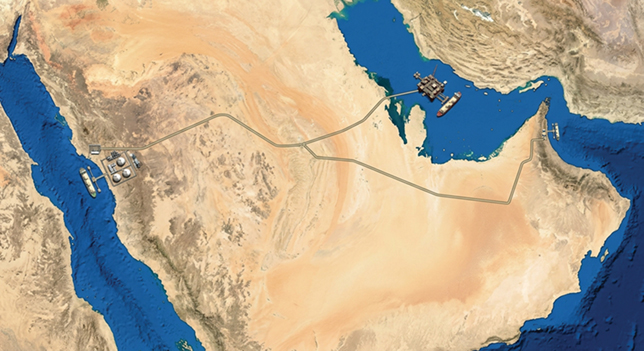
Regional exports, including shipments through alternative
routes, fell by 2.1 mb/d to 15 mb/d after the Strait of Hormuz was effectively
closed again in early July and oil infrastructure and tankers came under
attack.
The disruptions have also tightened refined-product markets.
Global refinery crude throughput rose by 1.8 mb/d in July but remained nearly 5
mb/d below year-earlier levels at 80.9 mb/d.
The IEA cut its
third-quarter refinery run forecast by another 370,000 b/d amid continued
Middle East product export disruptions and attacks on Russian refineries.
Refining margins in the Atlantic Basin reached record highs
as diesel, jet fuel and gasoline markets tightened amid strong seasonal demand,
supply shortages and depleted inventories.
Global observed oil inventories fell by 69 million barrels
in July, driven largely by a sharp decline in oil held at sea.
Total observed stocks dropped below 7.9 billion barrels,
with cumulative draws since the end of February reaching 410 million barrels.
Oil prices reflected the heightened uncertainty, trading
within an unusually wide range of almost $40 a barrel in July.
North Sea Dated crude rose $25.67 a barrel during the month
to close at $96.80, before easing to around $92 a barrel.
The IEA said the global oil market is expected to post a
deficit of 1.8 mb/d in the third quarter, more than double its previous
estimate, while warning that rapidly depleting inventories are reducing the
market’s ability to absorb further disruptions. -OGN/TradeArabia News Service