







































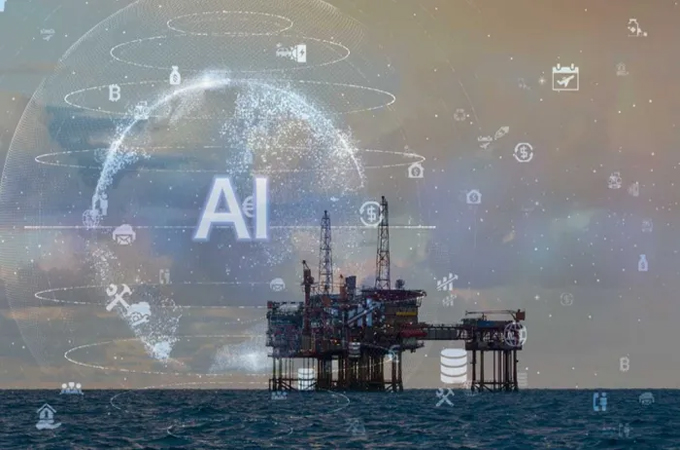
ExxonMobil’s use of artificial intelligence (AI) to identify four new exploration opportunities in Guyana’s prolific Stabroek Block highlights the growing role of digital technologies in the country’s rapidly expanding oil sector.
The company is applying AI, machine learning,
high-performance computing and advanced seismic imaging to historical
discoveries, drilling results and subsurface data.
The approach could help accelerate exploration, lower costs
and improve the chances of identifying new hydrocarbon resources.
The development comes as Guyana targets crude oil production
of 1.3 million barrels per day by 2027 and 1.7 million b/d by 2030, increasing
the importance of technology in maximizing offshore resources.
In May, ExxonMobil Vice President of Exploration John Ardill
said the company was expanding its use of deep learning, machine learning and
high-performance computing to analyze seismic data and identify prospects that
had previously been difficult to evaluate.
ExxonMobil is also expanding its offshore drilling
programme. The company has started drilling the Whiptail development well and
Rockhead-1 exploration well in Guyana’s Exclusive Economic Zone.
It has also sought environmental approval for the Haimara
gas-condensate development and proposed a 35-well drilling campaign from 2028
to 2033.
The growing use of AI and advanced digital tools is expected to create opportunities for technology providers, seismic specialists, engineering companies and oilfield service firms supporting Guyana’s increasingly data-driven exploration and development activities. -OGN/TradeArabia News Service