




















































 USS George Washington
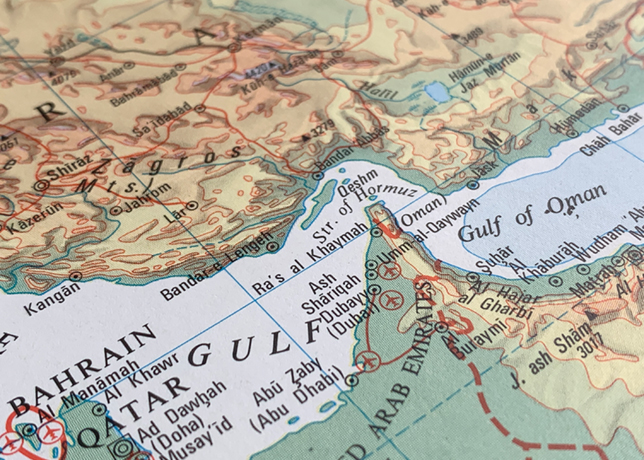
Two ADNOC vessels were attacked while transiting the Strait of Hormuz on Thursday, adding to growing tensions in the strategic waterway as the United States prepares tougher economic measures against Iran.
The attacks came as Washington threatened unprecedented sanctions on Tehran and said it could maintain its naval blockade of Iranian ports indefinitely.
The crisis is also putting growing pressure on global oil supplies. The International Energy Agency has warned that oil stockpiles are falling rapidly, making the reopening of the Strait of Hormuz increasingly urgent.
ADNOC said the two vessels were attacked while transiting the Strait of Hormuz on Thursday evening. No injuries were reported and the situation was brought under control. The company did not initially disclose the vessels' names, cargoes or the extent of any damage.
The UAE subsequently accused Iran of carrying out the attacks, with its Foreign Ministry describing them as hostile acts and accusing Iran's Revolutionary Guards of using the strait as a tool of economic pressure.
Iran has not publicly accepted responsibility for the attacks. The incident was the second involving an ADNOC-linked vessel in less than a week.
The attacks underline the growing danger facing commercial shipping even as Washington and Tehran continue to make competing claims over control of the waterway.
Environmental crisis adds another layer
The conflict is also generating an increasingly serious environmental threat.
Iran has demanded compensation for pollution in the Gulf after footage showed oil washing up on beaches around Qeshm Island.
Separately, an oil spill from the tanker Caroline Bezengi, stranded off Oman's coast, has spread dramatically. Greenpeace estimates the slick at about 1,300 sq km, or roughly 500 square miles. The tanker was carrying nearly one million barrels of crude and has been linked to Russia's sanctioned "shadow fleet". Satellite imagery indicates that the vessel has sunk further since it grounded.
The spill has reached Oman's coastline and threatens sensitive marine ecosystems in the Arabian Sea, adding an environmental dimension to a crisis already disrupting energy markets and shipping.
US threatens unprecedented economic pressure
Washington is responding to the continuing standoff with a combination of military and economic pressure.
US Treasury Secretary Scott Bessent said the administration would announce measures against Iran next week that would amount to economic isolation "like the world has never seen before". He said the campaign would be combined with the continuing blockade of Iranian ports.
"Watch this space for more announcements coming next week," Bessent said, signalling that the sanctions campaign is likely to expand beyond the measures already imposed on Iran's financial networks.
The Treasury Department has already targeted individuals, exchange houses and companies in several countries that Washington accuses of helping Iran's shadow-banking system move hundreds of millions of dollars. The latest action is the eighth US sanctions package this year aimed at networks allegedly helping Iran evade financial restrictions.
The strategy reflects President Donald Trump's stated preference for using economic pressure to force Tehran to make concessions. Trump has said the United States is watching Iran's deteriorating economy, high inflation and lack of access to money rather than immediately escalating the military campaign.
But the economic campaign is being reinforced by military power.
Defense Secretary Pete Hegseth said the US Navy could maintain the blockade indefinitely by rotating ships in and out of the region. The blockade has already inflicted severe economic damage on Iran by restricting shipping and cutting access to hard currency.
New US carrier heads for the region
The Pentagon is also maintaining a substantial naval presence in the region.
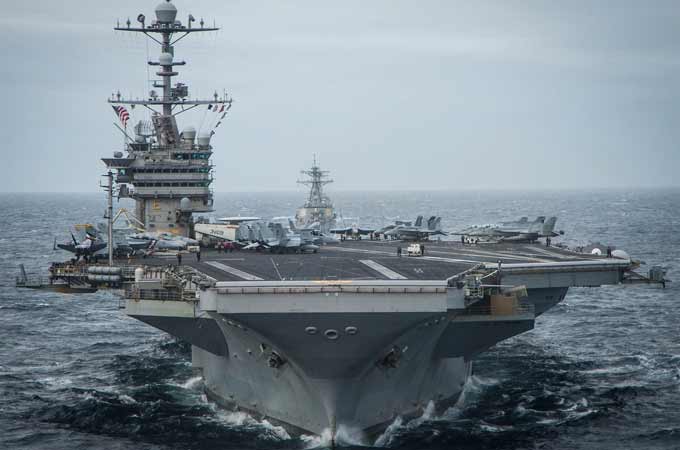
The USS George Washington is heading towards the Middle East to replace the USS Abraham Lincoln, which has been deployed for an exceptionally long period supporting US operations in the Iran war. The rotation had reportedly been planned, but its timing comes as Washington prepares for a prolonged confrontation with Tehran.
The Lincoln's deployment has also generated growing concern among US lawmakers and families of sailors over reported shortages, deteriorating conditions and the strain of an extended deployment. The Pentagon has disputed some of the reports, but Defense Secretary Hegseth has acknowledged the need to rotate the crew and return the carrier home.
Iran challenges Trump's claim of control
The military standoff is accompanied by an increasingly sharp war of words over who controls the Strait of Hormuz.
Trump has repeatedly claimed that the United States has "total control" of the waterway. Iranian Foreign Minister Abbas Araghchi rejected the assertion, warning Washington to be careful and accusing it of relying on false intelligence.
Actual shipping movements provide a more complicated picture. Traffic through the strait remains severely constrained. Reuters reported that only eight vessels passed through the waterway on Tuesday, compared with about 130 to 140 vessels a day before the war.
Iran has also made clear that it does not intend to restore normal shipping merely in response to US military pressure. Tehran has linked the reopening of the waterway to wider demands, including the removal of sanctions and the release of frozen Iranian assets.
Global oil cushion is shrinking
The economic consequences are now extending well beyond the Gulf.
The IEA said global observed oil inventories fell by 69 million barrels in July, taking total stocks below 7.9 billion barrels — the lowest level since April 2025. Inventories have fallen by about 410 million barrels since the start of the war, equivalent to an average draw of 2.7 million barrels a day.
The agency said the urgency of reopening the Strait of Hormuz has increased because previously available inventory buffers are rapidly being depleted.
The IEA now expects global oil supply to decline by 4.3 million barrels per day in 2026, compared with its previous forecast of a 3.7 million-barrel-a-day decline. Gulf production remains severely disrupted, with 8.3 million barrels per day of Gulf output still shut in, according to its latest report.
The agency expects the global oil market to remain in deficit in the third quarter, with the shortfall now estimated at 1.8 million barrels per day — more than double its previous forecast.
That makes the reopening of Hormuz increasingly important even if oil prices have recently moved lower.
Oil prices fall, but risks remain
Brent crude was around $87.09 a barrel on Friday, while US West Texas Intermediate was around $81.29. The decline reflected weaker demand expectations, higher US crude inventories and the ability of China and other major consumers to draw on accumulated stocks.