


































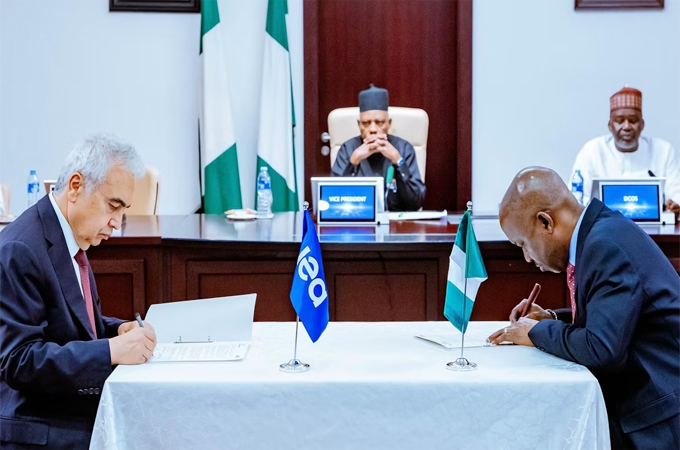
Nigeria has formally begun a new phase of cooperation with the International Energy Agency (IEA), following its admission as an Association country and the signing of the first IEA-Nigeria Joint Work Programme.
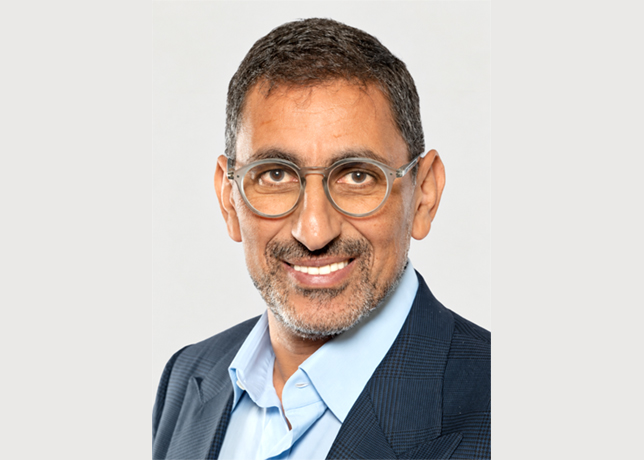
IEA Executive Director Fatih Birol met with Vice President
Kashim Shettima, Minister of State for Petroleum Resources (Gas) Ekperikpe Ekpo
and senior government and energy-sector officials in Abuja this week.
The visit marked a significant step in strengthening
Nigeria’s engagement with the global energy community.
The IEA Governing Board unanimously approved Nigeria’s
admission as an Association country in June.
Nigeria, Africa’s most populous nation and one of its
largest economies, is a major oil and natural gas producer and an increasingly
important participant in regional and global energy markets.
During his meeting with Vice President Shettima at the Aso
Rock Presidential Villa, Birol discussed Nigeria’s energy and economic
priorities and the opportunities presented by closer cooperation with the IEA.
“Nigeria’s admission as an association country with the IEA
is a significant milestone for our country and it reflects Nigeria’s strategic
importance in the global energy landscape and the confidence that IEA has
placed in our commitment to constructive international energy cooperation,”
Vice President Shettima said. “The country will benefit from IEA’s
institutional knowledge, the intellectual resources, the reach and expertise to
support our nation’s ambitions in this sector.”
“Nigeria joining the IEA Family is a landmark moment – for
Nigeria, for Africa and for the IEA,” Dr Birol said. “Nigeria is one of the
world’s most important emerging economies and a major energy producer, with a
young and rapidly growing population. Its voice and experience belong at the
heart of the global energy conversation. It was a pleasure to meet with the
Vice President and Nigeria’s energy leaders in Abuja as we begin this new
chapter together. Our partnership, with special thanks to Minister Ekpo as the
host and driving force behind this, will help the IEA engage more deeply with
energy systems in Africa, while leveraging our expertise and international
network in support of Nigeria’s priorities – from strengthening energy security
and further realising its huge energy potential to expanding access to
electricity and clean cooking solutions.”
Minister Ekpo said the new programme demonstrated Nigeria’s
commitment to the partnership and its participation in international energy
discussions.
“I am delighted to host the IEA Executive Director in Abuja
to celebrate this important milestone of Nigeria having become an Association
country of the IEA,” Minister Ekpo said. “The signature of our first Joint Work
Programme at the Presidential Villa signals the highest level of commitment of
Nigeria to deliver on this partnership, benefiting from the IEA s tremendous
wealth of knowledge and expertise. Nigeria is honoured to be at the table of
global energy discussions.”
The new partnership also expands the IEA’s engagement across
Africa. With Nigeria joining South Africa, Kenya and Senegal as Association
countries in sub-Saharan Africa, African perspectives will have a greater
presence in the Agency’s activities.
The IEA Family now represents more than 80% of global energy
demand, compared with around 40% in 2015, reflecting the Agency’s expanded
engagement with emerging and developing economies.
Nigeria brings significant energy resources and challenges
to the partnership. With more than 240 million people, the country is a major
oil and gas producer and exporter and has a growing off-grid renewable energy
sector.
However, it also faces rising energy demand, investment
needs and challenges in expanding reliable and affordable electricity and clean
cooking access.
The Joint Work Programme provides a roadmap for cooperation
in energy security, investment, data and statistics, energy efficiency and
clean cooking.
It will also support policy advice, analysis, training and
data cooperation between Nigerian institutions and IEA experts.
The programme builds on more than a decade of cooperation,
including recent work on energy data, capacity building and methane emissions.
In February 2026, Nigeria and the IEA also signed a Memorandum of Understanding in Paris to strengthen policy dialogue, data exchange, capacity building and international engagement. -OGN/TradeArabia News Service