


































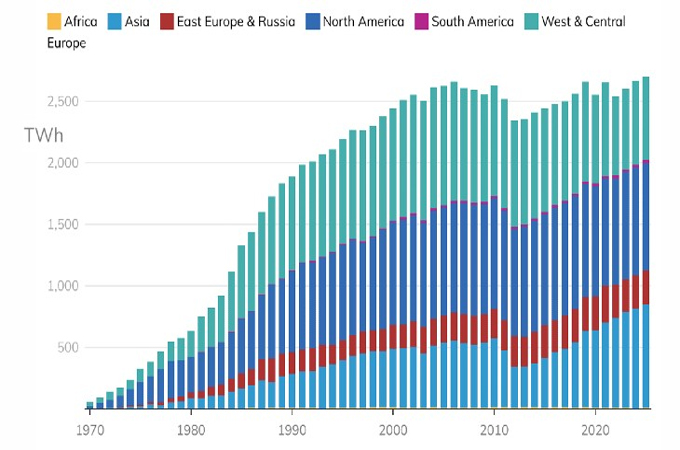
Global nuclear reactors generated a record 2,702 TWh of electricity in 2025, up from 2,667 TWh the previous year, as the sector sees growing government ambitions for expansion, according to the World Nuclear Association’s World Nuclear Outlook Report.
The report said global nuclear capacity
could reach 1,457 GWe by 2050 if all national targets are
achieved and the existing fleet continues operating.
That would be more than triple
current capacity of 423 GWe, exceeding the global tripling
ambition endorsed by 38 countries.
Nuclear plants also maintained strong reliability,
with the global fleet recording an average capacity factor of
83.7 per cent in 2025.
Construction activity increased, with 82 GWe under
construction and 11 reactors beginning construction during
the year.
Planned, proposed and potential capacity rose to
416 GWe, although about 550 GW of proposed capacity through
2050 has yet to become specific projects.
The report identified the USA, China, France, Russia
and India as likely to account for the largest share of
future capacity additions, reflecting continued expansion
among established nuclear power users.
Sama y León, World Nuclear Association Director
General, said: "This is an extraordinary moment for nuclear
energy. Reflecting on another year of record performance, and
looking ahead to a future of record ambition, governments
are clear: they need much more nuclear energy to address
the interconnected challenges of energy security, affordability,
competitiveness and climate goals.
"But ambition alone will not deliver 24/7
clean energy. That's why the Association has published
recommendations that set the path towards tripling
global nuclear energy capacity by 2050. We need to
make full use of the existing fleet, complete reactors
already under construction, capitalising on the
acquired capabilities, commit to the next projects and move
from individual projects to sustained programmes of deployment."
The association called for durable policy and
investment frameworks, streamlined regulation, stronger supply chains,
workforce development and wider deployment of proven reactor
technologies.
It also stressed that maintaining and extending existing reactors remains the fastest and most cost-effective way to secure low-carbon electricity. "For the rest of this decade, the focus must be on turning national ambitions into credible project pipelines, supported by the institutions, investment, people and industrial capacity needed to deliver them."