







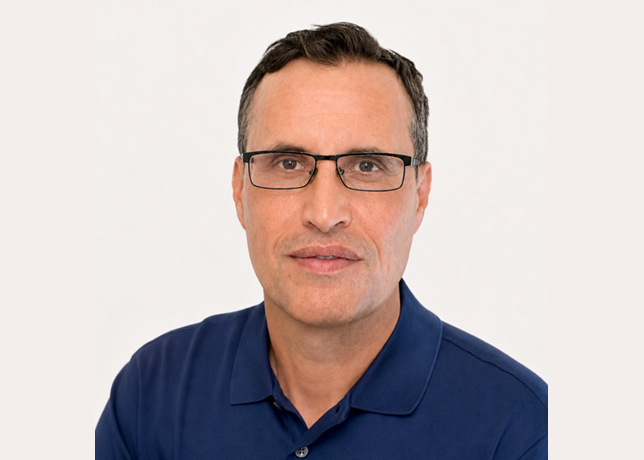















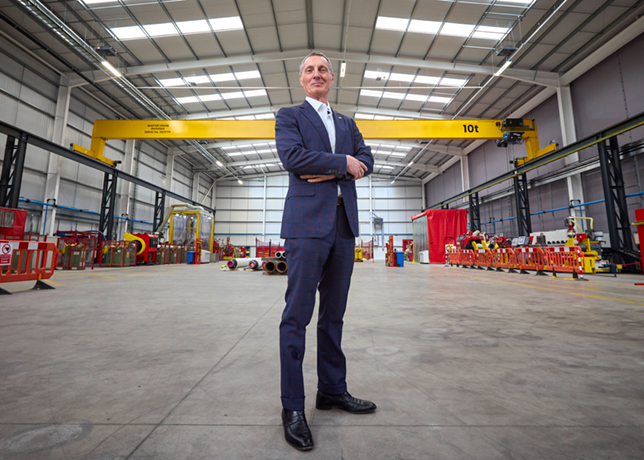

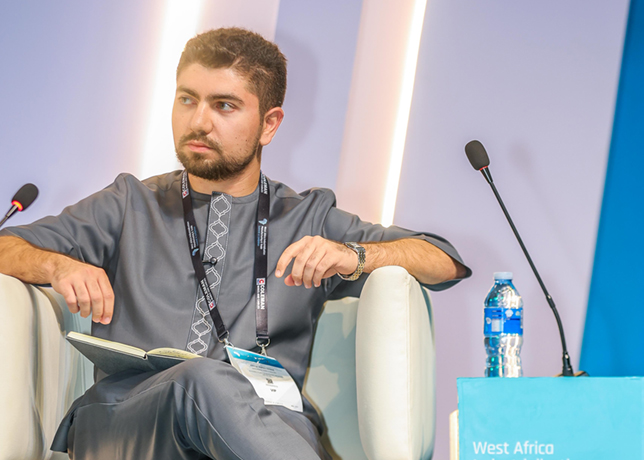




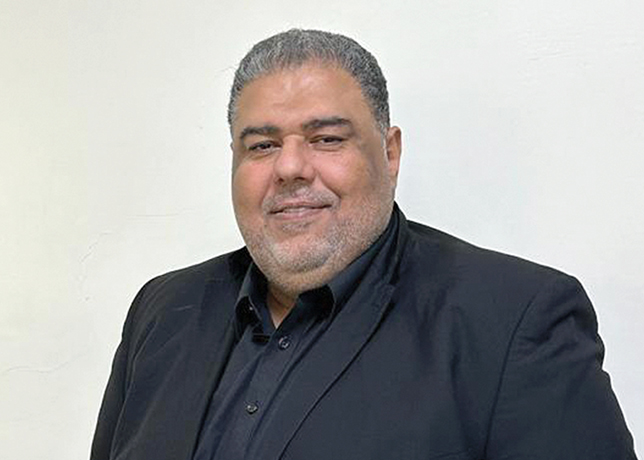






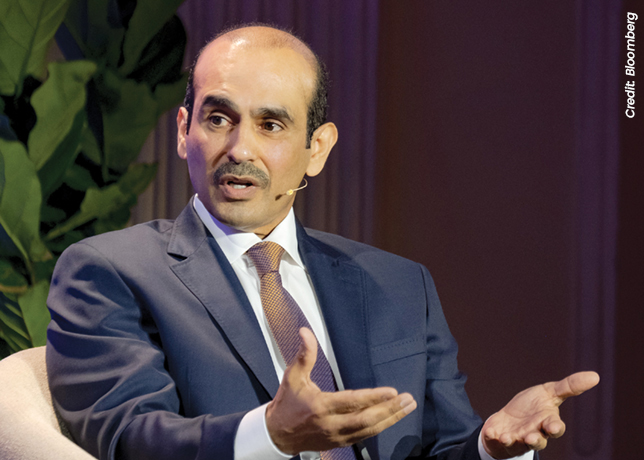
 Jack Chen
As state utilities across the Middle East accelerate multi-gigawatt solar integration and pioneer green hydrogen megaprojects, grid reliability hinges on bankable, utility-scale energy storage.
In an exclusive interview with OGN energy
magazine, Jack Chen, Head of Energy Storage, MEA Region at Trinasolar, outlines
how its integrated DC+AC architecture addresses the region’s strict
commissioning timelines and demanding operational conditions.
From maintaining cell-to-cell temperature variations under
2.5 deg C in extreme 50 deg C desert heat to delivering sub-10-millisecond
grid-forming responses, Trinasolar’s engineering strategy balances active
cooling parasitic loads against long-term lifecycle economics.
By executing complete factory-level testing, keeping cell
supply-chain traceability in-house, and deploying localised engineering support
across MEA, Trinasolar offers developers a blueprint to mitigate execution
risk, lower LCOS, and future-proof battery assets for emerging long-duration
and high-frequency regulation markets.
Below are excerpts from the interview:
As state utilities in Saudi Arabia and the UAE scale up
multi-gigawatt solar assets, what operational boundary determines whether
developers choose fully integrated DC+AC packages over modular, multi-vendor
BESS architectures?
Integrated systems minimise deployment and operational risk
through single-vendor accountability, while modular approaches favour
technology flexibility.
The right choice tends to come down to a developer’s risk
tolerance, procurement strategy, and in-house operational expertise.
For the multi-gigawatt state utility programmes scaling up
across Saudi Arabia and the UAE, that trade-off tends to favour integration.
At that scale, coordinating multiple vendors across DC and
AC scopes multiplies interface risk and adds time to an already tight
commissioning schedule, the specific problem Elementa + Electra was built to
remove.
The platform combines the Elementa 3 DC battery system with
the 13.8-MVA Electra AC platform as a single, factory-tested package,
delivering up to 50-MWh of storage capacity with configurable 2-8 hour
durations.
Because the DC and AC sides are engineered and tested
together rather than integrated on-site, the system achieves up to 96 per cent
full-chain efficiency, while containerised transport and factory-level testing
cut commissioning time by up to 50 per cent.
Considering green hydrogen megaprojects in Oman and Saudi
Arabia, what is the economic calculus of deploying multi-gigawatt LFP storage
for electrolyser capacity factors versus grid-supplied power?
LDES is a key enabler for multi-GW green hydrogen projects
in Oman and Saudi Arabia, where large solar and wind portfolios must be
combined to deliver a higher and more stable electrolyser capacity factor.
Elementa supports configurable multi-hour storage, enabling
surplus renewable generation to be shifted across extended periods and reducing
reliance on grid-supplied power.
At plant level, Trina BESS can firm the combined solar-wind
profile, manage intermittency and ramping, and maintain electrolyser loading
during renewable shortfalls.
This allows developers to increase renewable utilisation and
electrolyser operating hours while maintaining the low-carbon credentials of
hydrogen production to optimise the balance between renewable oversizing,
storage duration, electrolyser capacity factor and grid dependency, ultimately
targeting a lower LCOH.
How does Trina Storage intend to capture long-duration
storage market share in MEA if 4-hour LFP economics hit a ceiling against
emerging alternative chemistries?
Trina Storage’s strategy for long-duration storage is to
extend the capability of proven LFP technology while maintaining flexibility
for future chemistry evolution.
The Elementa platform supports configurable 2-8 hour
durations, enabling Trina to address emerging LDES applications in MEA without
requiring developers to immediately transition to less mature storage
technologies.
For 6-8 hour applications, system optimisation,
high-energy-density cells, liquid cooling and lifecycle management can continue
to improve LFP economics at plant level.
Beyond this range, Trina Storage will evaluate technology
based on LCOS, safety, bankability, degradation and regional operating
conditions, rather than chemistry alone, retaining a technology roadmap capable
of integrating next-generation chemistries as they become commercially
bankable.
The Elementa platform addresses emerging LDES applications
in MEA
What are the primary supply chain and logistical
bottlenecks currently delaying utility-scale BESS grid synchronisation across
the Middle East?
Two bottlenecks stand out in the region right now: The first
is a shortage of qualified system integrators and BESS-experienced engineers,
which tends to stretch out on-site execution timelines.
We ship the DC and AC sides in containerised form and
complete factory-level testing before anything leaves the plant, so most
integration work happens off-site.
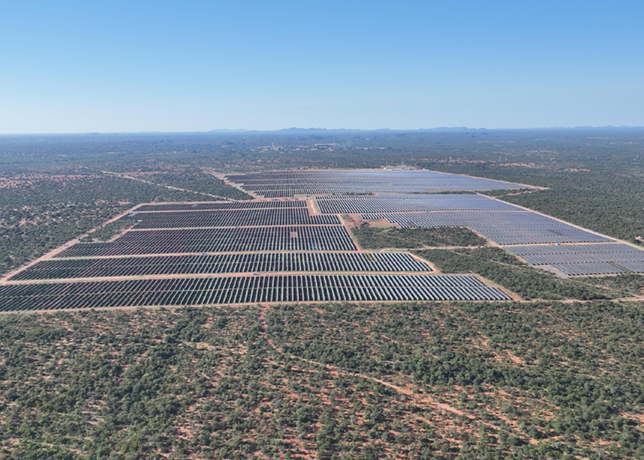
At the 300-MWh Abydos BESS in Egypt, where we were the
exclusive energy storage partner, the system was installed and connected to the
grid in just 60 days.
The second is supplier qualification for battery
traceability systems; onboarding a third-party vendor can take 6 to 12 months,
pushing back commissioning before construction even starts.
We keep traceability in-house: Our manufacturing execution
system tracks every battery cell across more than 2,100 process checkpoints,
generating upwards of 15 production traceability reports per project.
How does Electra achieve 10 ms full-power response with
synthetic inertia and grid-forming capability, given complex local grid
protocols?
It delivers full-power response in as fast as 10 ms, with
fast active and reactive power control supporting grid-forming, grid-following,
voltage/frequency regulation, synthetic inertia and black-start capability.
These critical dynamic functions are executed locally at the
PCS level, independent of slower plant-level commands.
For system integration, Electra provides native IEC 61850
and Modbus TCP communication with EMS/PPC, enabling high-speed plant
coordination and adaptation to different utility control architectures.
How does Trinasolar guarantee cell-to-cell temperature
variation under 2.5 deg C in desert heat exceeding 50 deg C?
Elementa + Electra uses a three-tier, vein-bionic liquid
cooling system engineered specifically to hold cell temperature variation at
≤2.5 deg C.
Rather than running fixed cooling parameters, the system
uses a self-developed decision-making programme that continuously monitors each
cell’s real-time thermal field and adjusts coolant temperature and operating
mode accordingly.
The platform is rated for -35 deg C to 55 deg C ambient
operation, and the Elementa series has completed operational validation in
extreme environments including harsh dessert conditions.
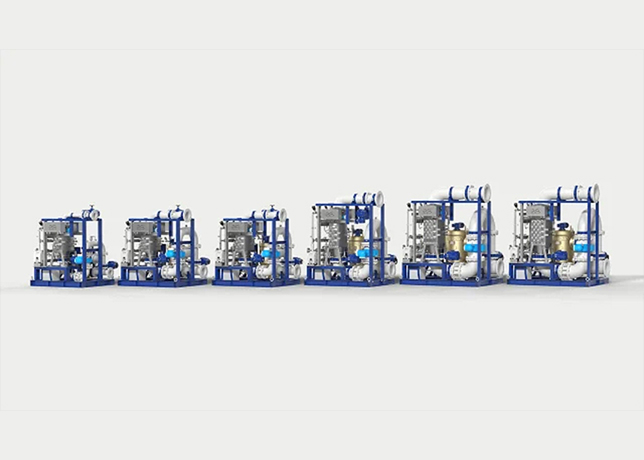
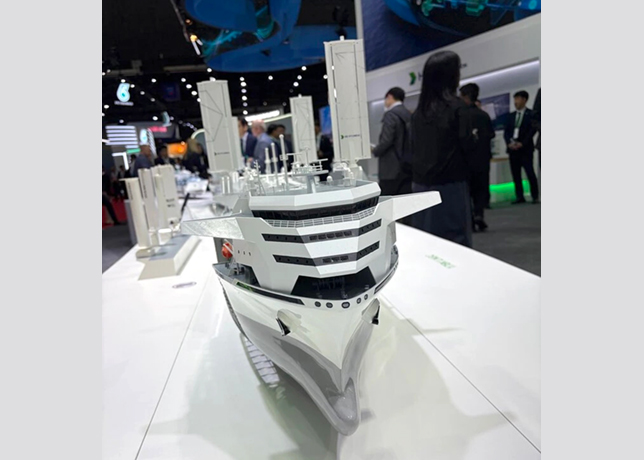
The Elementa plus Electra delivers 50-MWh of storage
capacity with 2-8 hour durations
What specific auxiliary power overhead is required to run
active liquid cooling in high-heat GCC environments, and how does that
parasitic load impact overall levelised cost of storage calculations?
For GCC applications, Trina Storage optimises liquid-cooling
auxiliary consumption against battery lifetime rather than simply minimising
HVAC power.
Verified field auxiliary consumption has been demonstrated
as low as 1.8 per cent.
From an LCOS perspective, cooling represents a parasitic
energy cost, but effective thermal management improves usable energy
throughput, round-trip efficiency and capacity retention over the project life.
Therefore, the economic benefit is evaluated on a lifecycle
basis, auxiliary energy consumed versus degradation avoided and additional
lifetime MWh delivered.
How does Trinasolar adapt its cell degradation guarantees
to protect developer revenue models against harsh cycling profiles for
frequency regulation?
Trina Storage addresses high-cycling applications by
aligning cell capability, degradation modelling and operating strategy with the
project’s actual duty cycle.
For frequency regulation, Trina evaluates the expected
cycling profile, depth of discharge, C-rate, temperature and energy throughput
when defining the system operating envelope and long-term performance
commitments.
This is supported by Trina’s in-house cell technology, with
the latest 314 Ah cell designed for up to 15,000 cycles, together with
intelligent BMS and thermal management that control SOC, temperature and
cell-to-cell variation to limit accelerated ageing.
Independently verified field data showing 98 per cent
usable-capacity retention after more than one year of operation further
demonstrates the platform’s degradation performance.
What fire safety architecture and thermal runaway
propagation safeguards are built into Elementa for regional civil defence
standards?
Elementa incorporates a certified, standards-driven
fire-safety architecture from cell to system level. At cell level, UL 9540A
validates thermal runaway behaviour, while UL 94-5VA flame-retardant pack
covers provide an additional passive protection layer.
Rack/system-level UL 9540A testing verifies resistance to
thermal runaway propagation.
At container level, the fire protection architecture is
designed and certified to NFPA 13 for sprinkler protection, NFPA 68 for
deflagration venting, NFPA 69 for explosion prevention and combustible-gas
management, and NFPA 72 for fire detection and alarm.
The overall BESS installation and fire-safety design
complies with NFPA 855 requirements.
With national localisation mandates, such as Saudi
Arabia’s iktva and the UAE’s In-Country Value programmes expanding, what
concrete commitments is Trina Storage making toward regional assembly, system
integration, or localised engineering support?
Our commitment on the ground is built around system
integration and long-term engineering support rather than a fly-in, fly-out
model.
Across MEA, we work with established distributors, EPCs, and
service partners who provide on-the-ground engineering support, installation,
commissioning, and long-term operations and maintenance backed by a global
network of 31 service centres and 230+ service engineers across 100+ countries
and regions.