





































 Image by Zotyesz/ iStock
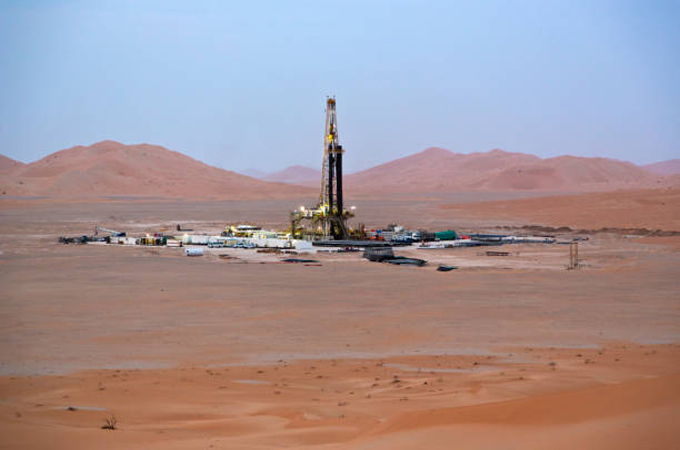
China’s largest desert oil field has produced more than 26 million tonnes of oil and gas from ultra-deep reservoirs, with resources located more than 6,000 meters underground, according to China National Petroleum Corporation (CNPC).
The Hade-Fuman oil field, on the northern edge of the
Taklimakan Desert in northwest China’s Xinjiang Uygur Autonomous Region, has
become a major center for ultra-deep oil and gas production.
In a recent development, oil workers successfully retrieved
core samples from a depth of 8,080 meters at the Zhentan-1 well.
The rocks, estimated to be around 500 million years old,
represent the first core recovered from more than 8,000 meters in the
northwestern Tarim Basin.
The samples are expected to provide geological data to
support exploration of ultra-deep oil and gas resources.
"With these valuable rocks, we can analyze and evaluate
the generative capacity of oil and gas below 8,000 meters, the thickness of the
oil and gas reservoirs, and the maturity level of the oil and gas," said
Xu Yanan, director of the project department of CNPC Tarim Oilfield Branch.
CNPC’s Tarim Oilfield has accelerated development of
ultra-deep resources beneath the Taklimakan Desert. A total of 485 ultra-deep
wells have been drilled at Hade-Fuman, including 133 oil wells that have each
produced more than 100,000 tonnes of oil and gas.
"We have extracted 20.36 million tonnes of crude oil
and 8.15 billion cubic meters of natural gas from the ultra-deep strata in the
Taklamakan Desert. The oil and gas equivalent exceeds 26.86 million tonnes. The
17,000-square-kilometer expanse of sand has been transformed into a hot spot
for oil and gas exploration and development," said Lu Zhongyuan, engineer
of CNPC Tarim Oilfield Branch.
The Tarim Basin remains a key growth area for China’s oil
and gas sector, with proven reserves exceeding 5 billion tonnes, more than half
of which are in ultra-deep formations.