


















































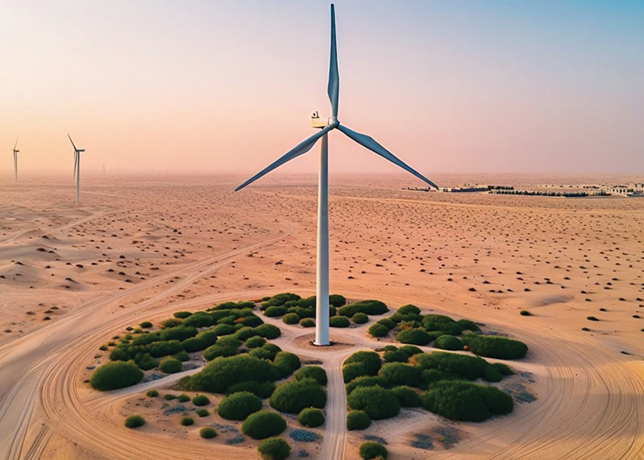
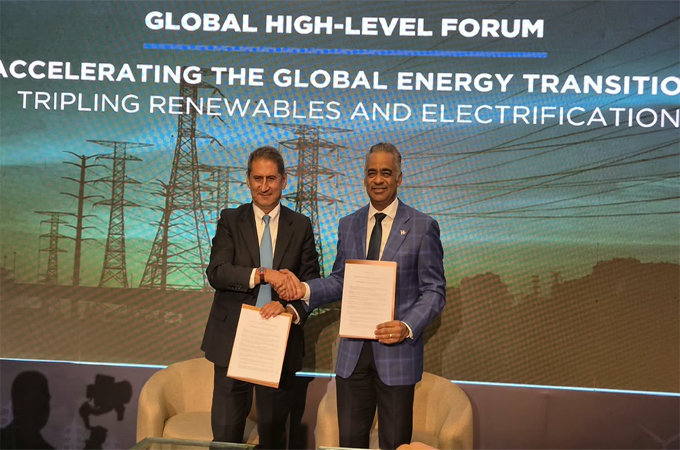
The International Renewable Energy Agency (IRENA) has launched a new regional cooperation platform aimed at accelerating renewable energy deployment and investment across Latin America and the Caribbean, where renewables already account for around two-thirds of electricity generation.
The Partnership for Accelerating Renewables in Latin America
and the Caribbean (PARLAC) was launched in Santo Domingo, Dominican Republic,
during a Global High-Level Forum on Energy Transition co-chaired by Joel
Santos, the Dominican Republic’s Minister of Energy and Mines and current
President of the IRENA Assembly, and IRENA Director-General Francesco La
Camera.
The initiative seeks to bridge the gap between countries’
energy transition ambitions, planning and implementation by helping governments
translate long-term strategies into practical projects and investment
programmes that deliver socioeconomic benefits.
PARLAC will support regional cooperation on renewable energy
technologies and electrification, complementing existing initiatives such as
the SIDS Lighthouses Initiative.
As a platform for IRENA member states, it will coordinate
action with strategic partners and promote national, regional and cross-border
energy transition projects.
During the launch, IRENA and the Dominican Republic
government signed a Letter of Intent to strengthen cooperation on energy
transition, focusing on policy planning, investment facilitation and knowledge
sharing.
Mobilising private capital remains a key challenge for the
region, despite its abundant renewable energy resources and significant
potential for further deployment.
IRENA estimates that decarbonising Central America’s power
system will require approximately $3.5 billion in annual investment through
2050, covering renewable generation, transmission, distribution and related
infrastructure.
In South America, achieving the Paris Agreement’s climate
objectives would require around $500 billion annually in energy projects and
end-use applications over the next 25 years, according to the agency.
Meanwhile, Caribbean countries may need approximately 4
gigawatts of additional renewable energy capacity and $9 billion in investment
to meet the ambitions outlined in their national climate plans.
The investment requirements highlight the scale of financing
needed to expand renewable generation, modernise electricity networks and
support wider electrification across the region.
To address these challenges, IRENA and the Dominican
Republic’s Ministry of Energy and Mines also hosted the first Central America
and the Caribbean Energy Transition Investment Forum in Santo Domingo.
The event took place alongside the OLACDE Energy Minister
Meeting and Energy Week.
The forum aimed to strengthen engagement between
governments, investors and other stakeholders, helping identify opportunities
to finance renewable energy projects and accelerate implementation.
Through PARLAC, IRENA aims to strengthen regional coordination, facilitate investment and support countries in turning renewable energy potential into concrete development opportunities, while advancing broader energy transition and climate objectives across Latin America and the Caribbean. -OGN/TradeArabia News Service