






































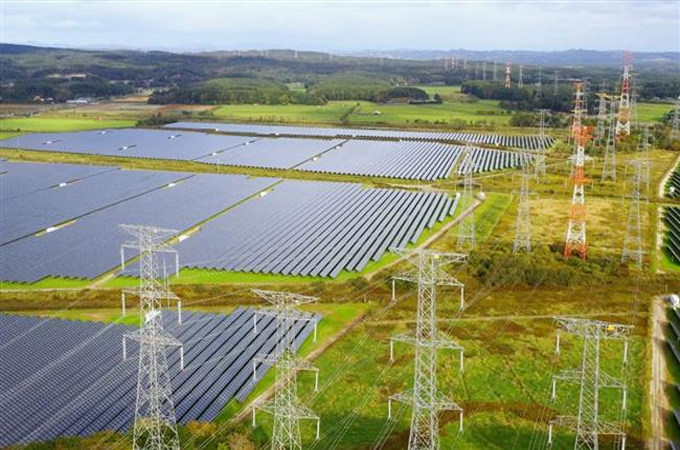
The global energy transition must accelerate through renewable-powered electrification, energy efficiency and major investments in grids and storage to remain aligned with the 1.5 deg C climate target, the International Renewable Energy Agency (IRENA) said in its 2026 World Energy Transition Outlook (WETO).
The report calls for urgent reforms over the decade to 2035,
stressing that a genuine energy transition requires progressively replacing
fossil-fuel systems rather than simply adding renewable capacity to an
unchanged energy mix.
While renewable energy additions continued to break records
in 2025, grid infrastructure has struggled to keep pace with deployment, global
energy demand has surged, and energy efficiency improvements have fallen
significantly short of the required rate.
IRENA said global installed renewable power capacity must
increase from 5.2 terawatts (TW) today to around 38.2 TW by 2050.
Electricity’s share of final energy consumption must rise to
35 per cent by 2035 and more than 50 per cent by 2050, with solar and wind
expected to supply over 80 per cent of global electricity by mid-century.
Without sufficient investment in energy efficiency, grids,
storage and system flexibility, the report warned, these critical components
could become bottlenecks to the transition.
Francesco La Camera, Director-General of IRENA said: “The
global energy transition is under stress. Record growth in renewables is not
enough on its own: energy efficiency is falling short, grids are struggling to
keep pace, and global energy demand continues to surge. We cannot deliver the
transition by simply adding renewables to an unchanged energy system. We need
reforms to build the infrastructure of a new energy system — one that is
electrified, efficient, flexible and powered by renewables.”
He added: “Electrification, grids, storage, flexibility and
energy efficiency are not merely supporting elements at the margins of this
transformation; they are its backbone. The central question is how rapidly we
can deploy these solutions together, at the scale required to keep the
transition aligned with 1.5 deg C while ensuring energy security,
affordability, competitiveness and broader social acceptance.”
The report also highlights the economic benefits of
accelerating the transition.
Under IRENA’s 1.5 deg C scenario, global economic growth
would exceed the business-as-usual trajectory by 1.1 per cent annually,
generating cumulative economic gains of around $46 trillion by 2050.
Renewable energy employment could increase more than
fivefold from just over 16 million jobs today, while greater electricity-sector
competitiveness could reduce end-user power prices by 15 per cent by 2050.
Achieving these gains, however, would require cumulative
annual investment of around $10.3 trillion over 2026-2050, with most additional
spending directed towards renewable power, grids, system flexibility and
electrification across end-use sectors.
“The quality of the transition will matter as much as its
speed,” La Camera continued. “Our analysis shows that accelerated
decarbonisation can strengthen investment, productivity, employment and
welfare. Affordability, social protection and fair access to economic
opportunities must be built into implementation from the outset to sustain
public acceptance and ensure that the benefits of the transition are broadly
shared.”
IRENA’s report outlines seven priorities for governments,
including integrated energy and market planning, country-specific transition
roadmaps, grid modernisation, stronger industrial and investment strategies,
social and environmental policies, and deeper international cooperation.
The report concludes that effective policymaking will be
essential to balancing the accelerated deployment of clean energy with
reliability, affordability and energy security.
If managed effectively, the transition away from fossil fuels can strengthen competitiveness, resilience, public health and long-term prosperity while supporting economic development. -OGN/TradeArabia News Service