
























































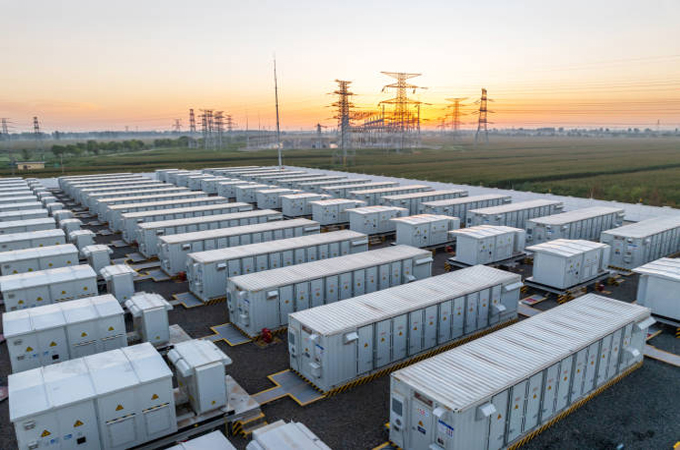
 Image by YoungNH/ iStock
Africa is struggling to translate falling battery prices into increased investment in energy storage, with financing constraints, regulatory uncertainty and infrastructure planning gaps slowing deployment, according to the latest ESI Africa Industry Insights: Energy & Storage Volume 5 (2026).
BloombergNEF data shows stationary battery pack prices fell
to approximately $70/kWh in 2025, a 45 per cent year-on-year decline.
However, of the $13.84 billion in energy transition
investment attracted by Africa during the year, only $666 million, less than 5
per cent, was allocated to storage and flexibility, according to figures
tracked by Electron Intelligence.
Nicolette Pombo-van Zyl, editor-in-chief of ESI Africa, said
energy storage had become a critical factor in determining whether projects
secure financing, electricity grids remain stable after sunset and renewable
energy generation is effectively utilised.
She said capital availability, regulation and data
collection had yet to keep pace with the growing importance of storage in
Africa’s energy development.
The publication examines the economics of battery storage,
including South African modelling that identifies lithium iron phosphate (LFP)
as a leading option for stationary applications.
It also explores how project scale, battery degradation in
hot climates, financing costs, import tariffs and freight charges influence
investment viability.
Emerging battery technologies, their potential impact on
Africa’s mineral value chains, cybersecurity risks and long-duration storage
solutions also feature in the report.
The volume highlights the need for better data on Africa’s
expanding distributed solar market.
According to Ember, approximately 26 GW of solar capacity
was installed across the continent between 2023 and 2025, with only around a
quarter captured in utility-scale and off-grid figures.
Improved project registration and data collection could help
policymakers and grid operators better understand solar deployment patterns and
their implications for electricity networks.
The publication’s African Infrastructure Elites section
highlights storage projects increasingly shaping renewable energy financing,
including Scatec’s Obelisk project in Egypt and Mulilo’s Hartebeesfontein
battery storage project.
Pombo-van-Zyl said the next phase of market development
would depend on regulators, utilities and financiers establishing appropriate
ways to value storage services, protect connected infrastructure and prepare
projects for investment.
She added that these challenges were solvable using existing industry tools and approaches. -OGN/TradeArabia News Service