
































Oman’s Ministry of Energy and Minerals has offered three new mining concession areas covering a combined 2,062 square kilometres, aiming to attract international investment, expand mineral exploration and support the development of an integrated mining industry.
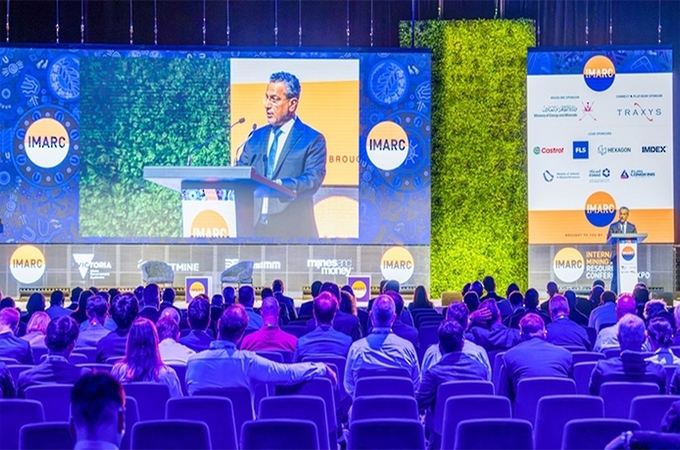
The announcement was made during Oman’s participation in the
International Mining and Resources Conference and Expo in Sydney, Australia,
where the Ministry joined six companies operating in the minerals sector to
showcase the Sultanate’s geological potential and investment opportunities.
The three concession areas offer opportunities for local and
international companies to undertake geological surveys, exploration programmes
and mineral resource assessments, paving the way for future mining projects
subject to technical and economic feasibility studies.
Concession Area 25-C covers 627 square kilometres, with
preliminary geological data indicating potential deposits of manganese, nickel
and laterite ores.
Area 25-F spans 830 square kilometres and has potential for
manganese, nickel and laterite, while Area 22-C extends across 605 square
kilometres and contains geological indicators of copper, chromite and gold,
alongside marble and basalt.
The Ministry’s participation in the three-day event also
aims to strengthen cooperation with Australian and international companies in
advanced mining technologies and promote investment across the mining value
chain, from exploration and resource assessment to mine development, ore
processing and manufacturing.
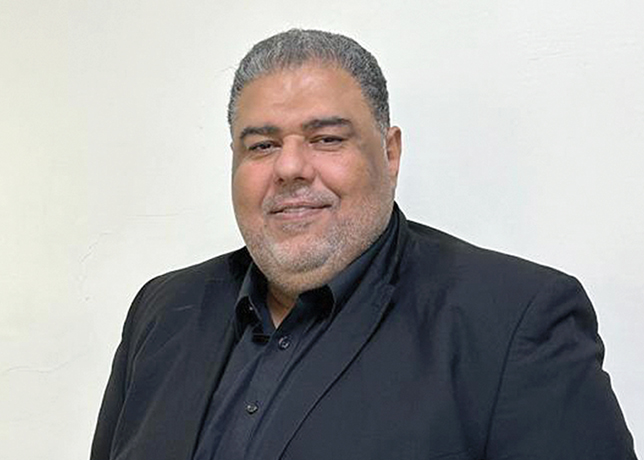
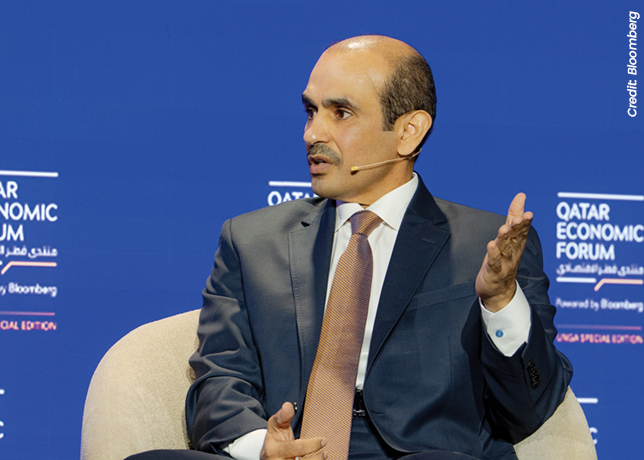
Mohsin Hamad Al Hadhrami, Undersecretary of the Ministry of
Energy and Minerals, said Oman’s participation reflects its strategy to
increase the minerals sector’s contribution to economic diversification and
move beyond resource exploration and extraction towards an integrated mining
industry driven by investment, modern technologies and specialised expertise.
He stressed that mineral wealth alone does not generate
prosperity, noting that its economic benefits depend on investment, knowledge
and technology to transform natural resources into productive projects,
competitive industries and sustainable economic opportunities.
Al Hadhrami invited international companies and investors to
explore the newly offered concessions and establish long-term partnerships that
support resource development, technology transfer and the competitiveness of
Oman’s mining sector.
He added that the Ministry is working to improve the
regulatory and investment environment, simplify procedures and expand digital
services to facilitate the progression of projects from exploration and
assessment to development and production.
These efforts also include adherence to environmental
standards, occupational health and safety requirements, the development of
national skills and greater participation by Omani companies and small and
medium enterprises (SMEs), supporting in-country value and the objectives of
Oman Vision 2040.
Oman’s mineral potential is underpinned by geological
diversity and formations dating back approximately 900 million years. Among its
most significant geological features is the Samail Ophiolite, one of the
world’s most important exposures of oceanic crust and upper mantle.
The country’s identified mineral resources and geological
indicators include copper, chromium, gold, nickel, manganese, zinc, lead,
gypsum, limestone, dolomite, marble, silica, silica sand, gabbro, basalt,
quartzite, clay and salts.
While some resources are commercially exploited, others
remain at the exploration and assessment stages, offering opportunities for new
projects and downstream industries.
At the Sydney exhibition, Oman’s pavilion is presenting the
available concession areas, existing projects and investment services,
providing investors with direct access to Ministry representatives and
participating companies.
Details of the opportunities and application requirements
are available through the Ministry’s Taqa digital platform.
The latest offering follows broader efforts to strengthen
Oman’s mining investment framework over the past five years.
During this period, 28 mining concession areas were awarded
for the exploration and development of various minerals.
The Ministry also improved regulatory frameworks, introduced
an occupational health and safety manual and established the Oman Minerals
Trading Company to regulate ore trading and marketing.
Digitalisation has been another priority, with the Taqa
platform enabling investors to submit and track applications and access
available investment opportunities, improving transparency and concession
management.
The sector has also recorded stronger economic performance.
Mining revenues grew by 39 per cent in 2025 compared with 2024, reflecting the
expansion of mining activities, the entry of copper production projects into
operation and the advancement of several concession areas towards development
and production.
The Mazoon Copper Mine project is among the anticipated
developments expected to support future production and stimulate related mining
activities and services.
Through the new concessions and continued regulatory reforms, Oman aims to attract specialised expertise, increase the value generated from its mineral resources and establish mining as a more significant contributor to economic diversification and sustainable growth under Oman Vision 2040.-OGN/TradeArabia News Service