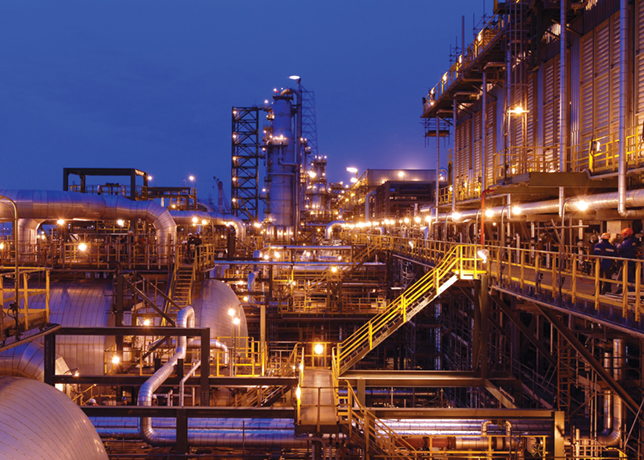


























Decisions made when designing new oil, gas, and petrochemical plants shape the reliability, safety, and operating costs of the plant for decades to come.
And this is clear when creating the site layout and suggesting equipment sizing, for example.
But what about designing for risk mitigation; a key consideration for front-end engineering design (FEED) teams.
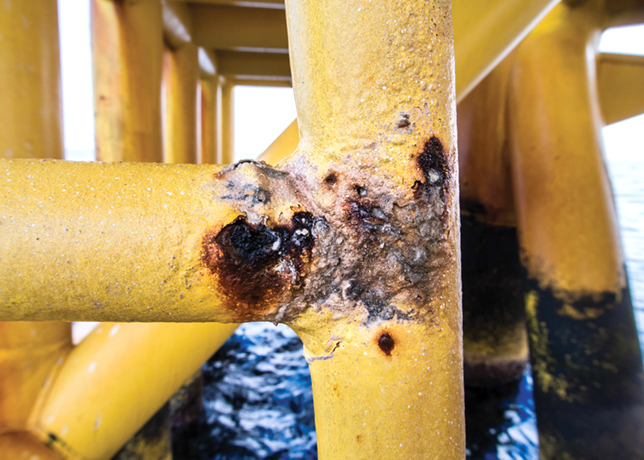
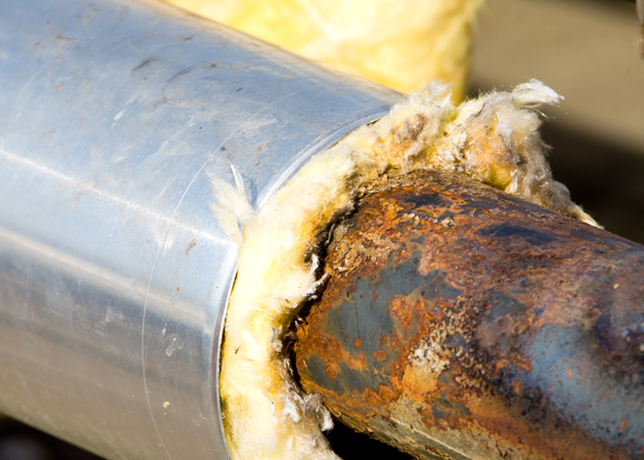
Take the case of corrosion, which poses a significant risk for many infrastructure operators.
According to the NACE Impact Report (2016), the energy industry incurs an estimated more than $2.5 trillion annually, equivalent to around 4 per cent of global GDP.
And yet, there’s a misconception that corrosion only compromises reliability in the later stages of an asset’s service life, with no need to monitor early on.
However, the reality is that corrosion can develop from day one and often in hidden locations.
This example provides a clear justification for FEED teams to embed risk-management technology in new-build designs.
By doing so, engineering, procurement, and construction (EPC) teams will deliver a robust plant that doesn’t surface reliability challenges in the early years.
THE LOWEST COST INSTALLATION WINDOW
Embedding asset risk monitoring technology into new-build design is not only dramatically cheaper than retrofitting, but it also provides timely data to highlight any degradation, ensuring complete asset condition awareness from day one.
There are several reasons why this is a cost-effective option.
Let us take the case of difficult-to-access assets like overhead pipes or even fractionation columns.
Site engineers already have scaffolding in place and teams on-site, so there’s also no need to wait for a shutdown or inspection window to carry out the work.
Every dollar spent before the operation starts is far more cost-effective than adapting the site when it’s producing at full capacity.
By way of example, let’s look at the benefits of installing corrosion under insulation (CUI) monitoring technology before operation begins.
This technology will inform site integrity for decades to come, so having data-informed risk information from the outset makes sense.
A study of operators using CUI monitoring across their sites revealed savings of up to an estimated more than $1.6 million per month, based on reliability and consequence-of-failure scenarios.
And given the high consequences of even a single failure, it’s easy to see how the remediation costs that the operators may face (not to mention the reputational damage) would far exceed the upfront cost of installing CUI monitoring.
When budgeting for a risk-mitigated design, FEED teams and operators should consider the total cost of asset ownership over 20 to 30 years, not just the capex of purchasing and installing it.
By implementing tools that support maintenance from the start of the lifecycle, despite higher upfront costs, you can maximise asset life and productivity, minimise risk, and reduce overall operating costs.
CUI-related failures don’t just risk high maintenance costs; they can also result in fires, injuries, environmental harm, and regulatory scrutiny, and no organisation wants its name attributed to such risks.
For context, an industry analysis of over 600 CUI-related failures (taken from around 3,000 reports) revealed about 30 critical failures and one fatality.
While severe consequences are rare, the risk from CUI is incredibly real.
SIMPLER INSTALLATION DURING CONSTRUCTION
Installing technology during the initial construction of a new-build site is cheaper and safer. It also offers greater design flexibility.
The alternative would be to retrofit the equipment once the site is in operation.
But installation teams would then need to hire extensive scaffolding and make the necessary assets accessible.
Plus, HSE measures are far more complex to navigate when processes are live.
When risk monitoring technology forms part of the initial design scope, installation teams can have full access to new assets before applying any insulation or cladding.
Meanwhile, the work can be carried out to suit the project timeline, enabling an efficient flow of activities, right through to inspection and test plans (ITPs) and quality assurance.
Early installation also offers design and construction flexibility. For example, with CUI monitoring technology, it’s much easier to tailor monitoring layouts to suit modular builds, stick-build projects, and phased construction when installation aligns with construction.
CUI monitoring can help save millions of dollars per month
BUILDING ASSURANCE FROM DAY ONE
By specifying and installing appropriate risk monitoring technology during construction, you provide robust integrity assurance throughout the asset’s life.
This enhances reliability and minimises costly downtime from day one.
With meaningful data from the outset, operators can feel confident assets start their service in the condition intended and trust that the EPC team constructed to scope.
They can also identify any design and construction issues early, ensuring they don’t become a larger, unknown problem.
Without this data, one can never be 100 per cent sure.
Site operators would be uncertain of their asset integrity during the crucial early operation years instead of verifying the quality of the new site.
With technology providing insights from day one, operators can quickly determine whether any identified deterioration or reliability issues are due to the design, construction, or operation of the asset.
This provides clear accountability for everyone, helping to resolve the issue with data clarity rather than subjective opinion.
WHY DATA MANAGES RISK BETTER
Technology has rapidly developed thanks to the advances of predictive technologies, remote monitoring and AI.
Enhancing decision-making, new technologies can now provide oil, gas, and petrochemical operators with timely data to inform and target maintenance schedules.
This means operators can always prioritise the highest-risk locations rather than relying on manual judgement.
Without technology, operators rely on periodic asset inspections, which are time-consuming and non-specific.
They also require immense resources to provide scaffolding for safe access.
Harder still, many oil and gas assets are remote and difficult to reach.
These practicalities alone can limit the frequency of inspection and leave reliability risks hidden from the human eye.
Technology that can remotely monitor assets and deliver continuous data from a broad range of locations (even the most remote) to a central platform enables data-informed decision-making.
Uncertainty falls, and maintenance teams can target activities towards the highest risk locations.
AI and machine learning have also enhanced risk-monitoring technology to help predict areas at risk and the likely rate of deterioration.
This technology-led insight allows asset integrity teams to take control and proactively reduce failure risk (rather than react to failures), while lowering maintenance costs by catching risks early.
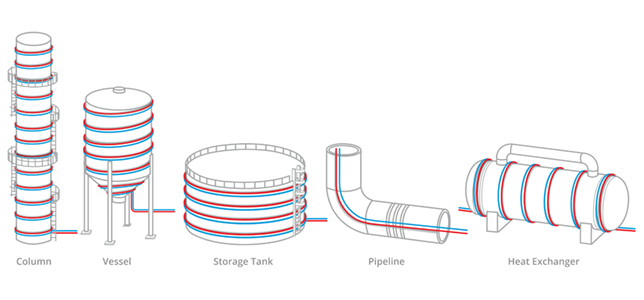
Asset types with sensors
ASSET INTEGRITY DATA AS A STRATEGIC OPERATOR ASSET
It’s important to remember that you’re designing and building a new site that will operate for decades.
By installing risk monitoring technology from the start, operators have a complete dataset to prove its value over time.
Data continuously collected from each asset not only informs their maintenance priorities but also helps validate new site designs and enhance asset management across their entire portfolio.
And should insurance, warranty, or regulatory compliance negotiations become necessary, data informs these too.
Data-driven integrity management lowers operating costs, enhances asset values, and protects everyone’s global reputation.
By investing in this strategic asset from day one, operators always have a comprehensive picture of site integrity.
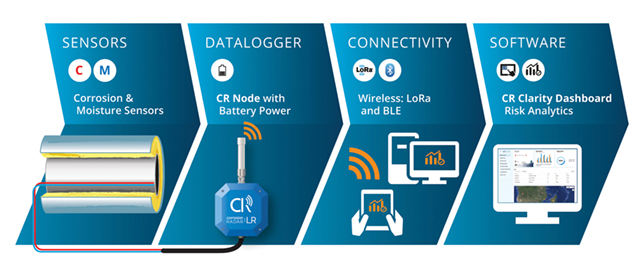
The CorrosionRADAR CUI monitoring process diagram
START EARLY TO REDUCE COMPLEXITY, COST & RISK
Asset reliability isn’t a mid-service life issue, and operational problems can emerge during early construction and throughout the asset’s life.
Capex savings can be substantial too with the presence of analytics and monitoring that can assist in design optimisation (for example, better fit and lower cost coatings or insulation systems).
Many brownfield sites have already retrofitted risk monitoring technology and appreciate the value it delivers.
By considering these options when designing new oil, gas, and petrochemical plants, FEED teams, EPCs, and operators can benefit from data-informed operations from day one.
Industry 4.0 technology exists to provide end-to-end service life assurance and maximise the productivity of expensive assets.
It informs better decisions, mitigates high-impact risks, and heightens organisational reputation.
There’s every reason to enjoy this assurance from day one.