

















































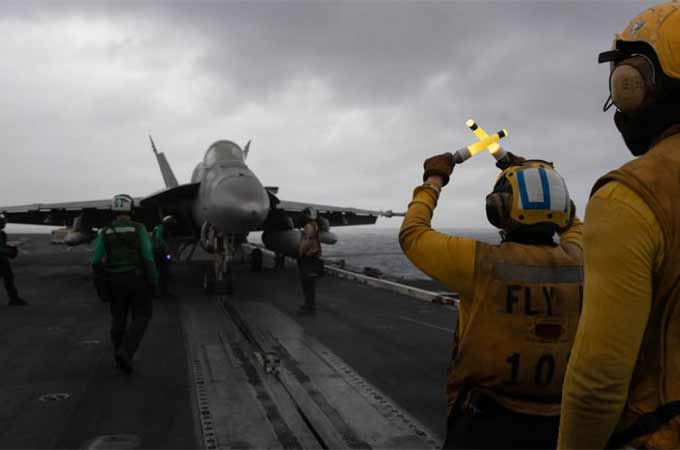
 A US fighter jet on a mission in the Gulf. (Image: CENTCOM)
Iran appears to be losing significant control over the Strait of Hormuz as commercial vessels increasingly use an Omani shipping route despite Tehran’s warnings, while US President Donald Trump has ruled out any current or planned negotiations with Iran, adding to uncertainty over the strategic waterway and pushing oil prices higher.
The battle for control of the Strait has emerged as a central issue in the US-Iran war, with Washington and Tehran issuing sharply conflicting claims about who controls the vital maritime passage. But shipping data cited by CNN and independently reported through Kpler indicate that the balance may be shifting.
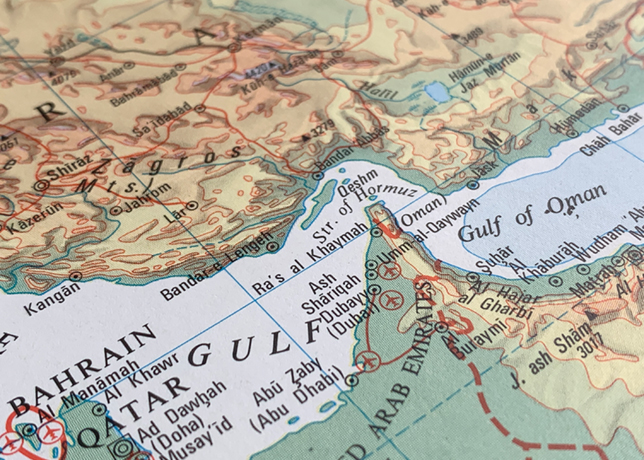
More than 80% of vessel transits through the Strait over the past two weeks have used the Omani route, a UN-authorised shipping channel that Iran opposes.
The change is significant because Kpler recorded virtually no traffic using the Omani route only a month ago. The shift suggests that ships are increasingly willing to ignore Iranian demands and travel along the Omani side of the waterway, often under the protection of US naval forces. Homayoun Falakshahi, head of crude oil analysis at Kpler, said it increasingly appeared that Iran had “at least partially lost control” of the Strait.
The development also undermines Tehran’s ability to impose its preferred system of control over shipping. Iran has previously sought to charge tolls on vessels using the Strait, but the diversion of traffic to the Omani route has made that increasingly difficult. Analysts cited by CNN said Iran’s ability to deter shipping remains significant, but its ability to dictate how commercial vessels navigate the waterway appears to have weakened.
There is, however, an important caveat. Shipping trackers do not capture all vessels. Some tankers have switched off their automatic identification system transponders for extended periods to avoid detection and possible Iranian attacks. Kpler's figures therefore represent confirmed or trackable movements rather than the entirety of maritime traffic. Reuters also reported that some ships may have been operating with their transponders switched off.
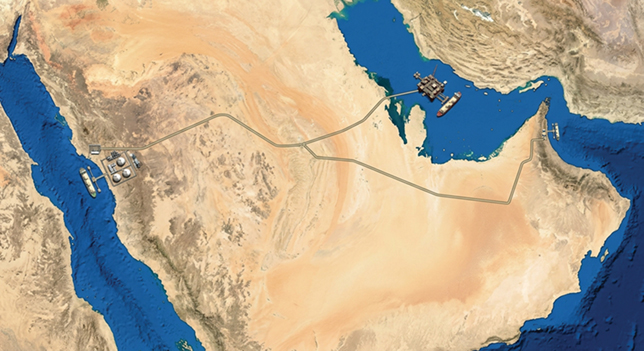
Gulf oil exporters are meanwhile adapting to the risks. Kuwait, Saudi Arabia and the UAE have chartered very large crude carriers to move oil through Hormuz and then transfer cargoes to other tankers outside the danger zone in the Gulf of Oman, according to Andy Lipow of Lipow Oil Associates. Such ship-to-ship transfers allow exporters to keep crude moving while reducing exposure to attacks inside the Strait.
Actual traffic, nevertheless, remains far below normal levels. Kpler data showed only six commodity vessels crossed Hormuz on Monday, compared with a 10-day daily average of 11. Reuters said no VLCCs or LNG tankers were recorded among those crossings, although vessels operating with their transponders off may not have been captured.
Trump, meanwhile, has rejected the prospect of a diplomatic breakthrough. In a post on Truth Social, he said there were “no talks or conversations” taking place or scheduled with Iran. He also said the US naval blockade remained in force and asserted that the Strait of Hormuz was “open and operating” and that mines had been removed or detonated.
Trump's latest comments came only a day after he had indicated that his administration had established a back channel with Iran's Islamic Revolutionary Guard Corps. Iran's parliament speaker accused Washington of seeking further concessions from Tehran, underscoring the widening gap between the two sides over any possible negotiations.
Reuters reported that Iran continues to insist that Hormuz will remain closed until Washington meets conditions set out in a June interim agreement, including lifting the blockade and oil sanctions and ending military operations.
Oil gains
The uncertainty has fed directly into oil markets. Brent crude rose for a fourth consecutive session on Wednesday, reaching $91.28 a barrel, while US West Texas Intermediate rose to $85.31.