


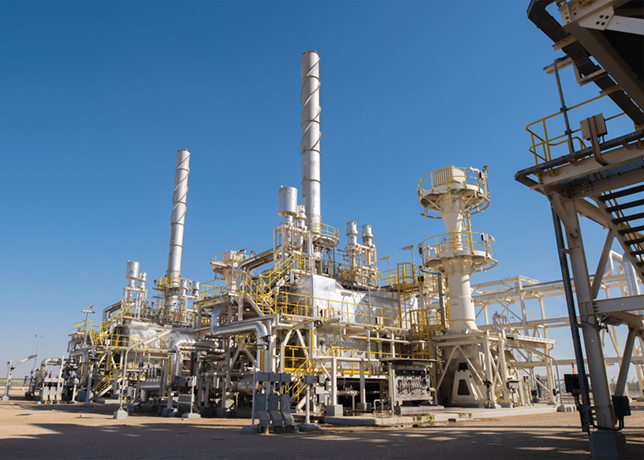















Although located over a 1,000 km from the oilfields of Saudi Arabia’s Eastern Province, Yanbu enjoys immediate access to its rich petroleum resources.
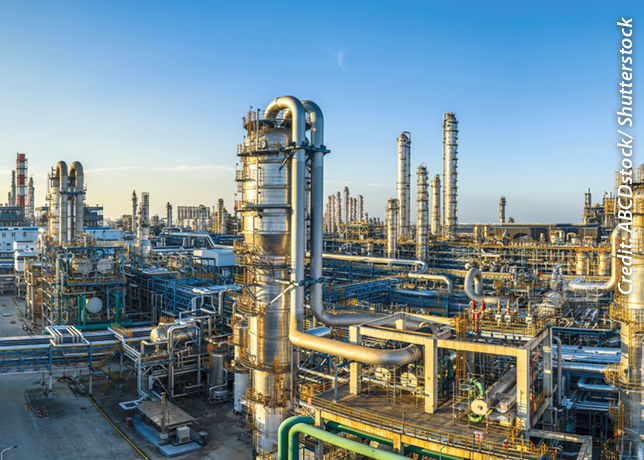
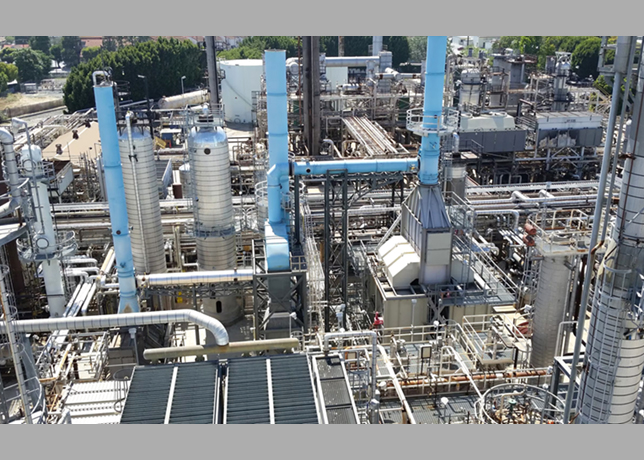
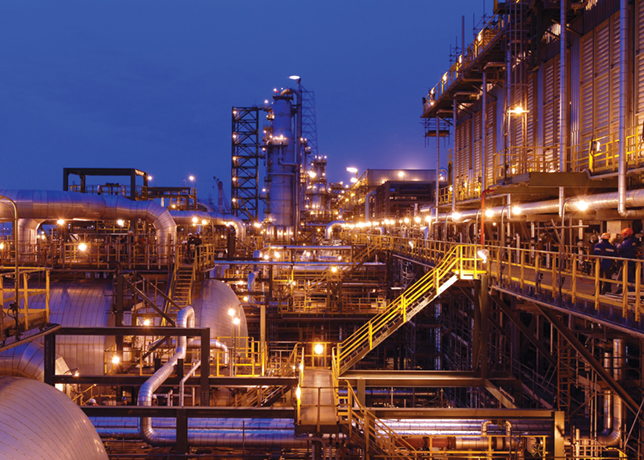
Cross-kingdom pipelines convey crude oil and natural gas liquids (NGL) to Yanbu for export and for use as fuel and feedstock’s in the city’s key industries. These plants, in turn, create products - for example bulk petrochemicals - that become raw materials for downstream manufacturing enterprises.
Also, close to Yanbu in the kingdom’s Western Province, exist large deposits of minerals, including iron ore, phosphate, gypsum and copper.
Opportunities for private sector investment in commercial and residential development include development, construction, and lease management of commercial retail and commercial offices.
Inevitably, growth in Madinat Yanbu Al Sinaiyah’s permanent residential community will yield increased retail demand for all types of goods and services. Retail categories benefiting by residential growth include home decorating services, furniture and household appliances, fabric and clothing stores, children’s toys, crafts and games, sport shops etc.
Opportunities for large-scale commercial development projects to be undertaken by the private sector will be primarily in the City Centre located in Haii Fahd. In addition, the City Centre offers major opportunities for the construction of privately-financed residential projects.
These include commercial and office buildings, enclosed malls, corporate office buildings, hotels and residential developments.
The Royal Commission began its planning at Yanbu with a thorough survey of the project site, which was located on a desert plain sandwiched between the Hejaz Mountains and the Red Sea. From the site’s inland boundary, a network of small water courses snake their way down to the sea.
The Yanbu site lacked everything required to support even a minimum level of human existence, let alone full-blown industrial development.
Unlike Jubail, the site was far from the nearest metropolitan area and ready access to essential goods and services. The challenge, therefore was enormous, to provide power, water, roads, airport, industrial port, telephones, housing, schools, health care facilities and all other services and facilities required by a modern industrial city.
For the past two decades, Yanbu Industrial City has been a utility island, self-contained and unconnected to any regional power or water systems. That situation, however, has now changed, with the completion of two projects.
A 380kv electrical intertie has linked the Yanbu power system with the western region grid, while new potable water lines connect the industrial city with a nearby SWCC desalination plant and Yanbu Al Bahr.
Besides being versatile, the power and water plant has certain design features, including multiple fuel use and alternative steam supplies that make it extremely reliable.
Yanbu’s telecommunications systems provide modern, citywide communications services, as well as linkages to the rest of the world. These systems were installed incrementally; starting with interim facilities geared to construction support operations. These included land and mobile telephone networks, telex equipment, microwave links mobile radio, paging system and emergency services. Later, marine radio for the port, air traffic control systems for Yanbu Airport and cable television were added.
The Yanbu telephone system offers fully automatic access to domestic and international networks, thanks to a broad range of technologies, microwave systems, a satellite relay and digital switching.
Yanbu Industrial City parallels King Abdul Aziz Road, the highway connecting Jeddah and communities up the coast. Six-lane wide within the city, this main artery forms the spine of the industrial development in the area. Feeder and collector roads branch off to community and industrial zones.
The Yanbu road network, which consists of nearly 460 km of paved surface, provides for rapid, safe and convenient travel within the city. The primary road grid in the residential area helps define and enclose the community’s 14 districts. Traffic flow is regulated by a computerised and synchronised traffic control system.
Besides roads, pedestrian paths link residential zones with neighbouring commercial centres and other high-use areas, such as apartments, schools and recreational facilities. Pleasantly landscaped, those paths are an integral part of the community’s open-space and recreation plan, and greatly contribute to Yanbu’s “pedestrian-friendly” city layout.
Yanbu Airport is located six km from Yanbu Al Bahr and 25 km from the industrial city. In use since 1979, the airport includes a 3,210-metre-long, 45-metre-wide runway, with a control tower and passenger terminal, requisite navigational systems, and modern cargo handling facilities. Although most of the air traffic consists of small and medium-sized aircraft, B-747 jumbo jets and even the Concorde have used the airport on occasion. Yanbu Airport currently handles regularly scheduled flights by Saudi Arabian Airlines to and from Jeddah and Riyadh.
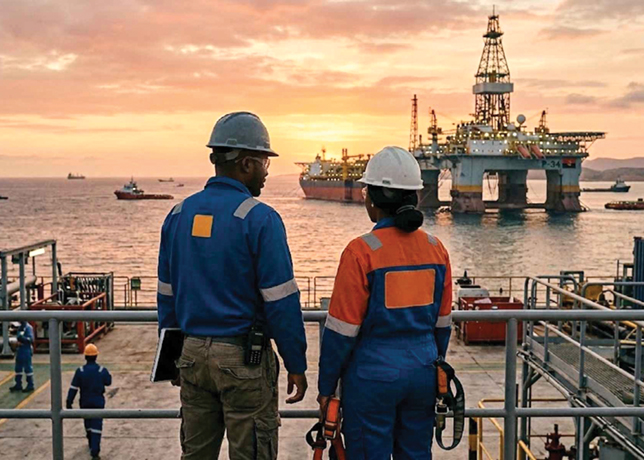
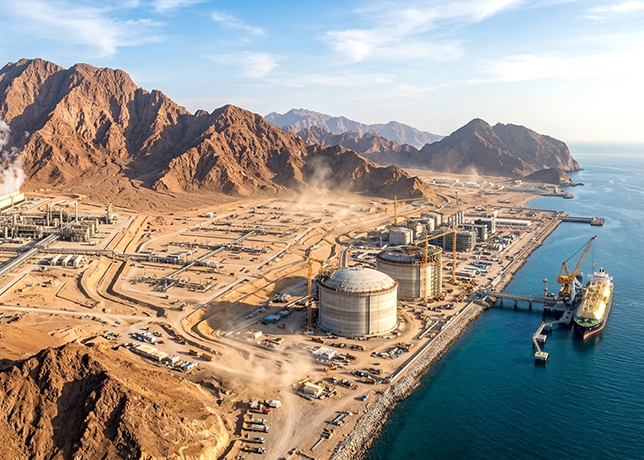
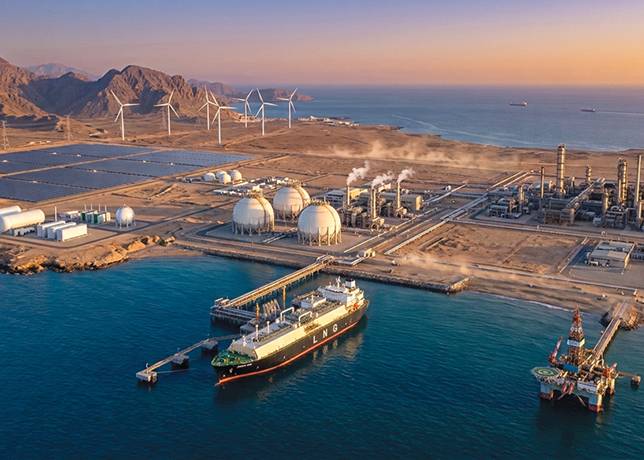
Extending along 15 km of coastline, Yanbu’s King Fahd Industrial Port is the largest oil and petrochemical-exporting complex on the Red Sea. Completed by the Royal Commission in 1982 and operated by the Saudi Arabian Seaports Authority since 1984, the port comprises seven terminals with 25 berths, a service harbor, bulk cargo and container handling equipment, and marine support facilities. The port handles crude oil from the Eastern Province delivered through the East-West Pipelines.
Over the years, the crude oil terminal has pumped billions of barrels of oil destined for markets around the world.
Dredged to a depth of 32 metres, the terminal consists of four loading berths connected to shore by a trestle and causeway. Yanbu Industrial City is more than industry and infrastructure. It is a thriving international community that offers its residents the means to lead comfortable, secure and satisfying lives. These include spacious and attractive housing, excellent educational and healthcare facilities and numerous shops, parks and recreational opportunities.
While Yanbu is totally modern, it is unmistakably Arab. Traditional architectural features the many mosques and minarets, the abundance of fountains and greenery all proclaim the city’s Arabic and Islamic character.
These and other reminders of a familiar way of life permeate the community, attracting new residents, reassuring older ones and contributing immeasurably to everyone’s quality of life. It is a small wonder that, in only two and half decades, a barren patch of desert has blossomed into a full-blown residential community.