



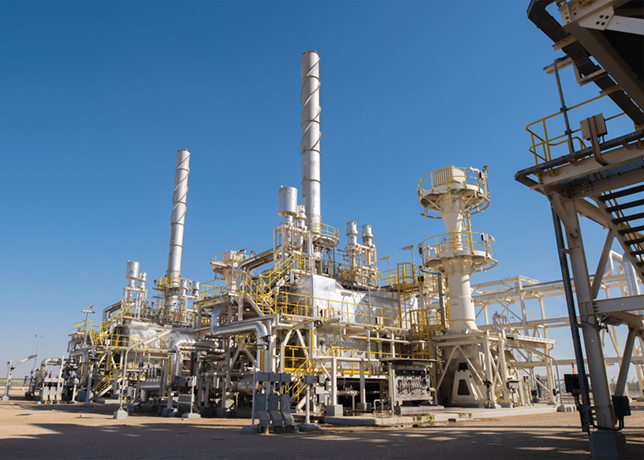

























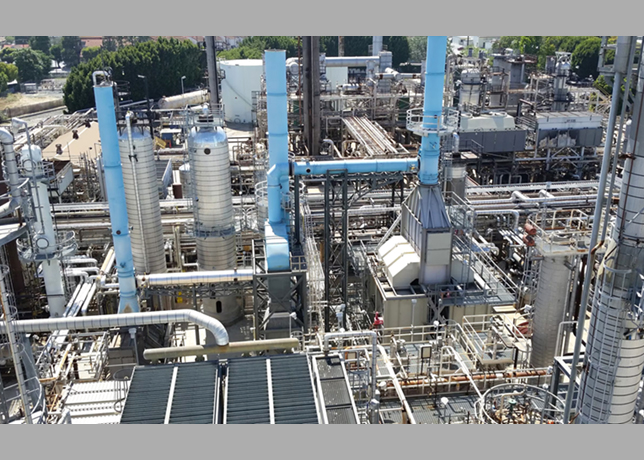




















The fuel tank storage market is set to reach over $28 billion by 2032, driven by an increased need for storing fuel reserves locally in a volatile global oil and gas market.
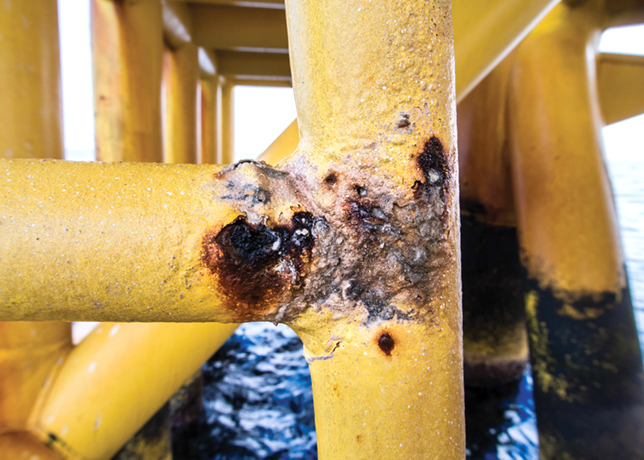
As world conflicts continue to put pressure on fuel supply chains, threats of corrosion to critical bulk tank storage facilities must be mitigated to improve efficiency, maintain environmental compliance and prioritise safety.
Traditionally, cathodic protection (CP) engineers have relied on physical inspections to assess tank corrosion — an inefficient, costly and unsafe practice.
Where modern tank farms often span several kilometres and require frequent checks to satisfy reporting regulations, engineers face significant limitations to the oversight they can achieve.
“Bulk tank infrastructure benefits from impressed current cathodic protection (ICCP) because it prevents the tank base from corrosion, which can’t be seen or inspected easily,” says Ian Loudon, International Sales and Marketing Manager at Omniflex, a remote monitoring specialist.
Often, tanks will be stored underground or submerged in water, and engineers only find out a system isn’t working when they have a leak.
For tanks storing explosive fuels, the importance of having intrinsically safe CP systems cannot be overstated.
A small leak is enough to create an ignition source for a catastrophic explosion, with huge safety and environmental ramifications.
In the best-case scenario, bulk tanks might deteriorate due to corrosion, causing a loss of critical assets in an already volatile oil and gas market.
With the right technology in place for managing the CP system remotely, these risks can be mitigated, and productivity restored to your tank farm.
ULTIMATE SOLUTION FOR LARGE SCALE PROJECTS
ICCP systems are used to manage corrosion in bulk tanks, which is better for large scale projects.
Unlike galvanic CP, which uses sacrificial anodes and is better for small, low-resistive environments, an ICCP system is a forced current used to maintain a bulk tank at -0.85V.
Being able to remotely control ICCP has huge benefits for tank farms.
Firstly, ICCP systems can be dynamically adjusted to account for changes in the conditions around the tank, such as soil dampness, acidity and resistivity.
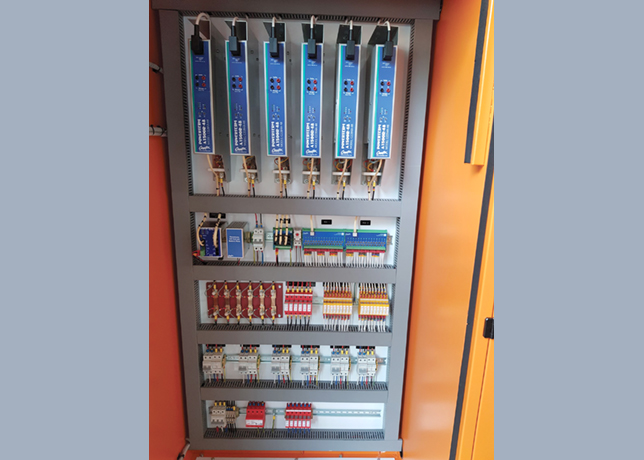
Secondly, remote monitoring using Omniflex’s PowerView CP range reduces ongoing maintenance costs since you don’t need to physically inspect difficult-to-access systems.
This solution was implemented in one of Africa’s largest open-access liquefied petroleum gas (LPG) import terminals.
The facility, which allows vast amounts of LPG to be stored locally, boosting the region’s energy security, benefits from automatic testing and results logging, and long-term cloud-based data storage.
Omniflex’s PowerView CP also offers integrated regular status reports, remote testing like instant off, depolarisation etc ideal for tank farm operators who are facing increasingly tighter reporting regulations to ensure compliance.
Regardless of the CP system employed, it needs to be intrinsically safe.
This is why alarm condition alerts are one of the most important aspects of remote monitoring.
Where before engineers were relying on manual inspections to pick up faults, they can now receive alarm condition alerts via SMS or email 24/7.
Ultimately, this provides reassurance and allows time-critical issues to be resolved quickly and safely.