
















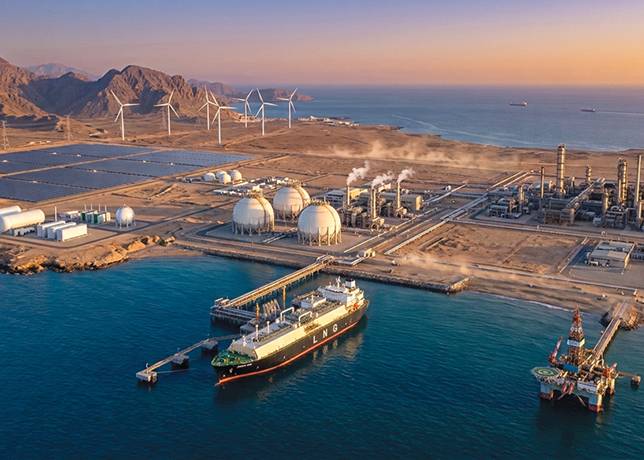


While traditional underwater pipeline projects in the Gulf of Guinea routinely choke under long lead times and three-year infrastructure cycles, a historic deployment at Nigeria’s OML 123 concession just completely disrupted the playbook.
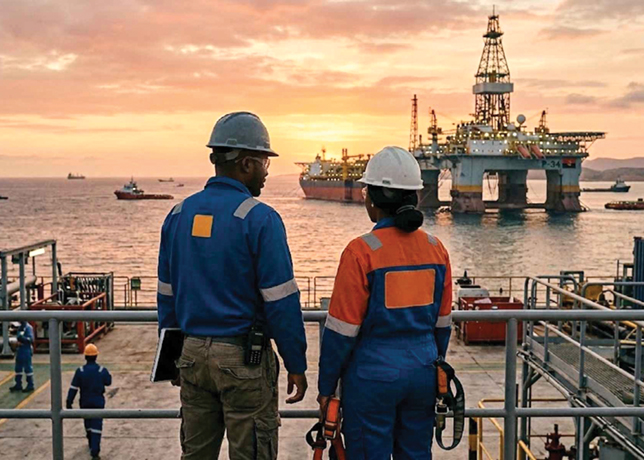
Kenyon International West Africa has officially commissioned Nigeria’s first-ever FlexSteel unbonded flexible pipeline system, slashing traditional offshore project duration by a staggering 80 per cent and saving the operator millions in potential production downtime.
Kenyon executed the deployment through a strategic partnership with Houston-based OEM FlexSteel, successfully porting a technology popularised in the Permian Basin into deep-water West African infrastructure.
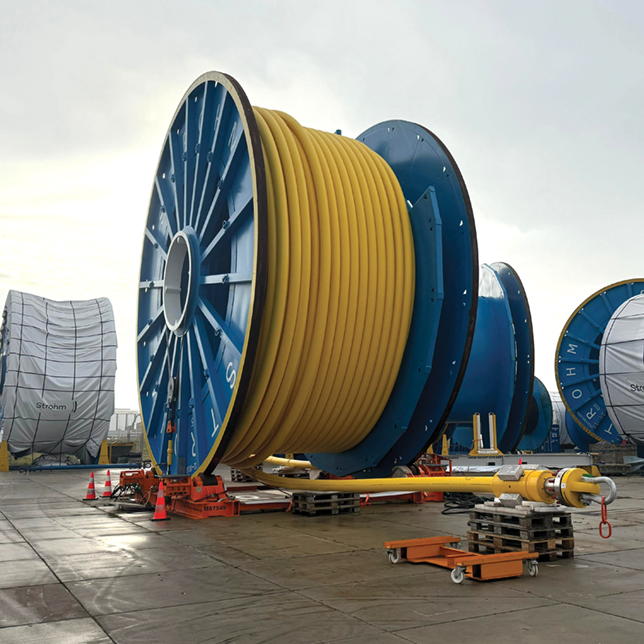
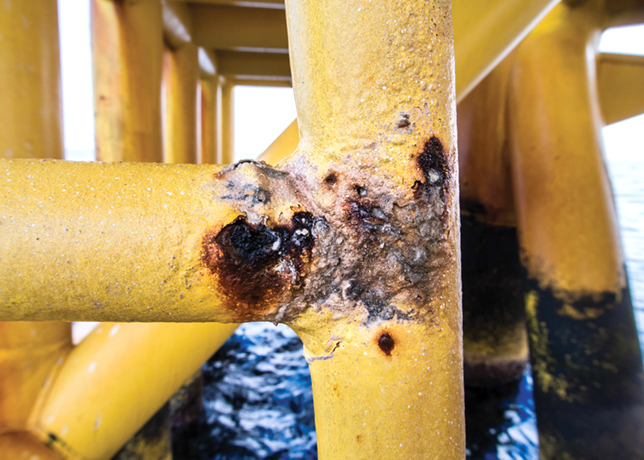
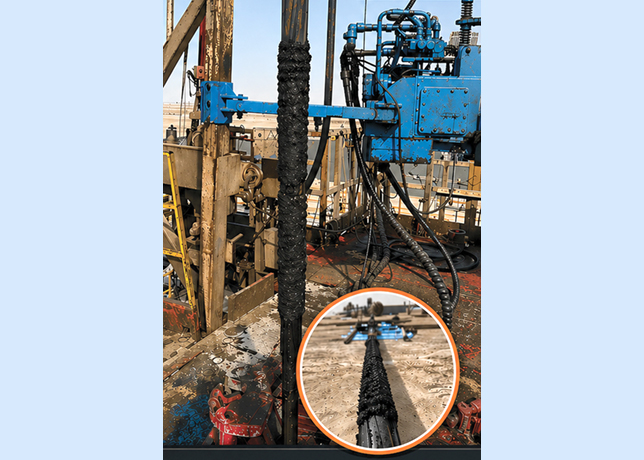
By utilising continuous, spoolable pipe lengths across an 8 km installation (4 km for gas and 4 km for oil), Kenyon minimised underwater connections, effectively neutralising traditional corrosion and leak points.
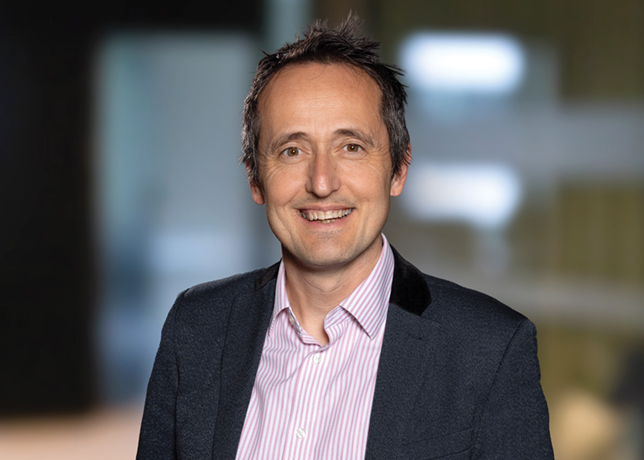
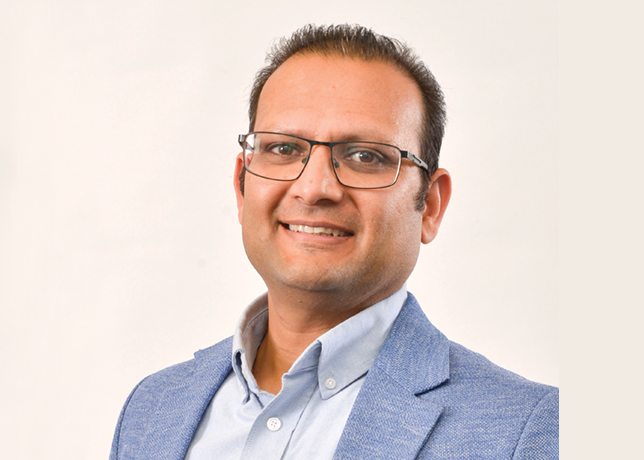
“The entire offshore coordination and installation was spearheaded by Kenyon’s local engineering team, signalling a shift where West African firms are no longer just field hands, but the primary drivers localising global engineering innovations,” Dr Victor Ekpenyong, CEO of Kenyon International, tells OGN energy magazine in an exclusive interview.
Below are excerpts from the interview:
You’ve stated that the industry can no longer afford traditional three-year infrastructure cycles. How exactly did Kenyon compress this timeline by 80 per cent without cutting corners on offshore risk management?
Long project timelines are driven by procurement, fabrication, logistics, and installation complexities of conventional rigid pipelines.
This technology eliminates bottlenecks by requiring less fabrication, fewer offshore activities, and a simpler deployment process.
Kenyon maintained all engineering reviews, risk assessments, quality controls, and regulatory compliance.
Safety and engineering requirements were never compromised while operational inefficiencies were eliminated.
This resulted in Nigeria’s first deployment, completed in 6 months rather than the conventional 24-36 months.
Faster execution does not come at the expense of safety when paired with the right technology and a disciplined project delivery approach.
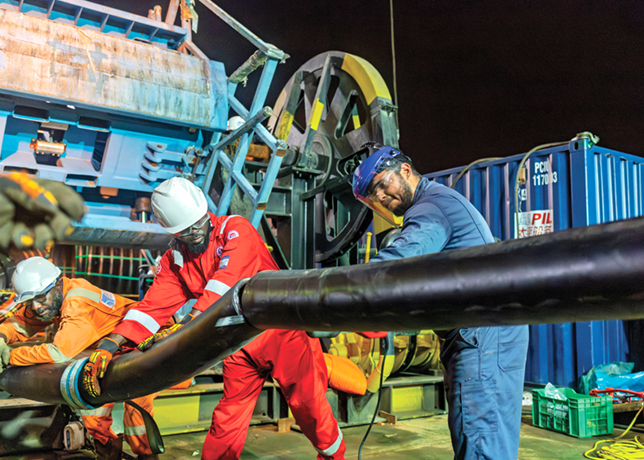
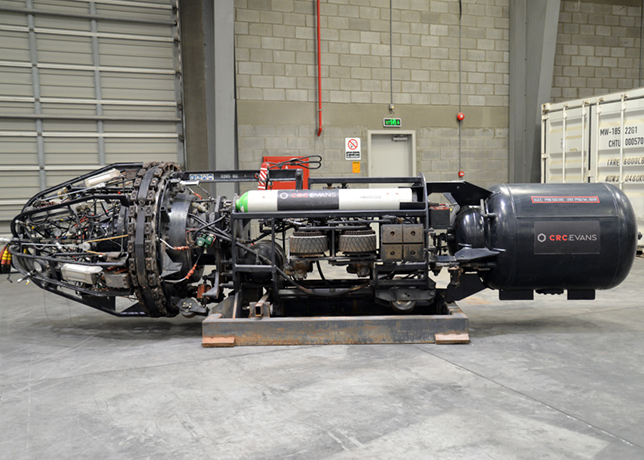
Nigeria’s first-ever FlexSteel unbonded flexible pipeline system is 8 km long
An 80 per cent reduction in deployment time means mitigated production downtime. How many millions of dollars did this save the operator compared to conventional carbon steel methods?
This specific infrastructure project generated significant long-term economic value, delivering substantial savings while accelerating production.
During traditional pipeline replacement, operators face deferred production, higher offshore vessel costs, and extended operational risk exposure.
By completing this deployment in six months, Kenyon reduced the time from conception to production readiness, translating into earlier production, reduced downtime, and considerable cost savings.
While the exact financial value belongs to the asset owner, the savings run into millions of dollars compared to conventional carbon steel alternatives and associated production deferrals.
How does an 8-km long, unbonded flexible flowline handle the specific geodynamic hazards and seafloor shifts of the Gulf of Guinea compared to rigid carbon steel?
The unbonded flexible composite flowlines deployed here accommodate seabed movement, settlement, uneven support, and thermal expansion within engineered design limits, unlike rigid steel which relies on stiffness.
The system deployed on OML 123 adapts to shifting conditions without compromising integrity, operating within its specified minimum bend radius.
The pipeline can be weighted to minimise flotation risks and environmental movement, including settlement, uneven seabed support, thermal expansion, or localised seabed movement.
Its continuous helically wrapped steel reinforcement layer provides the tensile strength necessary to withstand installation and service loads.
Every coil underwent structural pressure integrity testing during manufacturing to verify reinforcement layers before deployment, following detailed engineering evaluations.
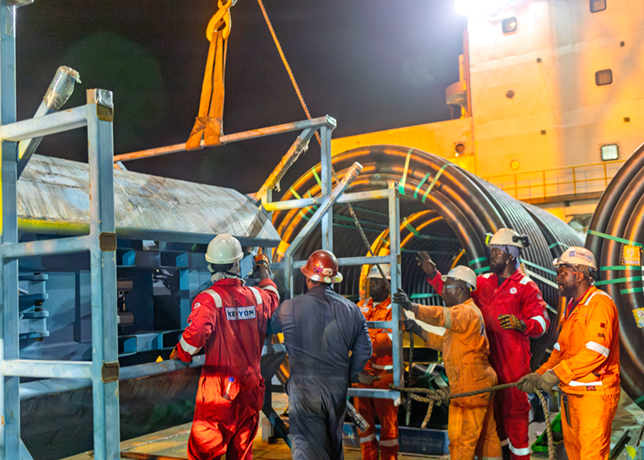
The OML 123 provides a scalable proof of concept for aging brownfield assets
Kenyon executed this project entirely with an indigenous Nigerian engineering team. What specific technical hurdles did your local team face during the offshore coordination, and how did you overcome them?
This successful execution demonstrates that project delivery is determined by capability, collaboration, and disciplined delivery rather than international status.
The project benefited from the technical expertise, engineering design, and product support provided by the original equipment manufacturer, FlexSteel.
Kenyon provided local leadership, offshore coordination, stakeholder management, and operational expertise within the Nigerian environment.
The engineering team managed typical complex offshore coordination challenges, including vessel mobilisation, logistics, installation planning, contractor interfaces, weather, and safety alignment.
Success relied on combining manufacturer technology with indigenous execution to deliver safely and efficiently.
This historic deployment relied on a strategic partnership with the Texas-based OEM, FlexSteel. What were the critical supply chain bottlenecks in transporting this spoolable technology?
Transporting highly specialised infrastructure technology across continents introduces supply chain complexities, requiring synchronisation across procurement, logistics, customs clearance, offshore scheduling, and installation readiness.
Kenyon proactively addressed potential supply chain delays through early engagement with the manufacturer, detailed logistics planning, and cross-team coordination.
The spoolable technology simplified transportation and minimised offshore complexity compared to rigid systems.
Transported on specialised reels, the pipeline occupied less deck space on installation vessels, streamlining the campaign.
Managing logistics as a critical execution component ensured the technology arrived ready within the accelerated timeline.
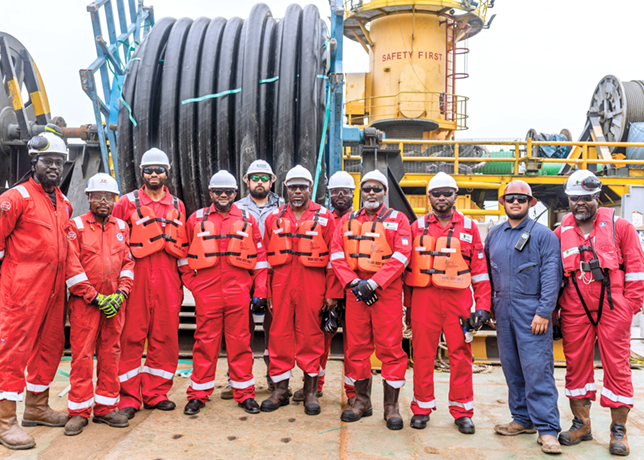
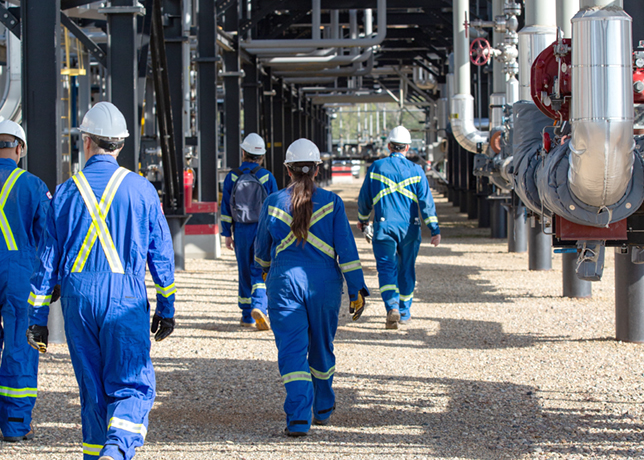
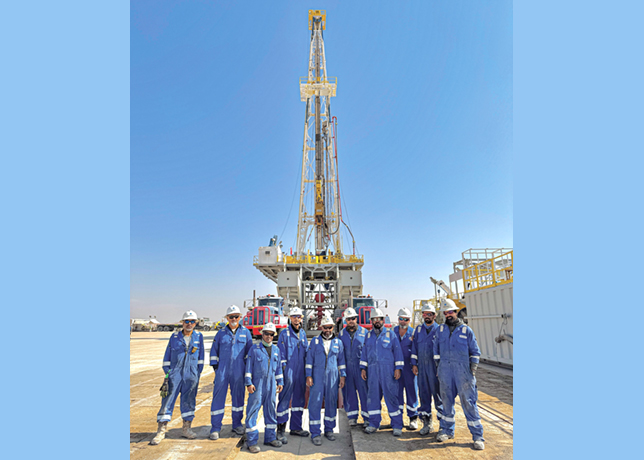
The project was executed entirely with an indigenous Nigerian engineering team
Is the OML 123 deployment a one-off success due to specific field conditions, or is this a fully scalable blueprint that can revitalise Nigeria’s declining offshore production capacity?
Every individual offshore asset has unique technical, operational, and economic realities, meaning no single technology is a universal solution.
However, OML 123 provides a scalable proof of concept for brownfield assets dealing with aging infrastructure, integrity concerns, and rising operating costs.
Speed of deployment is critical to sustaining production, and this project proves efficient infrastructure delivery is possible without compromising engineering integrity.
It can be replicated across shallow-water, swamp, and conventional offshore assets, excluding deepwater fields which always require separate evaluations.
The project drives a critical industry shift toward maximising infrastructure value.
The region is heavily threatened by third-party interference and vandalism. How does this specific unbonded flexible technology perform against security threats and illegal hot-tapping compared to traditional steel?
Pipeline vandalism and illegal hot-tapping remain significant industry challenges regardless of material.
This technology was designed to address integrity, reliability, corrosion resistance, and deployment efficiency rather than serving as a security solution.
Operational advantages include complete resistance to internal and external corrosion, eliminating a major cause of failure in aging infrastructure, while fewer total connections and joints reduce potential leak points across the system.
For deliberate third-party interference, robust surveillance, asset monitoring, stakeholder engagement, and security management remain mandatory.
Protecting infrastructure requires combining technology with coordinated security strategies.
When you look at capex versus opex, how long does it take an operator to see a return on investment (ROI) when switching to flexsteel technology?
High-performance composite pipeline systems carry higher upfront capital expenditure costs than conventional carbon steel, but operators evaluate total lifecycle value.
Economic advantages derive from reduced installation time, lower vessel utilisation, fewer construction activities, and near-zero pipeline maintenance operational costs regarding corrosion.
For OML 123, transitioning from approval to production in six months significantly accelerated value realisation.
Earlier asset production yields a far greater economic impact than upfront material cost differentials.
When factoring in deferred production, maintenance, and downtime, the payback period is considerably shorter than expected.
Are there active regulatory or state-level discussions to mandate composite technology over carbon steel for future Nigerian offshore concessions?
No active discussions exist to mandate composite pipeline technology over carbon steel, as regulators and asset owners should remain technology-neutral and focus on performance, economics, safety, and integrity.
The objective is to encourage solutions that improve efficiency and asset performance.
The OML 123 project serves as a successful proof of concept, demonstrating that alternative technologies meet technical requirements while reducing delivery timelines.
If similar projects continue delivering these operational results, market adoption will expand naturally because the underlying value proposition becomes impossible to ignore.
How do you plan to leverage the technical milestones achieved at OML 123 to capture market share in East Africa’s emerging oil corridors?
The OML 123 project serves as a proven technical reference point for delivering complex infrastructure projects safely and efficiently within accelerated timelines through strong manufacturer partnerships and disciplined execution.
These milestones apply directly to emerging East African markets where operators focus on reducing timelines, optimising capital, and accelerating production.
A presence in Kampala enables close engagement with regulators and operators as regional oil and gas resources continue to develop.
This versatile technology suits various onshore and offshore applications, including Lake Albert, positioning the firm to support upcoming infrastructure ambitions across the continent.
You were recently appointed to the board of the World Energy Council. What does this mean for the future of the Nigerian and African energy industries?
For too long, global energy transition policies have been designed from a macro perspective that doesn’t always translate seamlessly to the operational and economic realities on the ground in Africa.
My presence on the Council’s board means that Nigeria and the wider African continent have an active voice in shaping the actual governance framework of the global energy transition.
For the Nigerian and African energy industries, this appointment is a validation of our indigenous technical capacity. We will be leveraging this platform to advocate for a just, balanced energy transition.