











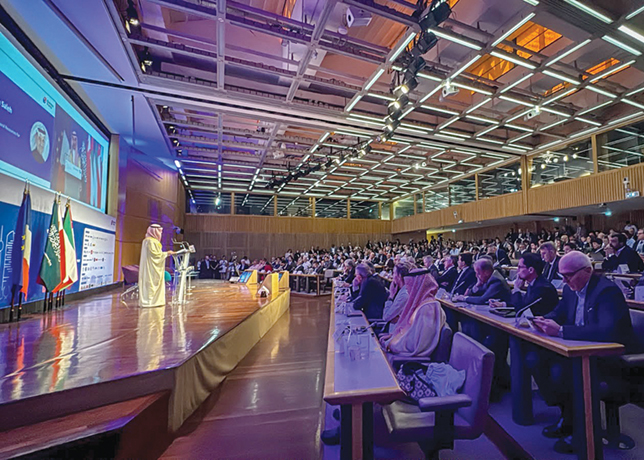

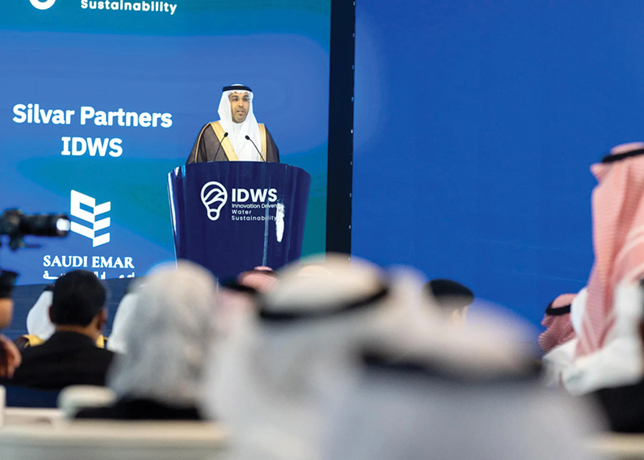
















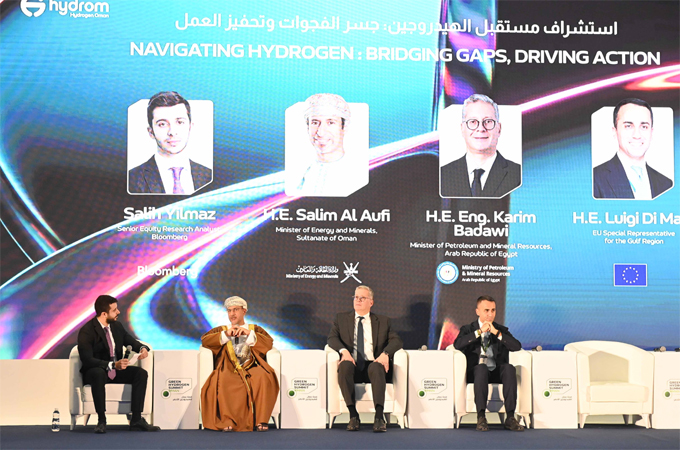
The 2025 edition of the Green Hydrogen Summit Oman (GHSO) opened under the theme “Bridging Gaps, Driving Action.”
Organised by Oman’s Ministry
of Energy and Minerals, and in partnership with Hydrom, the Summit served as a
platform for a sector update that confirms Oman’s transition from strategy to
execution.
While international
market conditions continue to reshape developer expectations, Oman’s
achievements to date signal a decisive, impact-driven commitment that positions
the nation as a credible first-mover in the global hydrogen economy.
Opening the Summit, Salim Al Aufi, Minister
of Energy and Minerals, said: “The Green Hydrogen Summit Oman 2025 reflects our
ongoing efforts to strengthen energy security at home and abroad, and to
position Oman as a central hub for the development of low-carbon hydrogen
industries. Over the past years, we have worked to build clear policies and
strong regulatory foundations that can support this sector as it grows and
adapts to global market realities. Our approach has always been rooted in the
responsible use of our natural resources and in creating lasting economic value
across the supply chain.”
He added: “Oman’s progress in energy has
always been about turning challenges into opportunities. What began decades ago
with the use of associated gas became a cornerstone of the global energy
system. Today, we are seeing a similar evolution in renewables such as solar
and wind, which are now among the fastest-growing energy technologies in the
world. The same spirit drives our work in hydrogen. Together with our partners,
we are addressing technical and financial challenges, building the
infrastructure, and establishing national companies capable of leading this
transition and enhancing Oman’s competitiveness in clean-fuel production and
exports.”
Delivering the
Summit’s opening keynote, Abdulaziz Al Shidhani, Managing Director of Hydrom,
outlined how Oman’s green-hydrogen framework, built around clear policy,
structured land allocation, and defined investment mechanisms, has evolved into
an integrated national programme.
Less than three years
after setting the framework for a new energy industry, Oman’s green-hydrogen
programme has entered a phase of coordinated execution, linking projects,
infrastructure, and regulation within one ecosystem built for scale and
long-term competitiveness.
Today, seven
developments, representing a combined production capacity of one million tonnes
of green hydrogen annually by 2030,are progressing through defined milestones,
while two projects were concluded by mutual agreement following developer
reassessment in response to market dynamics.
Within this portfolio,
the ACME Duqm Project represents a defining milestone as Oman’s first
large-scale green hydrogen development to reach construction.
Designed as a
three-phased development, its first phase is now under construction, targeting
100,000 tonnes of green ammonia and 17,000 tonnes of green hydrogen per annum
by 2027.
Phases 2 and 3 will
scale production significantly, with the full development targeting over
150,000 tonnes of green hydrogen and 800,000 tonnes of green ammonia annually.
With investment
deployed, equipment ordered, and construction in progress, the project stands
as tangible proof of Oman’s shift from strategy to implementation.
Beyond individual
projects, Abdulaziz Al Shidhani emphasised that Oman’s green hydrogen journey
is guided by a long-term national vision that resolves what he described as
the“competitive trilemma”of global hydrogen production, balancing cost,
execution, and market proximity.
He underscored that,
“While most markets are working to solve for two, Oman is building for all
three. Our renewable resources deliver cost advantage, our governance and
infrastructure bring execution certainty, and our geographic position connects
us directly to key demand centres. This combination defines Oman’s strength and
ensures that progress translates into real, lasting competitiveness.”
As Oman strengthens
its international reach, equal focus is being placed on shaping domestic demand
pathways that will complete the value chain.
Hydrom is working with
partners to advance new industrial uses of hydrogen across green steel,
hydrogen-based fuels, and heavy mobility sectors that will form the backbone of
future local offtake.
A double-sided auction
mechanism is also under study to connect domestic producers with emerging
industrial consumers and establish price discovery within the national market.
The third auction
round marks the continuation of Oman’s phased approach to developing its green
hydrogen portfolio.
With more than 130
companies registered, the process serves as a test of market depth under the
current global conditions, while maintaining the transparency and structure
that define Oman’s model.
Furthermore, the
incentive measures announced earlier this year, valued at $3.6 billion across
the sector, were introduced to reflect lessons from previous rounds and to
improve the financial resilience of early-stage projects.
Taken together with
the regulatory framework, land allocation system, and growing local supply
capabilities, these elements indicate a sector moving forward with confidence.
Al Shidhani concluded
that Oman is entering a stage where progress is reinforcing itself. “With
projects advancing, infrastructure in motion, and new sources of demand
emerging, the system is beginning to operate in full. Our priority now is to
sustain this balance and ensure that every part of the value chain contributes
to a market built to endure and grow.”
In its fourth edition,
the summit brings together senior government officials, chief executives, and
global energy leaders, alongside international representatives and
institutions.
Over three days, the
technical programme will explore the latest advancements in hydrogen
production, storage, transport, and industrial applications.
Sessions will examine
international case studies, evolving business models, certification standards,
and regulatory frameworks, while also highlighting progress in Oman’s hydrogen
projects in Duqm and Dhofar and the growing opportunities for integration between
renewable energy and digital technologies.
Organised with the participation of leading energy and hydrogen partners and sponsors, the Summit also features an exhibition showcasing the latest global innovations and technologies across the hydrogen value chain, offering participants an opportunity to engage directly with the companies shaping the future of this emerging industry. -TradeArabia News Service