










































Yemen’s hydrocarbon sector has suffered from declining output for the past several years, in part due to political turbulence as well as the maturation of its fields, which now require the application of enhanced oil recovery (EOR) techniques
As Yemen’s security situation deteriorates further, international oil companies (IOCs) that have previously proven extremely steadfast in the face of considerable political risk have opted to suspend their operations in Yemen and in some instances relinquish their assets.
Saudi Arabia’s intervention in the Yemen conflict is unlikely to prove sufficient to enable the government to regain control of the country. Conflict with the Houthi insurgents will continue in central and southern Yemen, while Al-Qaeda in the Arabian Peninsula (AQAP) militants will take advantage of the chaos to strengthen their position in the southern provinces.
Much of the fighting will take place in areas with oil and gas reserves, creating considerable risk of collateral damage to facilities and personnel. A number of international oil companies (IOCs) have relinquished their stakes in Yemen due to the fighting, and additional companies are likely to follow them to the exit. Even where IOCs are able to continue operating, export routes are likely to be compromised by AQAP fighters targeting pipelines and truck convoys.
Saudi Arabia’s blockade of Yemeni ports may cause additional delays to maritime exports. In some instances where foreign operators have withdrawn, state companies have taken over. However, the government’s reduced capacity following the Houthi advances means it will struggle to provide state-owned operators with the requisite resources to prevent further declines at Yemen’s ageing fields.
There is also a substantial risk that the government will be unable to maintain control of fields located near fighting with Houthi insurgents. IOCs with equity stakes in state-operated fields are therefore likely to see falling returns.
Foreign intervention in Yemen is unlikely to reduce instability and risks exacerbating the increasingly volatile situation. The risks that have led many IOCs to suspend operations in the country or exit altogether are extremely unlikely to be eased in the foreseeable future, and other companies are likely to follow suit.
The effective withdrawal of IOCs and ongoing attacks on facilities and personnel will almost certainly impede sector development and output over the medium term and beyond.
The March onset of Saudi Arabia-led airstrikes against Houthi forces in neighbouring Yemen further increases the risk of Yemen’s de facto and messy partitioning.
Neither side appears capable of achieving a decisive victory against its opponents; the Saudi-led intervention is unlikely to alter this. Saudi Arabia’s intervention is aimed at halting the military advance of Houthi forces – an Iran-supported Zaidi Shia movement – from their northern strongholds in Saada province.
The Houthis have seized control of the capital Sana’a and, following a short period working with the government, forced President Abdurabu Mansour Hadi to flee to the southern port city of Aden in February. With Houthi forces, backed by supporters of former president Ali Abdullah Saleh, continuing their inexorable advance on Aden, Hadi subsequently fled to Saudi Arabia in March. Although the Saudi military intervention will undoubtedly provide succour to Hadi’s forces, it is unlikely to tip the balance sufficiently for government forces to defeat the Houthis.
Even should the Saudi-led coalition of 10 Muslim countries – all of which are majority-Sunni apart from Bahrain, which is ruled by a Sunni monarchy – commit a large number of ground troops in Yemen, the very recent memory of Saudi Arabia’s failure to effectively intervene in Yemen’s 2009–10 Houthi insurgency means it would be loath to engage in a protracted campaign.
As in Libya, Islamist militants, primarily AQAP, have capitalised on the turbulence to expand their position in southern provinces such as Abyan, Hadramawt, and Shabwah. AQAP has won support from a number of tribes by portraying the Houthis as Safavid (Iranian) agents, and capitalising on mistrust of Saleh.
Moreover, the composition of the coalition feeds into the increasingly sectarian narrative of the conflict, an issue that will be further exacerbated should Iran respond by offering greater support to the Houthis. This would inadvertently benefit AQAP’s efforts to win support from Sunni tribes in southern and central Yemen.
The upshots of the latest developments have been the disintegration of Yemen’s limited state apparatus, with the internationally recognised government unable to carry out the majority of its functions, the fracture of military and security institutions, and substantial damage being inflicted on infrastructure and commercial assets either by factional fighting on the ground or ongoing Arab coalition airstrikes.
There also remains the issue of Yemen’s southern separatist movement, although this has subsided as the security situation has deteriorated. Yemen’s hydrocarbon sector has suffered from declining output for the past several years, in part due to political turbulence as well as the maturation of its fields, which now require the application of enhanced oil recovery (EOR) techniques.
President Hadi stated in August that crude oil production had fallen from 455,000 bpd in 2001 to 134,000 bpd in 2014, and further slides appear likely given the continued deterioration of the operational environment.
The likely intensification of fighting between Houthi and government forces in Ma’arib and Shabwah provinces means there is a growing risk of collateral damage to nearby oil and gas fields. However, the Houthis are unlikely to be able to hold fields and other assets in this region.
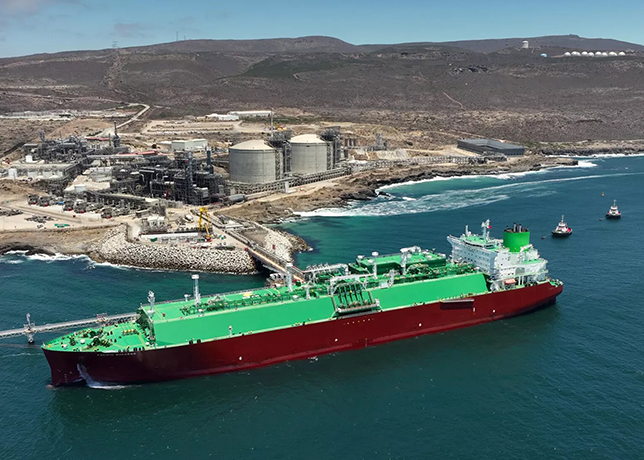
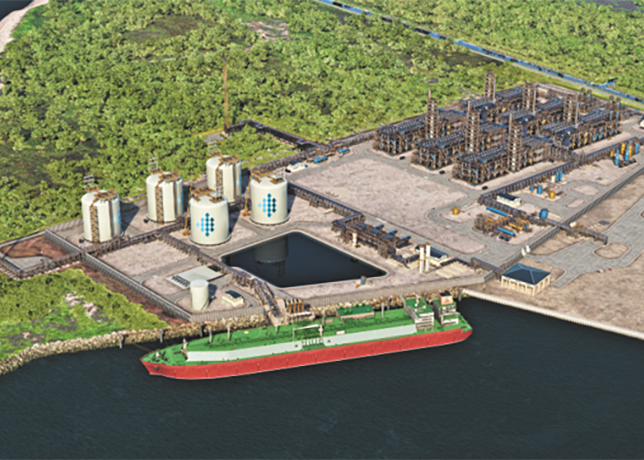
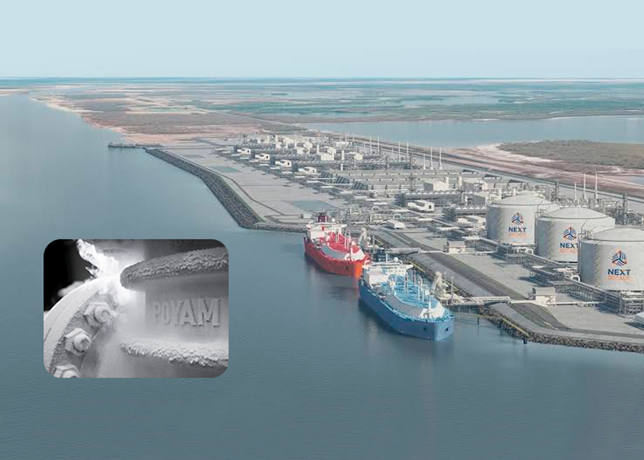
As a result, they will be unable to replicate the model of the Islamic State in Syria, which has been able to sell crude and low-grade products on the black market in order to generate the revenues that have been critical to its longevity. In the meantime, AQAP will continue to take advantage of the upheaval by targeting oil and gas pipelines. Yemen’s LNG output, which provides the government with some $660 million a year in revenues (about 6 per cent of total government receipts in 2014), is also at risk. Production capacity at the Total-operated Yemen LNG plant is approximately 7.2 mmtpy.
Although this is a relatively small proportion of overall global production in 2014 of 241 mmtpy, it is greater than the 4.6 mmtpy of new global production that IHS Energy forecasts to come onstream in 2015. Significant disruption to Yemen LNG’s operations would therefore counter the expected loosening of the global LNG market in 2015.
Although the liquefaction plant at Belhaf in southern Shabwah province is relatively secure, its feedstock supply is at greater risk. Gas is produced from Block 18 in the volatile Ma’arib province, before being pumped through a 200-mile pipeline across territory in which AQAP operates.
The risk of disruption to feedstock is therefore considerable, as demonstrated by Yemen LNG’s proclamation of force majeure in January. This was lifted after two weeks, and production is estimated at only 25 per cent lower in the first quarter of 2015 year on year, but is likely to move lower in the remainder of the year. Total stated on 7 April that staff numbers at the plant had been reduced to a minimum, although LNG production is continuing.
Yemen’s volatility has caused a number of IOCs that retain stakes in the country to re-evaluate their positions. Some have opted to relinquish their assets in Yemen entirely, while others have suspended operations and withdrawn staff from the country. The security situation is unlikely to improve sufficiently for these firms to resume operations in Yemen in the near future.
With foreign-operated blocks contributing more than half of Yemen’s falling oil production, the ailing government can ill-afford to lose IOCs. Although state-owned companies have in some instances stepped into the breach, the government will struggle to provide them with sufficient funds to maintain production levels, while the deteriorating security situation may prevent operations from continuing at all.
Total announced on March 30 that it had evacuated its entire staff from Sana’a and Kharir, and that it had largely suspended operations at Block 10, one of Yemen’s largest producing blocks. Production at the block is being maintained at minimal levels to supply local communities with gas. DNO has also suspended operation at the two blocks it operates, while CNOOC subsidiary Nexen and Dubai’s Dove Energy Group have opted to relinquish their assets in Yemen entirely.
Although a new state firm, Sharq Sar, was established to operate Dove Energy’s Block 53, a replacement operator for Nexen’s Block 51 has not been announced. Meanwhile, Sharq Sar – and other state oil companies – are likely to struggle to maintain production levels given the government’s fiscal constraints and their more limited technical expertise.
The withdrawal of IOCs from certain blocks is having knock-on effects elsewhere. For instance, Calvalley previously exported crude from its operations at Block 9 via facilities at Block 51. Following Nexen’s departure from Block 51, Calvalley stated in March that crude will now be trucked to Ma’arib province, where it will be loaded into a pipeline connecting to the Ras Isa terminal.
However, this pipeline has been attacked by AQAP fighters and Yemeni tribes on numerous occasions, and there is a severe risk of further disruption. Exports from Ras Isa may also be stopped by the Saudi naval blockade along the Yemeni coast.
Continued production at blocks close to the Houthi-government frontline is increasingly at risk of being halted altogether. This effectively covers key production sites in Shabwah and Ma’arib provinces, including Occidental’s Block S-1, OMV’s Block S-2, Kuwait Energy Company’s Block 5, and Block 18, which is operated by the state-owned Safer Exploration and Production Operations Company. Blocks 5 and 18 are probably the most important blocks still in operation, with Block 5 providing almost 25 per cent of Yemen’s crude production prior to the latest disruption and Block 18 supplying the feedstock for Yemen LNG.
The displacement and harassment of Yemen’s government by Houthi insurgents have denuded its already limited ability to project its sovereignty over the majority of the country, warranting a downgrade of Yemen’s State Capacity score from "F" (2) to "F" (1).
The confluence of depressed oil prices and reduced oil production due to the conflict and resultant departure of many overseas operators means that economic contraction is likely, with Yemen’s score for Real Per Capita GDP Growth downgraded from "B" (7) to "D" (3).


