





































In asset-intensive industries, the thin line separating a well-managed plant from a high-performing one is rarely visible on a spreadsheet budget, becoming starkly apparent only during the high-stakes execution of shutdowns and turnarounds.
Across many global facilities, procurement and operational decision-making continue to be driven by upfront cost, an approach that appears efficient on paper but frequently results in execution that falls short of expectations as delays emerge, rework increases, safety exposure rises, and environmental compliance becomes more complex.
The root cause of these sub-optimal outcomes is not a lack of technical capability, but rather the narrow lens through which strategic decisions are evaluated.
A growing number of leading operators, particularly those aligned with stringent global benchmarks, such as Saudi Aramco and SABIC, are shifting their approach by moving away from pure upfront cost control to align their decisions with total cost of ownership, operational risk, and execution certainty.
At its core, this industrial transformation rests on five interconnected pillars:
• Safety: This remains the most critical, yet often under-quantified, factor because while incidents do not appear in bid comparisons, they ultimately define operational outcomes; decisions that fail to eliminate hazards at the source tend to transfer risk downstream where the consequences are far more severe.
• Asset integrity: This is another area where short-term decisions create long-term impact.
Here choices related to cleaning methods, chemical compatibility, and treatment processes directly influence equipment life, reliability, and future maintenance requirements, meaning what appears adequate during execution can later manifest as premature failure or costly repairs.
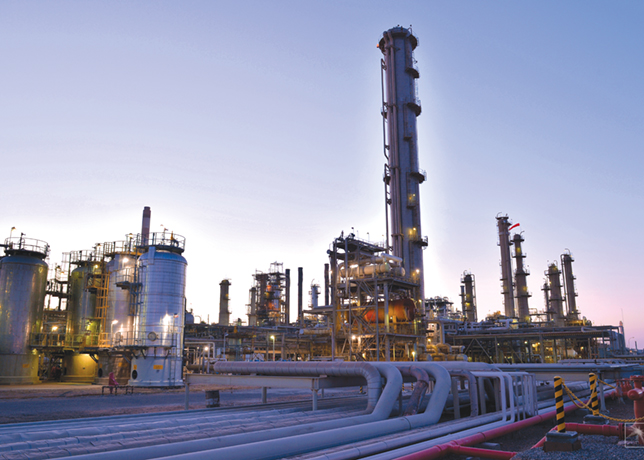
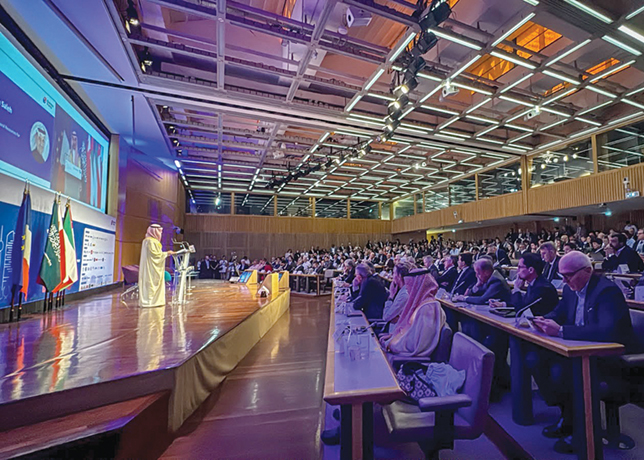
Mideast operators are moving away from upfront cost control to total cost of ownership
• Turnaround efficiency: This plays a decisive role in plant economics since every hour on the critical path carries a direct financial implication.
Yet many inputs that influence turnaround duration are still evaluated in isolation without fully accounting for their cumulative impact on the schedule.
• Environmental performance: This has evolved from a routine compliance requirement into a hard operational constraint, where effluent quality, emissions, and waste handling now heavily influence both cost structures and the basic ability to operate within tightening regulatory frameworks.
• Total cost of ownership: All of the aforementioned factors converge under this broader concept, reflecting the reality that the lowest upfront cost rarely translates into the lowest lifecycle cost once execution realities are factored in.
HIDDEN FRICTION IN DECONTAMINATION
This shift in thinking becomes particularly evident when examining operational areas traditionally treated as routine, such as decontamination during shutdowns.
Decontamination is frequently perceived as a standard activity and evaluated accordingly, leaving the lowest cost per unit of chemistry as the primary selection criterion.
However, this commoditised approach overlooks several critical variables that directly influence safety, schedule, and downstream impact.
One of the most important distinctions lies in how different chemistries address hazardous compounds, such as hydrogen sulphide and pyrophoric iron sulphides.
Some solutions are designed to temporarily bind these compounds, creating a potential for re-release under changing conditions, whereas others convert them into stable, non-reactive forms to effectively eliminate the hazard.
This difference is not merely technical; it has direct implications for safety because a failure to neutralise pyrophoric materials can result in ignition during equipment opening or entry, introducing additional remediation steps, delays, and personnel exposure.
Effluent characteristics represent another overlooked factor, as certain chemistries form strong, stable emulsions that increase chemical oxygen demand in wastewater, which in turn raises treatment costs and adds pressure on compliance systems.
Conversely, chemical alternatives that reduce residual load simplify disposal and improve overall environmental performance.
The impact on turnaround schedules is equally significant because decontamination typically sits on the critical path, meaning any additional circulation time, secondary treatment, or unplanned rework will extend the shutdown duration.
Because even a single extra day can materially alter the economics of a turnaround, execution visibility serves as a critical differentiator.
In many cases, completion is determined through estimation rather than measurement, whereas approaches that provide real-time indication of decontamination progress enable better control, reduce uncertainty, and help compress schedules.
Taken together, these factors demonstrate how a seemingly routine decision can influence multiple aspects of plant performance, from safety and compliance to cost and timeline.
For facility owners, the implication is clear: The focus needs to move beyond controlling individual cost elements toward managing overall outcomes.
A practical way to embed this shift is through a consistent evaluation framework.
Every operational decision, particularly those considered routine, should be assessed against four key questions:
• Does the solution eliminate risk or simply defer it?
• Does it simplify execution or introduce additional complexity?
• Does it reduce downstream impact or transfer the burden elsewhere?
• Does it improve certainty or increase variability in outcomes?
Applying this framework consistently leads to more predictable performance, fewer disruptions, and better alignment between planned and actual results.
In an environment where margins are under pressure and operational expectations continue to rise, the ability to manage outcomes rather than just costs becomes a defining capability.
The gap between budget and execution does not have to be accepted as inevitable; in many cases, it begins with re-evaluating decisions that have long been treated as routine.
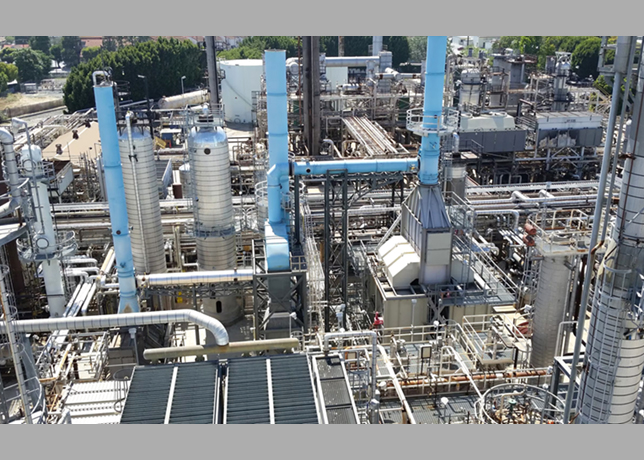
Consider a global operator confronting recurring pyrophoric fires during fluid catalytic cracking (FCC) turnarounds.
By selecting technology that eliminated hazards at the source rather than merely suppressing them, they achieved readiness in 10 hours with zero safety incidents, no delays, and no downstream waste burden, delivering an execution certainty that transcended traditional cost metrics.
CASE STUDY: ELIMINATING PYROPHORIC RISKS & COMPRESSING SCHEDULES IN FCC UNIT DECONTAMINATION
A global refinery operator faced critical safety and efficiency challenges during a fluid catalytic cracking unit (FCC) turnaround, where historical decontamination methods had caused pyrophoric fires, equipment fouling, and major operational disruptions.
• The challenge: The operator was restricted by severe safety hazards due to pyrophoric iron sulphides risking ignition during equipment entry, while traditional permanganate chemistry caused operational disruption by requiring an excessive equipment footprint that disrupted broader site operations.
Furthermore, unpredictable cleaning timelines created severe schedule uncertainty that threatened critical path deadlines.
• The paradigm shift: Replacing cost-driven decisions with an outcome-focused framework, the operator prioritised risk elimination over risk transfer by destroying pyrophoric threats directly at the source.
They further prioritised downstream simplicity to avoid chemical fouling and complex waste treatment, while focusing heavily on schedule certainty to guarantee rapid, predictable execution.
• Solution highlights: The operator deployed proprietary vapour-phase decontamination technology (Zyme-Flow® UN657), utilising a compact equipment setup with a minimal footprint to avoid interference with ongoing site operations.
This approach provided enhanced execution visibility through real-time monitoring, enabling immediate adjustments, such as fixing a dead leg mid-process, while achieving complete hazard conversion by transforming hydrogen sulphides and pyrophoric sulphides into inert compounds before equipment opening.
• Results: Within a 10-hour window, the operator achieved 100 per cent safety with 0 ppm hydrogen sulphides and zero per cent lower explosive limit (LEL), completely eliminating pyrophoric ignition risk upon entry.
This drove major schedule compression, allowing maintenance crews to start hot work immediately without historical delays, while ensuring zero downstream impact through the complete elimination of chemical fouling or secondary waste treatment.
Ultimately, site engineers endorsed repeat use for future turnarounds, establishing deep operational trust.
This outcome mirrors the priorities of forward-thinking operators in the Middle East: Proactive hazard elimination, schedule integrity, and total cost governance, proving that optimising routine scopes is pivotal to plant performance.
The true opportunity lies in recognising these decisions well before the tendering process begins.
* Anupam Sharma is a strategic leader with over two decades of experience across diverse industries, technologies, contracting models and capital deployment in the Mena region.