



































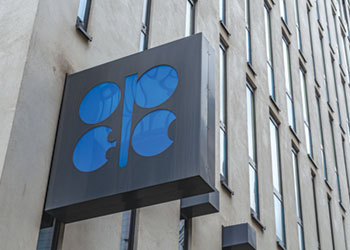
The Organization of the Petroleum Exporting Countries (Opec) is facing weakening demand in H1 2024 just as its global market share declines to the lowest since the Covid-19 pandemic on the back of output cuts and member Angola's exit, Reuters forecasts.
The trend means the group would struggle to ease production cuts unless global oil demand accelerates or the group is prepared to accept lower oil prices.
Angola said it is leaving Opec from January 2024, following exits by Ecuador in 2020, Qatar in 2019 and Indonesia in 2016.
This leaves the group with 12 members and takes its production to below 27 million barrels per day (mbpd), less than 27 per cent of the total global supply of 102 mbpd.
Separately, a Reuters poll last month predicted oil prices to stay near $80 a barrel in 2024.
A survey of 34 economists and analysts forecast Brent crude would average $82.56 in 2024, down from November's $84.43 consensus. Just one contributor expected prices to average above $90 mark next year.
Meanwhile, the International Energy Agency (IEA) predicts oil demand reaching 102 mbpd in the late 2020s before declining to 97 mbpd in 2050.
There are large declines in oil use in cars, buildings and power generation, although most of this is offset by growth in oil use in trucks, aviation and petrochemicals.
Almost half of global oil use is currently in road transport, but this is under increasing pressure from the rise of electric vehicles (EVs). The EV market has been growing exponentially in recent years, and nearly 20 per cent of new cars being sold globally in 2023 are electric.