













































Artificial intelligence drives measurable improvements in safety, energy efficiency, and operational reliability across downstream petroleum operations worldwide
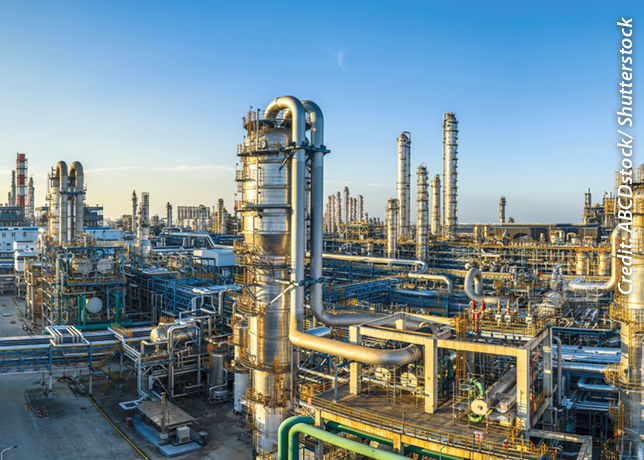
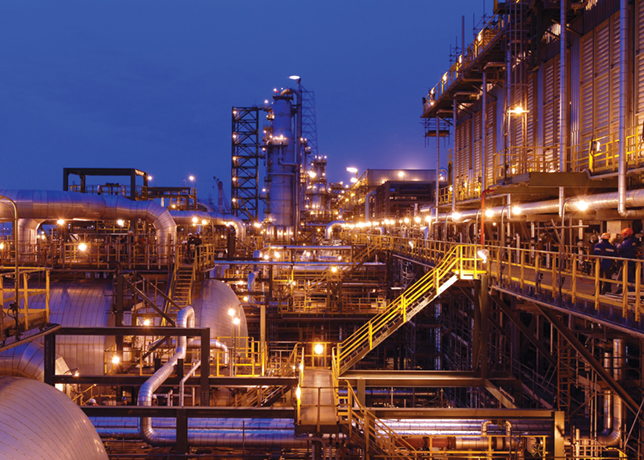
Artificial intelligence (AI) has emerged as a transformative force in oil refining, fundamentally altering how downstream facilities approach process control, safety management, and operational efficiency.
The technology’s integration across refinery operations represents not merely an incremental improvement but a paradigm shift from reactive to predictive industrial management, delivering quantifiable results that reshape the sector’s economic and environmental performance.
The global AI market for oil and gas operations has expanded from $3.14 billion in 2024 to a projected $7.64 billion in 2025, with analysts forecasting growth to $25.24 billion by 2034 at a compound annual growth rate of 14.2 per cent.
In downstream operations specifically, 41 per cent of refineries currently deploy AI solutions, whilst another 52 per cent plan implementation within three years, reported by IBM Institute for Business Value.
A comprehensive systematic review by researchers in India demonstrates that AI can reduce equipment downtime, emissions, and operational costs whilst enhancing decision-making and regulatory compliance.
This rapid adoption reflects AI’s demonstrated capacity to address the sector’s most pressing operational challenges whilst simultaneously advancing sustainability objectives.
Industry leaders have already documented substantial performance gains. For instance, Shell’s predictive maintenance implementation across over 10,000 equipment assets processes 1.2 trillion data points annually, achieving a 20 per cent reduction in unscheduled downtime and 15 per cent decrease in maintenance expenditures.
BP’s AI-integrated refining operations recorded a 20 per cent increase in throughput efficiency and 25 per cent reduction in maintenance-related disruptions.
Saudi Aramco analyses approximately 10 billion data points daily, generating $4 billion in technology-driven operational improvements in 2024 alone.
PREDICTIVE ANALYTICS & EQUIPMENT RELIABILITY
AI-driven predictive maintenance constitutes perhaps the most mature application in refinery environments.
Machine learning (ML) algorithms analyse sensor data encompassing vibration patterns, temperature profiles, pressure fluctuations, and chemical compositions to identify precursor indicators of equipment degradation.
The paper titled, ‘The AI-Driven Process Control for Enhancing Safety and Efficiency in Oil Refining’ published in Applied Chemical Engineering demonstrates that AI systems can forecast failures in critical assets including pumps, compressors, heat exchangers, and reactors with sufficient lead time to enable scheduled interventions rather than emergency responses.
The operational impact extends beyond cost reduction, such as at Shell’s Netherlands refinery, AI systems identified 65 control valves requiring repair that conventional monitoring had failed to detect, preventing potential hydrocarbon breakthroughs and associated production losses.
A smart energy management system deployed across multiple oilfield and refinery sites achieved 25 per cent energy savings, 15 to 20 per cent reduction in carbon emissions, and significantly lower operational costs through integration of predictive modelling with real-time SCADA data.
McKinsey research indicates that predictive maintenance can deliver a 30 per cent reduction in maintenance expenditures and 40 per cent decrease in unplanned downtime.
Random Forest regression models have demonstrated superior performance in balancing predictive accuracy, robustness, and interpretability compared with neural networks, support vector machines, and gradient boosting algorithms.
These systems continuously ingest new operational data, allowing maintenance schedules to be refined dynamically based on actual equipment conditions rather than predetermined time intervals.
Furthermore, there are substantial financial implications. Equipment failures in modern refinery operations cost approximately $500,000 per hour of downtime, a figure that has more than doubled in recent years.
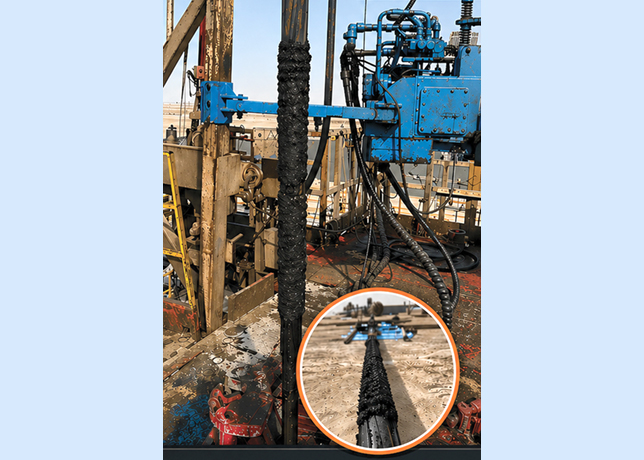
Major oilfield operators implementing predictive maintenance across drilling fleets report 30 per cent reductions in unplanned downtime and 20 per cent decreases in maintenance costs within the first operational year.
PROCESS OPTIMISATION & ENERGY MANAGEMENT
AI technologies enable real-time optimisation of complex refining processes through continuous analysis of multivariate operational parameters.
Reinforcement learning algorithms adjust control parameters including feed rates, reactor temperatures, and pressures to maximise product yield, enhance throughput, and minimise raw material waste whilst maintaining product specifications.
These adaptive systems learn optimal strategies through interaction with the refinery environment, continuously improving performance without explicit programming for each scenario.
Energy management represents a critical application domain where AI delivers both economic and environmental benefits.
The technology identifies inefficiencies across energy-intensive operations including distillation columns, fluid catalytic cracking units, and hydrocracking processes.
Analysts project that refineries could achieve 208 trillion BTUs of annual energy savings through AI-based process optimisation, whilst AI-optimised fired heater operations can deliver one per cent efficiency improvements translating to 900 tonnes of fuel savings annually per unit.
Deep learning algorithms process complex sensor signals and infrared imagery to detect early-stage equipment degradation, enabling preventive interventions before performance deterioration affects product quality or energy consumption.
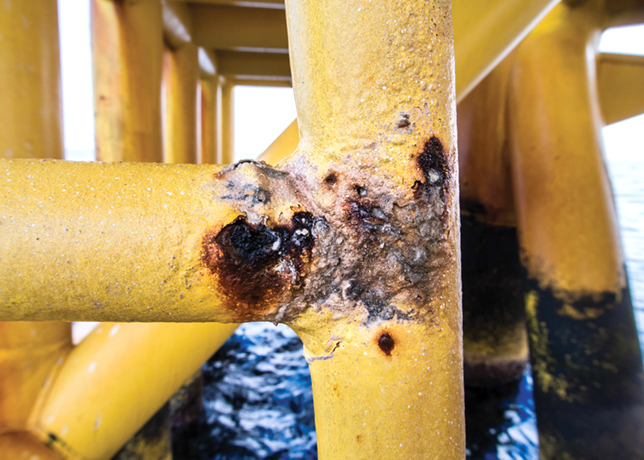
These systems identify subtle deviations in normal operating parameters that may indicate underlying issues including leaks, corrosion, fouling, or overheating, providing operators with actionable intelligence to prevent escalation.
Natural language processing applications extract insights from unstructured data sources including operator logs, maintenance records, shift reports, and regulatory documentation.
This capability enhances situational awareness by combining human-generated observations with sensor data, identifying recurring failure patterns, and supporting regulatory compliance activities.
The technology proves particularly valuable for analysing historical maintenance records to predict future maintenance requirements and optimise resource allocation.
Oil and gas executives report 27 per cent improvements in production uptime through AI-based predictive equipment maintenance and 26 per cent enhancements in asset utilisation optimisation.
Digital transformation initiatives incorporating AI are expected to increase market value by $56.4 billion between 2025 and 2029, growing at 14.5 per cent compound annual growth rate.
Companies successfully implementing AI report up to 20 per cent reductions in operational costs, whilst 64 per cent of executives acknowledge significantly revamping workflows to enhance process efficiencies and reduce manual effort.
IMPLEMENTATION CHALLENGES & FUTURE TRAJECTORIES
Despite demonstrable benefits, AI adoption faces substantial barriers. Legacy infrastructure at many refineries lacks modern sensing capabilities and real-time data acquisition systems necessary for effective AI deployment.
Integrating AI with existing control systems requires significant capital investment in digital infrastructure, complicating business cases particularly for older facilities operating on constrained budgets.
Cybersecurity concerns have also intensified as AI integration expands system connectivity and potential attack surfaces.
Without robust security protocols including network segmentation, encryption, and intrusion monitoring, AI-enabled systems may become vulnerable to unauthorised access or operational manipulation.
The interconnected nature of modern AI systems creates potential vulnerabilities that require comprehensive security frameworks to protect sensitive operational data.
Meanwhile, workforce capability gaps present another significant challenge. AI-driven control systems demand expertise spanning data science, ML, and process engineering, a combination rarely found in traditional refinery operations teams.
Only 29 per cent of energy industry respondents invest in workforce retraining despite 92 per cent acknowledging the competitive advantage of reskilling initiatives.
This skills shortage threatens to constrain AI deployment velocity and long-term sustainability.
Model explainability remains particularly problematic for safety-critical applications. Complex deep learning systems often function as "black boxes", making it difficult for operators to understand decision-making processes and trust automated recommendations.
Regulatory uncertainty compounds this challenge, as standardised frameworks governing AI deployment in safety-critical sectors remain underdeveloped.
Ambiguity regarding certification, accountability, and liability discourages widespread adoption for core process control and safety applications.
Future developments will likely centre on digital twin technologies combining AI-based predictions with physical models for refinery-wide optimisation.
These virtual replicas enable low-risk testing of control strategies, fault simulation, and dynamic optimisation without disrupting actual operations.
Federated learning approaches promise to enable secure cross-site model training whilst maintaining data privacy and intellectual property boundaries, allowing refineries to benefit from collective insights without exposing proprietary information.
Explainable AI systems will prove increasingly essential as AI assumes greater operational responsibility.
These interpretable models must not only deliver accurate predictions but also provide human-understandable explanations for their outputs, satisfying regulatory requirements whilst building operator confidence.
The convergence of AI, process engineering, and industrial cybersecurity will ultimately define the next phase of refinery modernisation, enabling safer, smarter, and more environmentally conscious operations.