




































Low-carbon hydrogen is emerging as a key solution for decarbonising hard-to-abate sectors, including iron and steel production, chemical manufacturing, and long-haul transport.
With less than 1 per cent of global hydrogen supply currently low-carbon, blue hydrogen is a critical transitional solution, helping scale production while moving toward a hydrogen-based economy.
According to IDTechEx, the global blue hydrogen market is projected to reach $52 billion by 2036, growing at a CAGR of 22 per cent.
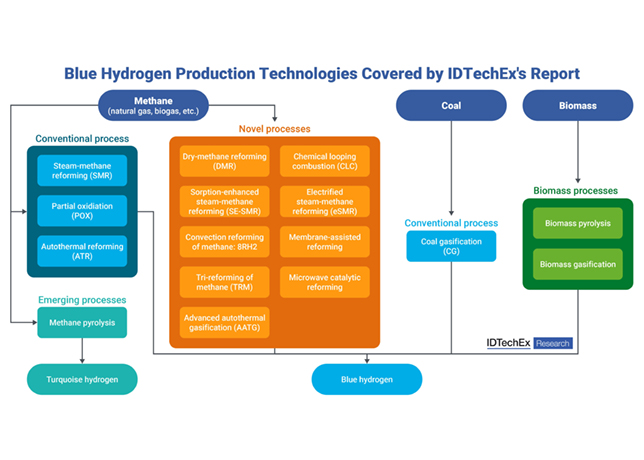
Blue hydrogen is produced from fossil fuels using conventional methods combined with carbon capture, utilisation, and storage (CCUS), significantly reducing carbon emissions compared to grey hydrogen.
Turquoise hydrogen, produced through methane pyrolysis, generates solid carbon as a by-product instead of requiring carbon capture, offering an additional low-carbon option.
Key blue hydrogen production pathways include steam methane reforming (SMR) with CCUS, autothermal reforming (ATR) with CCUS, partial oxidation, and coal gasification, while emerging technologies like methane pyrolysis, biomass-based hydrogen, and eSMR are gaining attention.
Globally, over 60 governments have included hydrogen in energy transition strategies.
Policies and incentives in the US, Canada, the Netherlands, and the EU support low-carbon hydrogen through tax credits, emissions trading, and CCS directives. However, growth is uneven, with several large-scale projects delayed or paused due to high costs and weak demand.
Despite challenges, strong regulatory support, mature CCUS technologies, and rising hydrogen adoption are driving market expansion.