




















The Flagship platform unveiled aims to create the Middle East’s first university dedicated to ecological transformation, positioning the Kingdom as a regional hub for talent, knowledge and sustainable growth
A new higher-education platform dedicated to ecological transformation has been formally launched in Bahrain, signalling a structured effort to integrate sustainability, industrial innovation and finance into executive and postgraduate education.
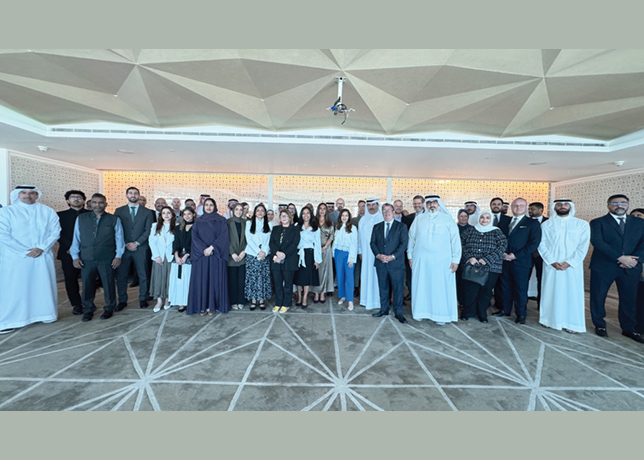
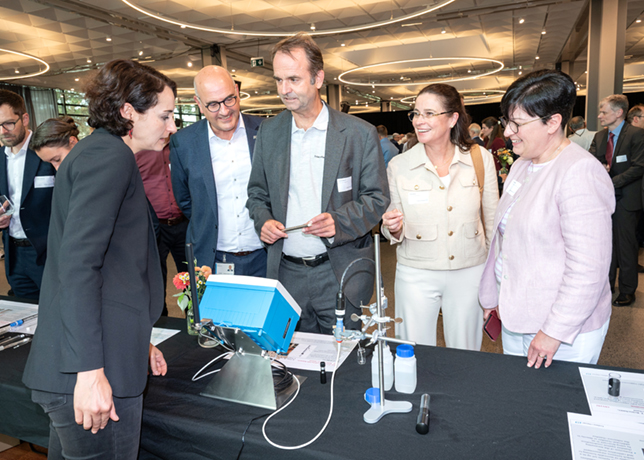
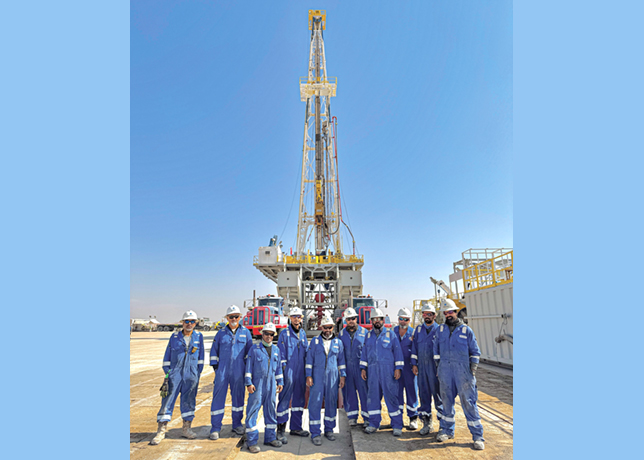
Veolia, Terra Academia International (TAI) and the Bahrain Institute of Banking and Finance (BIBF) announced the launch of Terra Academia Bahrain that aims to create the Middle East’s first ‘Green University’.
The initiative represents a strategic step in Bahrain’s effort to build capacity around ecological transformation and sustainable growth.
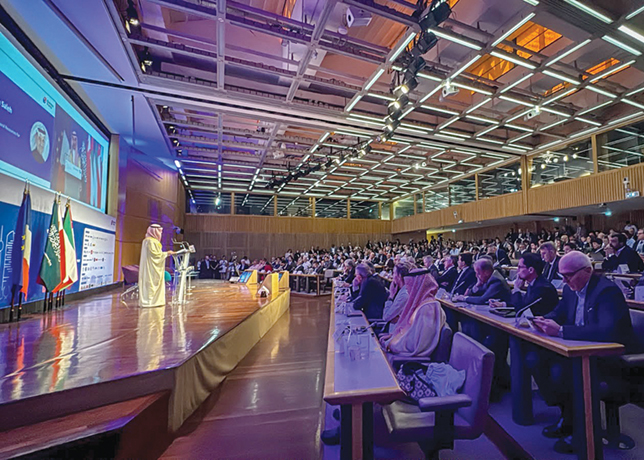
Present at the launch were Dr Mohammed bin Mubarak Juma, Bahrain’s Minister of Education and Chairman of the Board of Trustees of the Higher Education Council,; Khalid Ebrahim Humaidan, Governor, Central Bank of Bahrain; Eric Giraud-Telme, France’s Ambassador to Bahrain; and Khalid Al Rumaihi, Chairman, Alba.
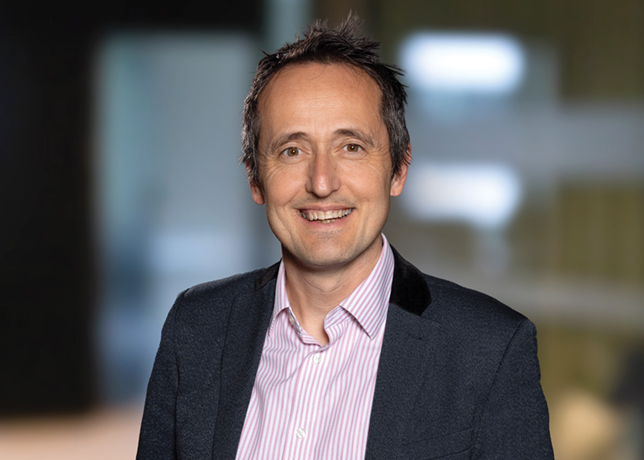
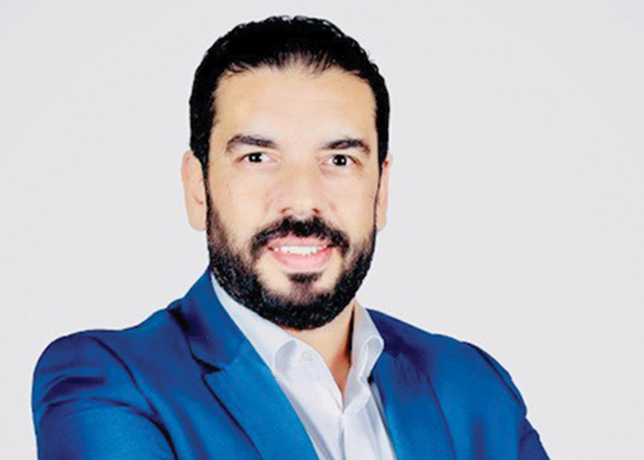
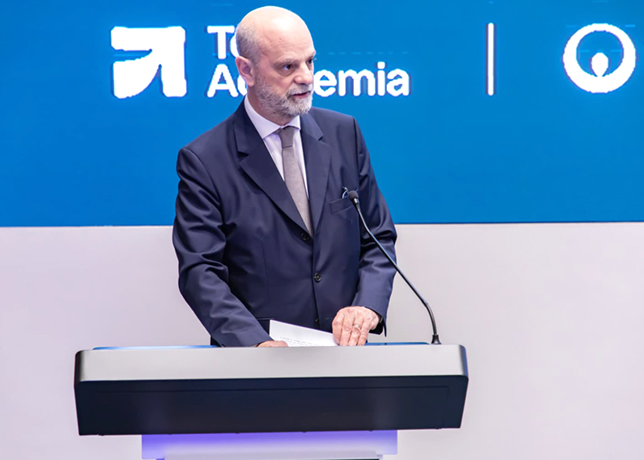
Jean-Michel Blanquer, Chairman of Terra Academia and former French Minister of Education, tells OGN energy magazine that at this stage the university concept is referred to as "Green University".
The structure will initially work in collaboration with the BIBF, where programmes will be conceived, with the possibility of establishing a dedicated campus in the future.
The first intake under the new platform will be an executive seminar scheduled for April 2026, followed by the creation of a Master in Waste Management in 2027 and additional programmes thereafter.
REGIONAL HUB FOR ECOLOGICAL EDUCATION
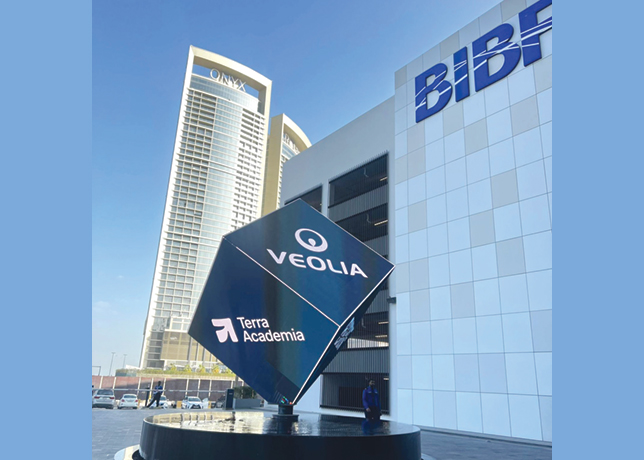 |
Terra Academia will initially operate from BIBF |
The establishment of Terra Academia Bahrain aims to create an international centre of excellence for ecological transformation, industrial innovation and future skills development.
With this initiative, the ambition is to create in the Kingdom of Bahrain the first university dedicated to ecological transformation in the Middle East, positioning itself as a regional hub for talent, knowledge and sustainable growth with an ambition to train 5,000 students and professionals by 2030.
The project is envisioned as the development of a dedicated campus bringing together several partner universities, complemented by an online platform providing educational content and learning resources.
Blanquer characterises Bahrain as strategically placed within a region central to global ecological transformation.
He describes the Middle East as "a key place from an ecological point of view and from a geopolitical point of view", adding that within this landscape Bahrain has "this ability to gather people of different origins, different beliefs, different approaches and act as a strong hub for the region".
The programme will be open to a broad cohort. While the first intake is a seminar for senior executives, Blanquer stresses that the ambition is to cultivate a comprehensive culture of ecological transformation.
"It will be for everyone because the idea is to have a complete culture about all the challenges of ecological transformation. Sometimes people have a good specialty in one aspect and not in another," he says.
The faculty will be drawn from various places, including the UK, France, Bahrain and the wider region, reflecting what Blanquer calls a worldwide approach.
Although he acknowledges a strong French component, he adds that Terra Academia envisages a network of green universities in other parts of the world, creating an interconnected platform rather than a single isolated campus.
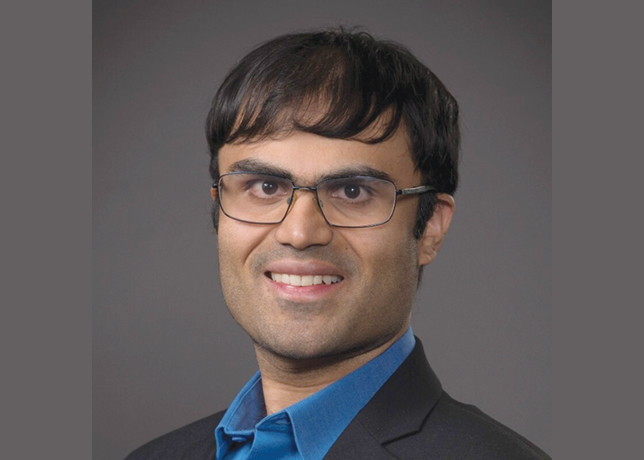
Sony Kapoor, economist and policy adviser, describes the launch as highly significant in regional terms.
"The region is on the frontline of climate change, where heat stress, an already critical problem, was becoming worse," he says.
He adds: "The region has some of the largest sovereign wealth funds and capital can deployed in sensible places, aligned with a sustainable environment. For all these reasons, I think setting up the first green university here is a fantastic pioneering initiative that’s going to yield big dividends for Bahrain and the region."
PROGRAMME ARCHITECTURE& INDUSTRY INTEGRATION
Terra Academia positions itself not as a traditional academic institution but as an architect of ecological transformation programmes.
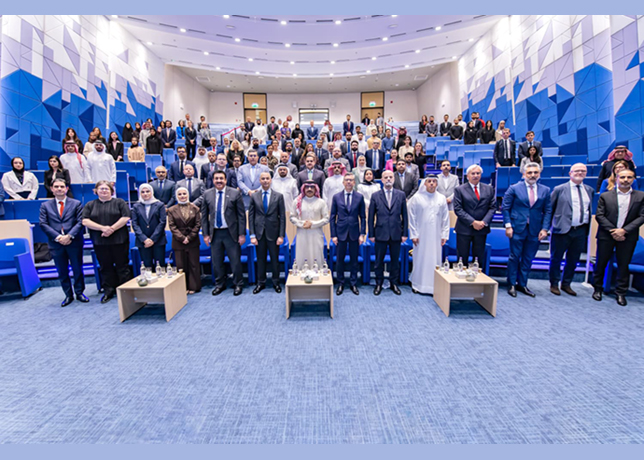 |
Veolia, Terra Academia and BIBF launch Terra Academia Bahrain |
Blanquer underscores this distinction, explaining that the organisation is "dedicated to green transformation" and structured to gather institutions from both the academic and economic worlds to meet emerging needs.
The executive programme will rest on what he identifies as three core pillars. "The first is a strong scientific culture supported by a systemic approach to environmental challenges. The second is an economic approach, with particular emphasis on finance, intended to bridge the gap between scientific imperatives and commercial realities. And the third is the operational connection between academic excellence and corporate strategy," he elaborates.
"Terra Academia is dedicated to this bridge between the excellency of the academic world, and this excellency must have a quick and strong impact on the concrete world, especially in the action of the companies and in the strategy of the companies," Blanquer explains.
He adds that students must gain rigorous academic insight while engaging directly with the concrete challenges faced by industry.
The partnership framework reflects this orientation. Veolia, described by Blanquer as "a leader in ecological transformation through water management, waste management, energy management", is identified as a key partner, particularly given its regional presence.
He notes that the company’s technological capabilities and innovative approach lends legitimacy to training initiatives focused on ecological transformation.
However, he is clear that Terra Academia is not an institution of Veolia and remains open to partnerships with other companies, including regional stakeholders.
The choice to launch a Master in Waste Management in 2027 signals an early focus on applied environmental disciplines aligned with industry needs.
Further programmes are expected to follow, although specific details beyond this initial degree have not been disclosed.
TECHNOLOGY, FINANCE & LONG-TERM VISION
The design of the Green University is shaped by what Blanquer describes as rapid changes in both the energy sector and education itself.
He highlights the digital revolution, and particularly artificial intelligence (AI), as a transformative force.
"We understand there is a lot of change happening, especially with the digital revolution and more specifically with artificial intelligence," he says.
He also emphasises that environmental pressures remain paramount despite geopolitical turbulence.
"Despite there being geopolitical problems today, which might make us feel that environmental questions are on the back burner, but in reality, environment still remains the main challenge for the planet," Blanquer states.
He argues that this requires a long-term approach centred on bridging existing skill gaps through integrated education.
Education, in his view, is undergoing structural change.
"It’s important to understand that education in the 21st century is going to evolve a lot, even in terms of the forms of education," he says, pointing to the revolution driven by AI and the need for institutions to remain accurate and at the forefront of new challenges while closely associating with the economic world.
Blanquer’s own background as former French Minister of Education informs the project’s orientation.
He describes education as "the engine of the century" and frames human resources as central to ecological and social stability.
"If you want a peaceful world and a world with a new ecological way of living, it’s very important to understand that human resources are key," he says.
He adds that early learning is critical and that prioritising youth is inseparable from prioritising the planet.
French and European academic traditions are expected to inform the Bahrain-based programmes.
Blanquer refers to France’s schools of economics and the approach associated with Nobel Laureate Philippe Aguillon, highlighting reflections on green growth compatible with environmental necessities and innovation driven by green growth.
He also points to France’s scientific tradition, citing the University of Strasbourg and its Nobel recognition in chemistry.
In the energy domain, he references a tradition of decarbonation through nuclear plants and electrification, suggesting that sharing such technological and strategic visions with the Middle East is integral to the energy transition underway in the region.
As the first executive cohort prepares for its April 2026 seminar, the initiative is positioned at the intersection of policy, finance and corporate strategy.
Its architects present it as a vehicle to align scientific rigour with capital deployment and industrial execution, anchored in Bahrain but designed with a global outlook.
By Abdulaziz Khattak