

























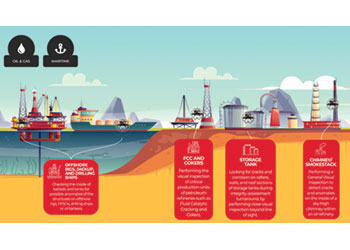
 The many applications areas for the Elios drones
The Elios cutting-edge drone technology has significantly enhanced the way the oil and gas sector operates, bringing numerous benefits to the industry as a whole, Junio Valerio Palomba, Managing Director – EMEA, Flyability, tells OGN
The oil and gas industry is perpetually in search of innovative technologies that improve safety, efficiency, and cost-effectiveness.
One such revolutionary innovation is the Elios drone, designed specifically for the inspection and monitoring of industrial facilities. Engineered by Flyability in Switzerland, the product is now in its third iteration since 2014.
SAFETY AND RISK REDUCTION
Traditional inspection methods often require personnel to work in hazardous environments, including confined spaces, elevated structures, and toxic atmospheres.
The Elios drone can navigate through these spaces, eliminating the need for human intervention and reducing the risk of accidents and injuries.
Moreover, the Elios drone is equipped with a robust protective cage, allowing it to collide with surfaces without causing damage or compromising its functionality.
This design feature enables the drone to safely access hard-to-reach areas and inspect complex structures, further minimising the risk to personnel.
COST-EFFECTIVENESS
 |
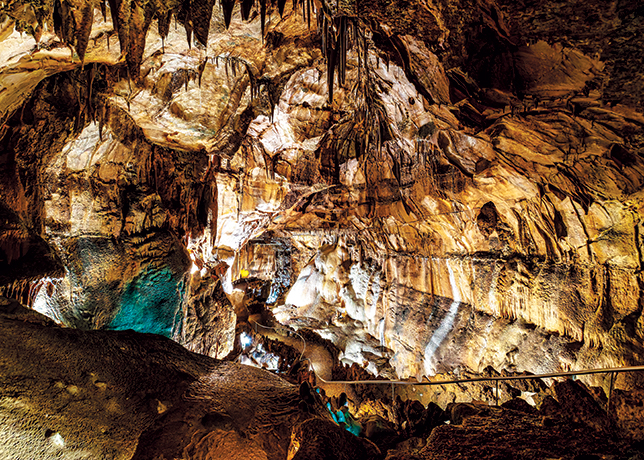
The Elios drone can navigate through confined spaces and toxic atmospheres |
The Elios drone eliminates the need for expensive equipment, such as scaffolding, cranes, or rope access systems — often required in traditional inspection methods — significantly reducing both capital and operational expenses.
Additionally, the drone's ability to conduct inspections quickly and efficiently leads to less downtime for the facilities.
This increased efficiency translates into a reduction in both labour costs and lost production time, resulting in overall cost savings for the company.
DATA COLLECTION AND ANALYSIS
Equipped with advanced sensors, high-resolution cameras, and thermal imaging capabilities, the Elios drone can capture detailed and accurate data during inspections.
This technology enables operators to identify potential issues, such as corrosion, leaks, or structural damage, with greater precision than traditional inspection methods.
Furthermore, the Elios drone's onboard software allows for real-time data processing, enabling operators to access and analyse the collected data swiftly.
This rapid data analysis facilitates more informed decision-making, allowing operators to prioritise maintenance and repairs based on the severity of the identified issues.
ENVIRONMENTAL BENEFITS
 |
The Elios drone eliminates the need for human intervention |
The use of Elios drone technology in the oil and gas industry also contributes to environmental protection efforts.
Traditional inspection methods can be both time-consuming and invasive, with a higher potential for environmental damage. The Elios drone allows for quicker, less intrusive inspections, reducing the likelihood of environmental harm.
Moreover, the drone's ability to accurately detect leaks and other potential issues allows for more effective and timely maintenance.
This proactive approach to maintenance not only minimises the risk of environmental incidents, such as spills or emissions, but also helps to ensure regulatory compliance, protecting both the environment and the company's reputation.
REMOTE OPERATIONS
Remote operation allows for inspections to be conducted in areas that may be unsafe or difficult for human inspectors to access, such as offshore platforms or remote pipelines.
In addition, remote operation enables companies to centralise their inspection teams, reducing the need for personnel to travel to various sites.
This centralisation leads to a more efficient use of resources and further reduces operational costs.
IMPROVED ASSET MANAGEMENT AND MAINTENANCE
With the detailed data provided by Elios drones, oil and gas companies can more effectively manage their assets and maintenance schedules.
The drone's high-resolution imagery and sensor data allow operators to pinpoint potential issues before they escalate, leading to a more proactive approach to asset management.
By identifying areas of concern early, companies can address issues before they become critical, leading to more efficient maintenance operations and an extension of the asset's lifespan.
This proactive approach not only ensures the safe and efficient operation of the facilities but also contributes to long-term cost savings.
CASE STUDIES & APPLICATIONS
The application of Elios drone technology was most noticeable in the following case studies:
• Chevron Corporation: Chevron has integrated the Elios drone technology into its inspection processes, leading to significant improvements in efficiency and safety.
The drone enabled Chevron to inspect a floating production storage and offloading (FPSO) vessel's complex structure and confined spaces without putting human inspectors at risk.
It allowed Chevron to complete the inspection in only two days, as opposed to the traditional eight-day inspection process thus resulting in considerable cost savings.
Meanwhile the drone's high-resolution imagery and thermal imaging capabilities helped identify potential issues more accurately than traditional inspection methods.
As a direct result of the key strategic value delivered by the Elios technology, Chevron Technology Fund decided to become a strategic investor into Flyability, during its most recent round of fundraising.
• Adnoc: Adnoc Refining, a subsidiary of the Abu Dhabi National Oil Company (Adnoc), collaborated with Terra Drone Corporation to perform a visual inspection of its residue fluid catalytic cracking (RFCC) facilities.
By employing the Elios 2 drone technology, Adnoc Refining was able to conduct a safer, more efficient, and cost-effective inspection of their complex facilities.
The high-resolution imagery and data captured by the drone enabled the company to identify potential issues and assess the condition of their assets with greater accuracy.
The successful implementation of drone technology in this case study demonstrates the value of adopting innovative solutions to enhance inspection processes and optimise asset management in the oil and gas industry.
WORKFORCE TRAINING AND SKILL DEVELOPMENT
The adoption of Elios drone technology in the oil and gas industry also presents opportunities for workforce training and skill development.
As companies increasingly invest in drone technology, they will need to train their personnel to operate and maintain the equipment effectively.
This training not only equips workers with valuable new skills, but also promotes a culture of innovation and adaptability within the industry.
Moreover, as the demand for drone operators and related expertise increases, the industry has the potential to create new job opportunities. This expansion of the workforce can contribute to the overall growth and sustainability of the oil and gas sector.
CONCLUSION
The integration of Elios drone technology into the oil and gas industry has led to numerous benefits, including enhanced safety, cost-effectiveness, improved data collection and analysis, environmental protection, remote operations, workforce training and skill development, and better asset management and maintenance.
As the industry continues to adopt this innovative technology, it is likely that the benefits will only continue to grow, revolutionising the way oil and gas companies operate and maintain their facilities.
The Elios drone technology is a prime example of how embracing innovation can lead to significant improvements in the efficiency, safety, and sustainability of the oil and gas sector.
As the industry faces increasing challenges and pressures to reduce its environmental footprint, innovations like the Elios drone will undoubtedly play a crucial role in shaping the future of oil and gas operations.
By Abdulaziz Khattak