





























QatarEnergy inks Guyana offshore deal
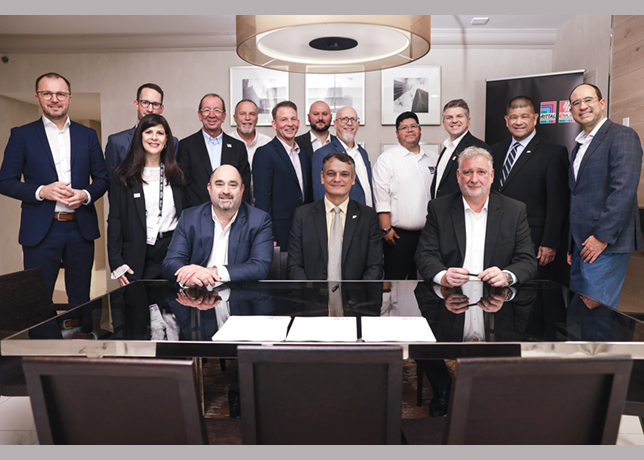
QatarEnergy has signed a production-sharing agreement for shallow-water Block S4 offshore Guyana. The block was awarded through the 2022 Guyana Licensing Round.
Under the terms of the agreement, QatarEnergy will hold a 35 per cent share, while its partners—TotalEnergies (the operator) and Petronas—will hold 40 per cent and 25 per cent, respectively.
Block S4 covers an area of 1,788 km² and is situated approximately 50–100 km from Guyana’s coast, in water depths of 30–100 meters.
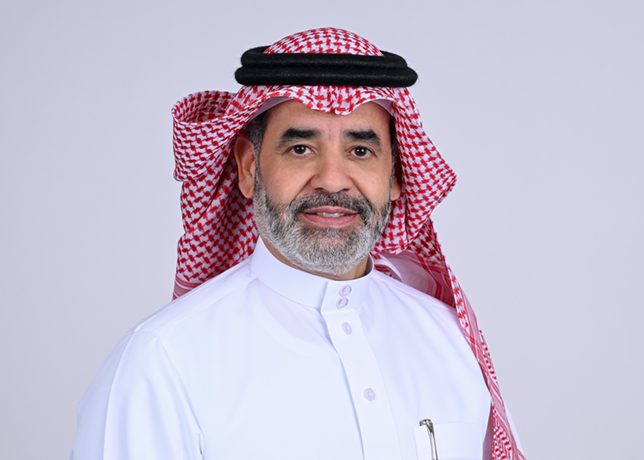
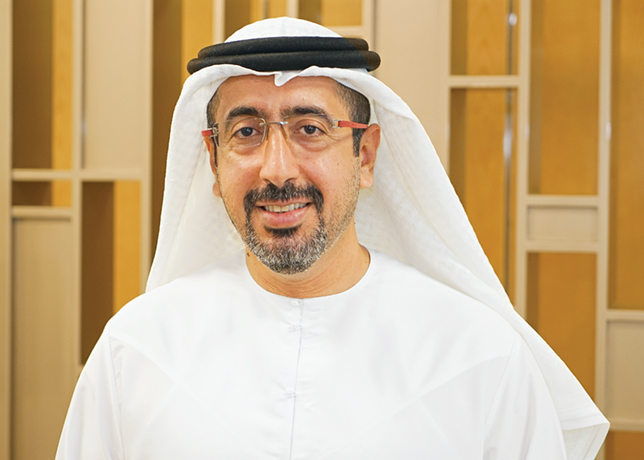
Saad Al-Kaabi, the Minister of State for Energy Affairs, the President and CEO of QatarEnergy, said: "We are pleased to secure this exploration block in Guyana, further building on the strategy to expand our global upstream exploration activities."
Al-Kaabi added: "I would like to thank the Government of Guyana and our partners in the block for their valued support and cooperation. We look forward to working together to deliver on our exploration objectives."
Wärtsilä introduces PhD programme
WÄRTSILÄ has launched an industrial PhD programme aimed at accelerating innovation and advancing future technologies through close collaboration with leading Finnish universities.
The programme offers doctorate students defined research topics, full funding, and access to both academic and industrial expertise.
Partnering initially with Aalto University, the University of Vaasa, and LUT University, the initiative connects students with Wärtsilä’s marine and energy technology leadership.
Six students will be admitted in 2025. The first application round drew strong interest, with over 50 applicants at the University of Vaasa.
Applications are currently open at Aalto, with others to follow later this year.
Solar PV market to hit $116bn by 2030
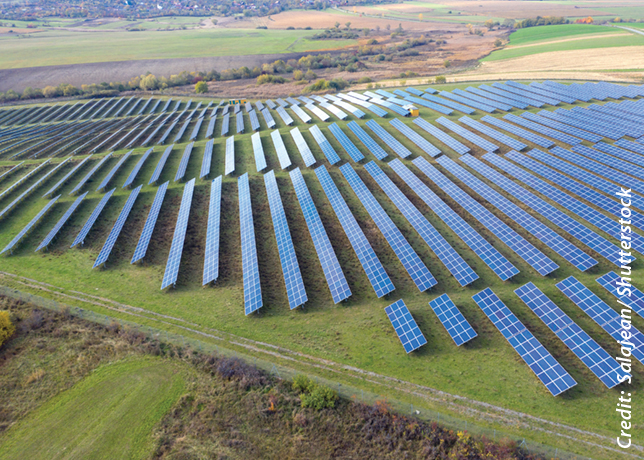
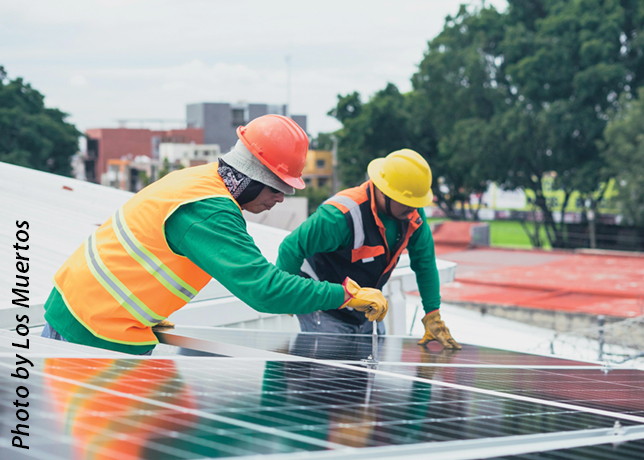
THE global solar PV modules and inverters market is projected to reach $115.8 billion by 2030, driven mainly by Asia-Pacific (APAC) due to strong policies, renewable energy targets, investments, urbanisation, and falling technology costs, according to GlobalData report.
Solar PV modules are expected to hit $80.7 billion and inverters $35 billion.
APAC leads production and market growth, while trade policies and localisation reshape supply chains.
Europe, the Middle East, and Africa (EMEA) focuses on quality and domestic capacity, and the global inverter market grows with utility-scale projects, hybrid storage, and stricter grid and cybersecurity standards, with APAC dominating at $19.8 billion.
Baseload Taiwan wins tribal nod
BASELOAD Power Taiwan has opened a local office in the Hongye Tribe, Hualien County, and signed an MOU following a historic tribal vote approving land lease for geothermal development.
It is the first private developer in Taiwan to secure tribal consent under the Indigenous Peoples Basic Law.
Building long-term trust over five years, Baseload will begin a two-year exploratory drilling phase, followed by plant development. The project provides clean, 24/7 power, supports agriculture and tourism, creates local jobs, and emphasises transparency, monitoring, and local hiring.
Fluor to design UK SAF hub
FLUOR Corporation has been awarded a contract by LanzaJet for the front-end engineering and design of Project Speedbird, a sustainable aviation fuel (SAF) hub in North Yorkshire, UK, jointly developed with British Airways.
Using LanzaJet’s Alcohol-to-Jet technology, the facility will convert second-generation ethanol from agricultural residues and woody biomass into SAF, cutting British Airways’ carbon emissions by about 230,000 tonnes annually.
Producing over 90,000 tonnes of SAF and renewable diesel each year, the Teesside site offers strategic location, advanced infrastructure, and skilled workforce.
Fluor will record the contract value in Q3.
Australia decommissioning costs
NEW research by Xodus for the Australian Government estimates that fully removing Australia’s offshore oil and gas infrastructure will cost $28 billion by 2070 ($43 billion adjusted for inflation), down from a 2020 estimate of $39.9 billion.
The reduction reflects improved forecasting for well plugging, pipeline removal, and vessel mobilization across 700+ wells, 7,600 km of pipelines, and 520 subsea structures.
Future savings are expected from better coordination, technology, and infrastructure development.
The report highlights opportunities for private-sector innovation, alignment with offshore wind, and investment in vessels, ports, and recycling.
Andrew Taylor, Head of Advisory APAC at Xodus, said: "Accurate cost forecasting is critical as Australia develops a safer and more sustainable decommissioning sector. This research gives both industry and government the tools to plan, budget and execute decommissioning more efficiently. The revised estimate not only reflects a maturing approach but provides a baseline for smarter, more collaborative strategies going forward."
New AI centre for energy innovation
THE Renewable Energy Institute (REI), European Centre of Technology (ECT), and Centro Studi Galileo (CSG) have launched the AI Centre for Energy Innovation and Technology to advance global climate action.
Building on decades of expertise and partnerships with UNEP and IIR, the Centre will leverage AI to accelerate renewable energy adoption, sustainable technologies, and efficiency improvements across Europe.
It will provide professional training, disseminate research, support international standards and policy development, and drive innovation in AI applications for renewables, energy storage, smart grids, and sustainable heating and cooling solutions.
Aed Energy wins start-up award
AED Energy, a UK developer of thermal energy storage, won "Newcomer / Start-Up of the Year" at the 2025 Energy Storage Awards for its breakthrough impact in long-duration energy storage.
The company is developing high-temperature thermal storage technology that provides reliable, low-cost heat and power using abundant materials and proprietary heat-to-electricity conversion.
Designed for grid-scale storage, industrial heat, renewable integration, and combined heat and power (CHP) applications, Aed Energy’s technology—developed in the UK—targets markets across Africa, Europe, and the Middle East.