
















 Dave Philp
The future energy operating system will use AI to predict and balance supply and demand, ensuring resilience, and enabling new energy markets, Dave Philp, Chief Value Officer, Bentley Systems, Advisory Services, tells OGN
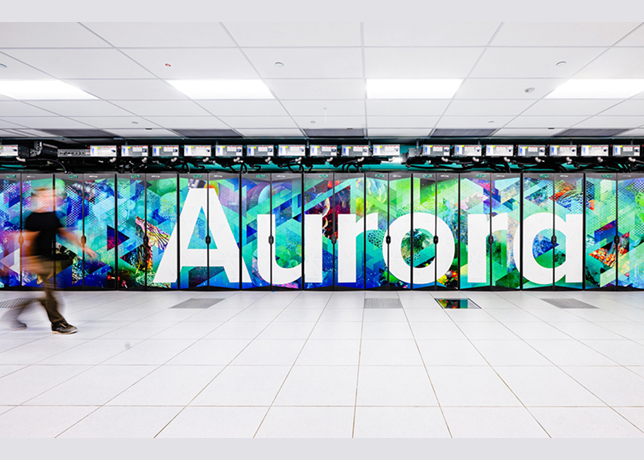
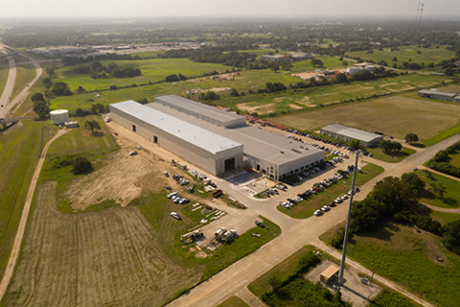
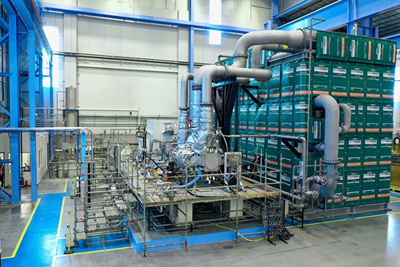
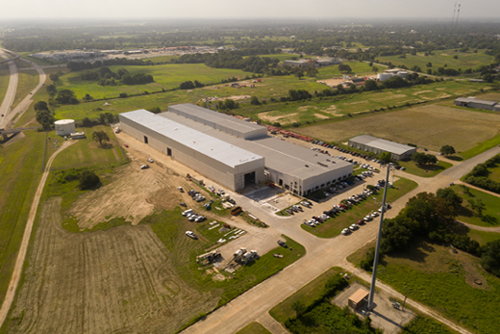
The vast energy needs of AI are encapsulated by an imposing development in Ashburn, northern Viriginia (US).
The development forms part of the world’s biggest cluster of data centres (the state has more than 600 listed data centres) and it has strongly divided opinion.
On the one hand, these centres are the engine of AI and cloud computing and a vital component of modern society.
On the other, they are making negative headlines for the strain they are placing on the state’s energy and water resources.
AI, as the International Energy Agency (IEA) noted in its 2025 report, is 'one of the biggest stories in the energy world today'.
Global electricity demand from data centres is set to more than double over the next five years, it noted, consuming as much electricity by 2030 as the whole of Japan does today.
For grid operators everywhere, the challenge is how to maximise the potential of AI to develop robust and intelligent grids and deliver far more value than the energy it consumes?
AI: THE NET-ZERO ACCELERATOR
The answer lies in using AI, digital twins and other technologies to modernise our power systems.
By modernise, we mean enabling grids built around fossil fuels to adapt to geographically dispersed and intermittent renewable energy sources.
I would argue these technologies are, apart from stringent policy, the single greatest accelerator for the energy transition.
They are helping us to compress timeframes and de-risk the massive capital investments required in modern energy programmes.
They can accelerate project and infrastructure planning, design and delivery, equip decision-makers with better foresight into long-term infrastructure needs and help grid operators anticipate and respond to surges in demand
DIGITAL IN ACTION: THE PINNAPURAM INTEGRATED RENEWABLE ENERGY PROJECT
 |
AI can generate hyper-accurate, probabilistic |
Digital twins are already supporting better strategic planning across the energy sector and optimising the performance, control, and adaptability of energy delivery.
The Pinnapuram Integrated Renewable Energy Project (IREP), in Andhra Pradesh, is a prime example.
Using GeoStudio geotechnical analysis software from Seequent (a Bentley Systems company), AFRY, the engineering consultancy, has been able to simulate ground and subsurface conditions and create 3D models of the extensive site footprint to provide it with crucial insights ahead of design.
It has gained a complete, holistic geological picture of the site which will inform and accelerate the design process.
AI & INTERMITTENCY
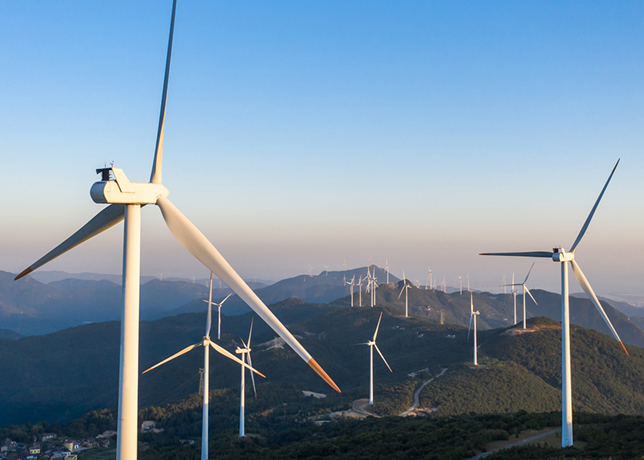
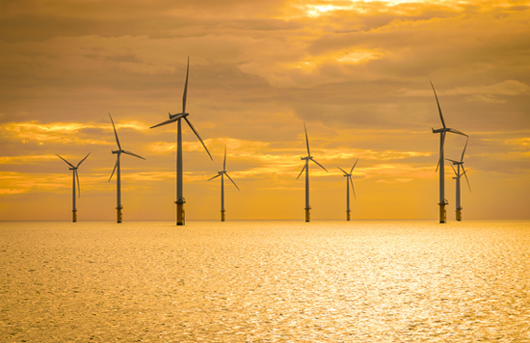
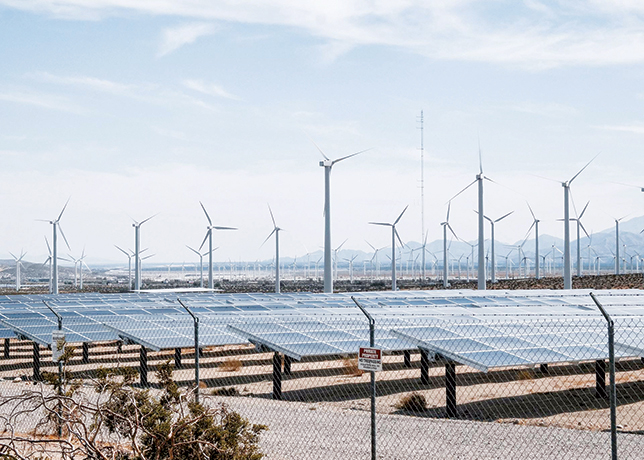
The Achilles’ heel of renewables has always been intermittency; the sun doesn’t always shine, and the wind doesn’t always blow.
AI is our most powerful tool to transform this variability from a critical liability into a manageable, predictable variable.
AI forecasting models are a world away from simple weather reports. They are sophisticated systems that ingest and learn from dozens of inputs simultaneously: Hyperlocal weather models, satellite imagery tracking cloud cover, historical performance data from the asset itself, and real-time SCADA system outputs.
By identifying complex, non-linear patterns in this data, AI can generate hyper-accurate, probabilistic forecasts of energy generation. Not just if the wind will blow, but precisely how much power a specific wind farm will generate in a 15-minute window three hours from now.
These AI-driven forecasts are fed directly into the control systems of grid operators and the digital twins of the grid itself.
When the AI predicts a significant drop in solar output due to approaching cloud cover, the system can proactively and automatically ramp up power from a battery storage facility or a hydropower dam to seamlessly fill the gap.
Ultimately, an infrastructure digital twin of the entire grid acts as the master orchestrator.
It uses the AI forecast as a primary input to run thousands of simulations per second, determining the most stable and cost-effective way to balance supply and demand.
This allows grid operators to maximise the intake of renewable energy with confidence, knowing they have an intelligent, automated system ready to manage any fluctuations.
DATA DELUGE
We live in a big data age. The challenge today is not about collecting or storing data; it’s about context and accessibility.
Often data exists in siloed, incompatible formats. The engineering data is in one place, the operational data in another, and the geospatial data somewhere else entirely.
The key to leveraging this data is to federate it.
This is where infrastructure digital twins provide immense value.
A digital twin doesn’t necessarily hold all the data, but it understands where it is and how it relates to the physical asset.
It provides the crucial context, aligning time-series data from a sensor with its exact 3D location on a turbine, its maintenance history from the asset management system, and its original design specifications.
This creates a 'single pane of glass' through which stakeholders can visualise, analyse, and act on information, turning raw data into actionable intelligence.
INNOVATION & ISLANDS
Today, the primary barriers to scaling up are less technology than people, process, and commercial models. Some examples include:
• Risk aversion: Organisational silos between IT (Information Technology) and OT (Operational Technology) often prevent the seamless flow of data required for true digital transformation.
• Lack of data standards and interoperability: Without open, common data environments, we risk creating thousands of 'digital islands', which are highly optimised individual assets that cannot communicate with each other to form a truly intelligent system of systems.
Overcoming this requires a commitment to open platforms and a shift in procurement from focusing on the lowest capital cost to the best whole-life value delivered through digital insight.
TURBINES & TECH SKILLS
To accelerate the use of digital technologies within the renewable energy sector we must also address the skills gap. This requires a three-pronged approach:
• We must deepen the partnership between industry and academia to redefine the curriculum for the next generation of energy professionals.
The future energy expert is not just an electrical engineer; they are a data scientist, who understands physics, or a mechanical engineer, who can write Python scripts to analyse performance data.
• We must invest heavily in upskilling and reskilling our existing workforce. This means creating continuous learning programmes and fostering a culture that values digital literacy as a core competency for everyone, not just a few specialists.
• As technology providers, we have a responsibility to make our software more intuitive. We must democratise the use of advanced simulation and AI, empowering engineers to ask complex 'what-if' questions and get insights without needing a PhD in data science.
At Bentley Systems, we are working to address the problem through initiatives such as our programme with Enactus, a global nonprofit advancing student innovation and entrepreneurship.
We announced in June the start of the 2025 iTwin4Good Challenge, an international competition designed to build skills and grow and new a diverse pipeline of future infrastructure leaders and solution developers.
THE THREE ‘DS’
The energy system of the future will be defined by three 'D’s': Decentralised, Digitised, and Democratised.
It will be a highly decentralised network of large-scale renewable projects, microgrids, community solar, and millions of homes and electric vehicles acting as both consumers and producers—or 'prosumers'—of energy, all connected and interacting in real-time.
This complex, bi-directional ecosystem simply cannot be managed manually. It will be orchestrated by a fully digitised, autonomous grid, underpinned by a federated system of infrastructure digital twins.
This 'system of systems' will be the operating system for our energy landscape, using AI to predict and balance supply and demand, ensuring resilience, and enabling new energy markets.
This is not just a technological evolution; it’s a fundamental democratisation of power, creating a more sustainable, resilient, and equitable energy future for our planet.