



















































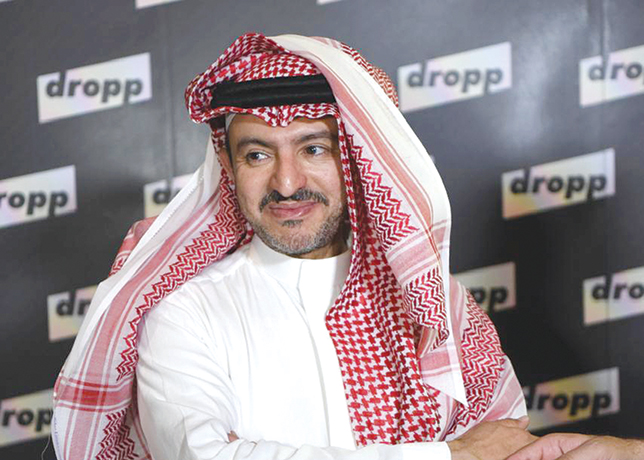
 Faisal Monai
Digital tokenisation is emerging as a pivotal tool, enabling energy assets to be represented on-chain and integrated directly with investor and regulatory ecosystems, Faisal Monai tells OGN
The energy sector is entering a period of profound transformation, driven by the convergence of digital finance and infrastructure investment.
As demand for cleaner, more efficient energy sources grows, stakeholders are increasingly exploring innovative ways to mobilise capital, enhance transparency, and streamline operations across complex projects.
"Digital tokenisation is emerging as a pivotal tool, enabling energy assets to be represented on-chain and integrated directly with investor and regulatory ecosystems," Faisal Monai, Co-Founder & CEO, droppRWA, tells OGN energy magazine.
In the Middle East, this evolution is already underway. ADNOC and IBM have been testing blockchain applications across oil and gas supply chains, supporting initiatives to digitise and streamline energy project management.
These early deployments demonstrate how energy companies are embracing technology not only to improve operational efficiency but also to prepare the sector for broader institutional investment and global market integration.
INCREASING ADOPTION
Growing institutional adoption of the Real-World Asset (RWA) sector is accelerating, with projections suggesting a total market of $2 trillion by 2030.
Sovereigns and financial institutions are increasingly recognising that this new capital markets infrastructure offers more than mere incremental improvement: It provides a complete overhaul for operational efficiency, instant, legal ownership, and asset investability.
At its core, tokenisation is the moving of physical assets on-chain, where the legal and economic rights of an underlying physical asset are embedded into a digital-native token on a blockchain.
Previously categorised as an experimental framework for consumer-scale assets, this technology is now being applied to critical infrastructure and high-value sovereign assets, including commercial real estate, global commodities, and large-scale energy projects.
Historically, nations have been cautious regarding the digitisation of critical infrastructure. However, the emergence of sovereign-grade infrastructure, where law is built directly into the code, has shifted this paradigm.
By integrating digital issuance directly with national registries, governments are now enabling the creation of regulator-native digital entities that carry full legal weight.
There is one sector which could benefit enormously from this: the energy industry.
EXPANDING ACCESS THROUGH FRACTIONALISATION
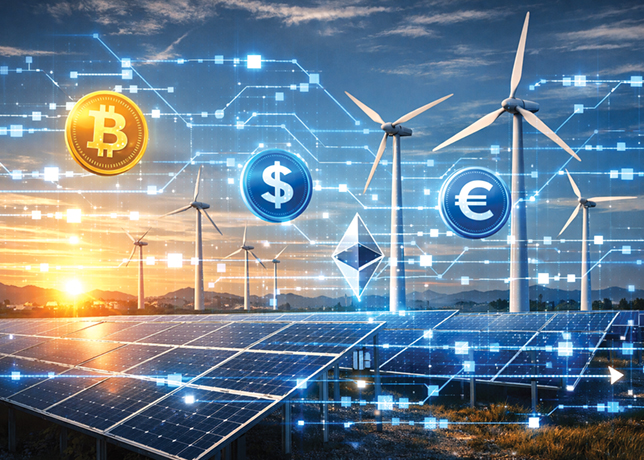 |
Despite in the primary issuance phase, the industry’s largest players are already using energy tokenisation |
The immediate benefit of tokenisation is the ability to break down massive, multi-billion-dollar energy projects into smaller, manageable digital units.
This process, known as fractionalisation, fundamentally changes access to these assets.
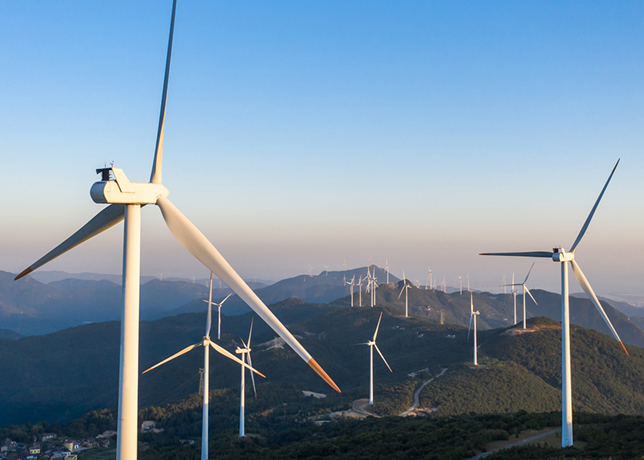
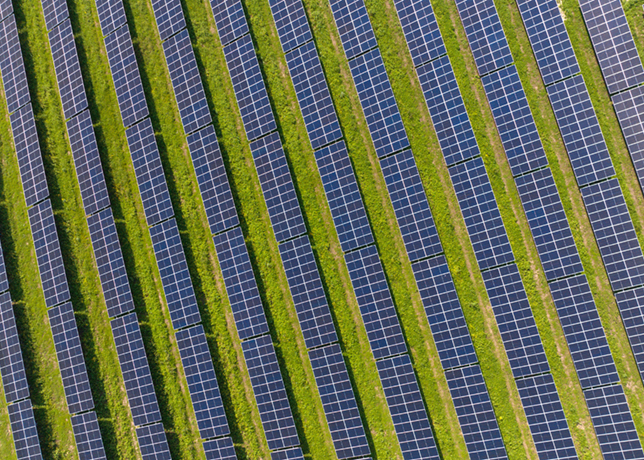
In the traditional model, a utility-scale solar or wind farm is an indivisible block of capital, accessible only to a few major institutional players.
By fractionalising these assets, the minimum ticket size is significantly reduced, allowing a much broader base of investors to participate.
This doesn’t just open the door for more players; it allows developers to source capital from a more diverse, global pool, bypassing the traditional funding bottlenecks that often stall large-scale projects.
CREATING LIQUIDITY THROUGH SECONDARY MARKETS
While fractionalisation provides the entry point, the digital nature of these units is what creates actual liquidity.
Historically, if an investor put capital into a private energy project, that money was "locked" for years; and there was no simple way to exit a position or rebalance a portfolio.
By placing these fractional shares on a digital rail, the development of active secondary markets is enabled.
Investors can now buy or sell their holdings with far greater ease, moving capital in and out of projects as needed.
This shift makes energy infrastructure a much more attractive destination for discretionary capital, as investors no longer have to fear their funds being trapped in an illiquid asset for a decade.
PROGRAMMABLE REVENUE & AUTONOMOUS SETTLEMENT
A critical technical advantage of tokenisation is the transition from slow, manual record-matching to programmable revenue distribution.
Through the utilisation of smart contracts, self-executing, programmable protocols, originally slow-moving assets can be transformed into intelligent, high-velocity financial instruments.
In legacy systems, a solar installation selling electricity to a national grid requires intensive manual auditing and prolonged quarterly settlement periods.
In a tokenised environment, revenue will be able to be distributed autonomously and instantaneously to token holders, triggered by real-time production data from the source.
This level of automation facilitates accelerated access to working capital, reduces operating costs, and establishes a new benchmark for stakeholder transparency.
By utilising an immutable ledger, the potential for disputes is mitigated, creating a verifiable and accountable value chain from generation to distribution.
This is the design target that sovereign-grade tokenisation infrastructure is being built toward; the technical foundation is being laid now in primary issuance deployments.
IMMUTABLE ESG PROVENANCE
Tokenisation provides the necessary infrastructure to prove a project’s green credentials, rendering the green attributes of a project verifiable and immutable.
By tokenising carbon credits or renewable energy certificates at the point of origin, each token represents substantiated, digital evidence of environmental practice.
For full disclosure, while tokenisation improves chain-of-custody and audit trail integrity at the point of issuance and transfer, it doesn’t independently verify the underlying environmental claim.
That process is still undertaken using normal practices, with the verified data being shared on-chain.
However, it still creates a high-integrity mechanism for corporations to offset their environmental footprint with total transparency.
In an era of heightened regulatory and consumer scrutiny, these programmable ESG profiles mitigate "greenwashing" risks and provide a clearly identifiable audit trail for compliance.
THE INSTITUTIONAL ROADMAP
We are currently in the primary issuance phase of energy tokenisation, yet the industry’s largest players are already starting to use this technology.
EDF Group’s Saudi RHQ, in collaboration with droppRWA, are integrating blockchain protocols within the Saudi energy landscape.
This strategic collaboration focuses on enhancing project liquidity, and developing standardised frameworks for the regional carbon credit market.
This momentum is reflected across the wider GCC.
From ADNOC’s and IBM’s oil and gas supply-chain blockchain pilot, Abu Dhabi’s potential exploration of blockchain-based clean energy certificates, and NEOM’s vision for a digitally tracked energy grid, the Gulf is establishing the sovereign-grade rails required for a global energy transition.
The shift towards sovereign-approved tokenisation represents a structural re-architecting of the energy sector.
By enhancing investability, automating cash flows, and providing immutable sustainability data, this infrastructure is no longer a matter of theoretical exploration, but a prerequisite for the next generation of global capital markets.
By Abdulaziz Khattak