



































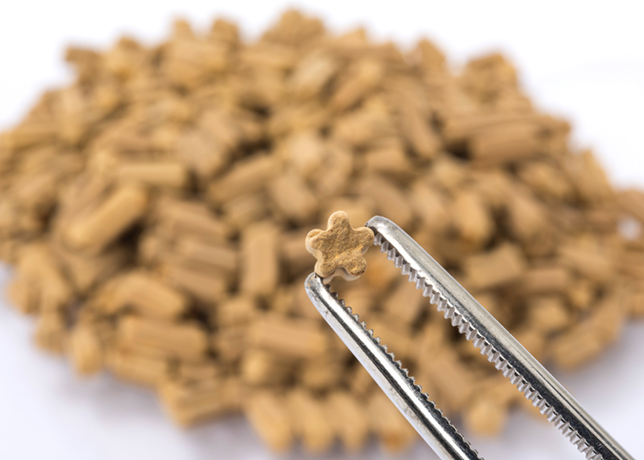
 BASF’s DeNOx catalysts achieve over 99 per cent N2O removal
New technologies aim to cut costs and deliver measurable emissions reductions across GCC industries, while sustaining chemical production, Christian Peters tells OGN
BASF is positioning catalysts and adsorbents at the centre of cost-effective carbon capture, utilisation and storage (CCUS), targeting system-wide efficiency rather than capture alone.
By addressing critical steps such as CO2 dehydration, the company aims to lower energy demand, simplify operations, and improve reliability for large-scale deployment.
Its Sorbead® adsorbents and catalyst portfolio enable both conditioning and conversion of CO2 into valuable products, supporting circular feedstocks.
'CCUS is not a substitute for energy efficiency, electrification, or renewables; it is a complementary solution,' Christian Peters, Vice-President, BASF Global Chemical Market Catalysts, tells OGN energy magazine in an exclusive interview.
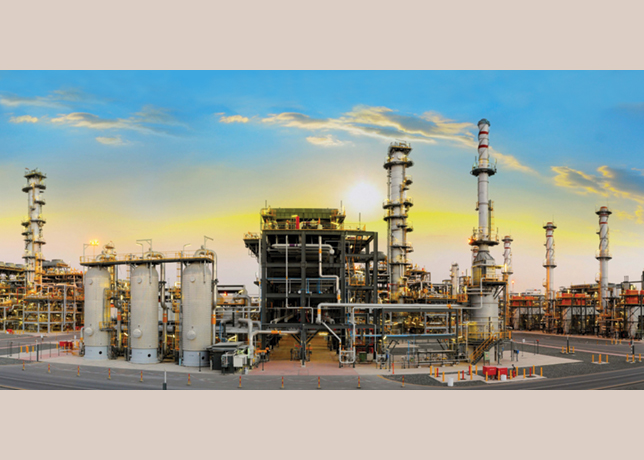
Across GCC clusters, BASF reports tangible results, including over 99 per cent nitrous oxide abatement and extended process efficiency.
Combined with X3D® catalyst innovation and a diversified supply network, the company is reinforcing resilience while advancing lower-carbon chemical production.
Below are excerpts from the interview:
What role do BASF’s catalysts and adsorbents play in CCUS, and how do you respond to criticism that CCUS may slow broader emissions reductions?
BASF’s role is to make CCUS economically viable by reducing total system cost, not just optimising the capture step.
A critical but often underestimated element is CO2 dehydration. For transport, utilisation, or storage, CO2 must meet strict water specifications to avoid corrosion, hydrates, and reliability issues.
While liquid desiccant systems such as TEG are proven, they are energy intensive and complex, especially for large, dry, high purity CO2 streams.
This is where BASF’s Sorbead® solid adsorbents are highly differentiated. Designed specifically for CO2 dehydration, Sorbead® offers lower energy demand, simpler operation, and reduced solvent handling compared with conventional TEG systems.
This translates directly into lower operating costs, higher on stream factors, and more predictable long term performance; key levers for scaling CCUS.
Beyond capture and conditioning, catalysts are central to CO2 utilisation. BASF’s catalyst portfolio enables conversion of captured CO2 into products, such as methanol or other intermediates, turning emissions into feedstock.
This is reflected in BASF’s Green Map, which positions catalysts and adsorbents as enablers of circular feedstocks and lower carbon value chains.
Regarding concerns about CCUS, BASF is clear: CCUS is not a substitute for energy efficiency, electrification, or renewables; it is a complementary solution for hard to abate process emissions that are intrinsic to chemical reactions.
Can you share concrete examples of measurable emissions reductions or savings delivered in GCC clusters, and the main challenges encountered?
Across GCC industrial clusters, BASF’s catalyst and adsorbent technologies have delivered quantifiable sustainability and economic benefits by targeting high impact process steps.
One clear example is nitrous oxide abatement. BASF’s DeNOx and DeN2O catalysts routinely achieve over 99 per cent N2O removal.
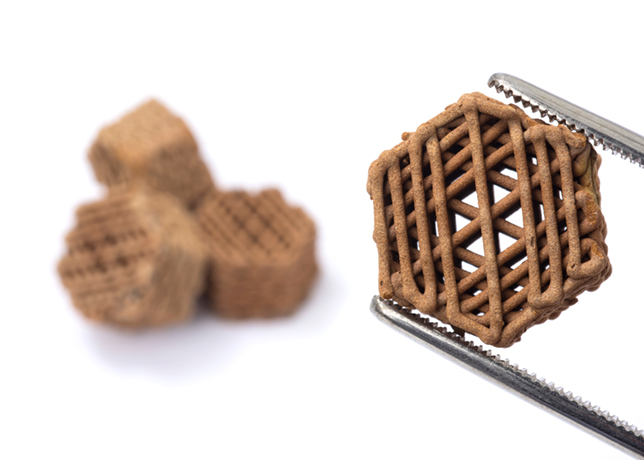 |
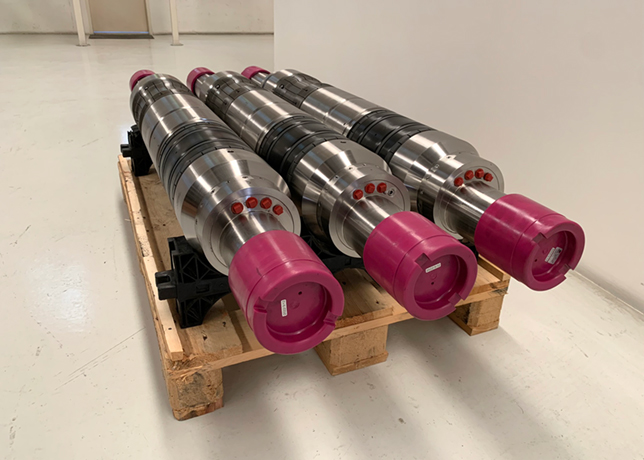
BASF’s X3D catalysts ... 3D printed |
Given that N2O has a global warming potential nearly 300 times higher than CO2, eliminating just one tonne of N2O is equivalent to avoiding roughly 300 tonnes of CO2.
At large GCC sites, this translates into hundreds of thousands of tonnes of CO2 equivalent reductions over a catalyst lifetime, without compromising production rates.
Another example is feed and intermediate purification using BASF Selexsorb® adsorbents in olefin and polymer complexes.
By deeply removing sulphur, oxygenates, nitrogen compounds, and COS, these adsorbents protect downstream catalysts and stabilise operations.
Customers typically achieve longer cycle lengths, reduced regeneration energy, extended polymer catalyst life, and fewer off spec products.
How is BASF adapting its catalyst supply strategy to enhance resilience amid volatility and rising regional competition?
BASF operates a multi regional manufacturing and supply network across Europe, the Americas, and Asia, supported by global R&D and technical service hubs.
This footprint mitigates geopolitical risk, logistics disruptions, and raw material volatility while ensuring reliable supply to GCC customers.
Rising competition from local GCC players is not a threat, but a catalyst for differentiation.
BASF’s response is twofold: Maintain global manufacturing flexibility to stay competitive, while increasingly focusing on value driven catalyst solutions that help GCC producers compete on performance and sustainability, not just price.
Combined with strong local technical engagement, this positions BASF as a long term partner in a more volatile and innovation driven market.
With regard to BASF Winning Ways strategy, what has changed in your daily work, and what does it mean for chemical market catalysts?
Winning Ways reinforces a sharper focus on value creation, agility, and customer impact.
In daily work, this translates into faster decision making, stronger customer centricity, and an even greater emphasis on innovation.
While BASF has built a strong culture over 160 years, Winning Ways raises ambition further, challenging teams to accelerate solutions, help customers succeed more, and continuously improve performance across the chemical market catalyst business globally.
As economic headwinds affect the chemical industry globally, how can BASF chemical market catalysts support producers?
BASF remains committed to supporting customers through efficiency, innovation, and reliability.
Growth regions, such as the Middle East and India, strengthen the industry’s outlook, and innovations like BASF’s 3D printed X3D® catalysts allow customers to outperform even in difficult markets.
How does chemical catalysts contribute to innovation, and what is the latest breakthrough?
Chemical catalysts contributes by combining deep catalytic know how with advanced manufacturing.
A prime example is BASF’s X3D® catalyst shaping technology, which applies additive manufacturing to industrial catalysts.
X3D® was first introduced in sulphuric acid production in 2019. Its open, engineered structure significantly reduces pressure drop while maintaining high activity, delivering lower energy consumption and improved plant economics without changes to process design.
Since then, BASF has validated X3D® across applications, built strong commercial references, and demonstrated repeatable customer value.
This culminates in a major milestone in Q1 2026, when dedicated commercial production capacity for X3D® comes on stream, enabling supply at industrial scale.
In parallel, BASF extended X3D® to N2O abatement. By combining proven DeN2O chemistry with X3D® shaping, BASF achieves very high removal rates with substantially lower pressure drop delivering significant energy savings and CO2 equivalent reductions worth several million euros per year.
Importantly, X3D® is a drop in, low capital solution, allowing customers to realise immediate benefits simply by upgrading catalyst geometry.
How do sustainability and circularity trends shape your business?
Two trends dominate: Circular feedstocks and lifecycle accountability. As the industry shifts toward CO2 derived, bio based, and waste derived feedstocks, catalysts play a critical role in managing new impurities and reaction pathways while maintaining economic viability.
At the same time, customers increasingly assess full lifecycle impacts, including catalyst lifetime, replacement frequency, and end of life handling.
BASF addresses this through longer lasting, more robust, and increasingly recyclable catalysts, reducing waste and embedded carbon per tonne of product.
Together, these trends place catalysts at the centre of the sustainability transformation.
How important are face to face interactions in such a technical industry?
Face to face interaction remains essential. Being present at a plant builds a shared understanding of operating realities and accelerates troubleshooting during start ups or upsets. It is also fundamental to trust building, especially for mission critical assets like catalysts.
Finally, in person collaboration enables better joint decision making and co innovation.
While digital tools enhance analysis, personal engagement drives alignment, confidence, and speed. At BASF, this is a strategic advantage.
GCC feedstocks often have elevated sulphur levels. What challenges and opportunities does this create?
High sulphur content poses operational challenges but also creates downstream value.
BASF addresses removal and protection with solutions, such as Durasorb® RSH for mercaptan removal, high performance SRU catalysts for sulphur recovery, and sulphur resistant E 15x S catalysts for PyGas hydrogenation, enabling greater feedstock flexibility.
Recovered sulphur becomes a strategic raw material, particularly for sulphuric acid production.
BASF’s QUATTRO and X3D® sulphuric acid catalysts enable efficient, low emission conversion with long catalyst life.
How do new manufacturing technologies influence performance and sustainability?
Emerging manufacturing technologies are redefining catalyst design.
X3D® removes geometric constraints of traditional shaping, enabling open structures that optimise flow, mass transfer, and heat management.
The result is lower pressure drop, lower energy consumption, and higher throughput.
X3D® has been proven in commercial operation since 2019 and with the commercial production capacity coming on stream in Q1 2026, it is now scaling across applications.
Its sustainability impact is immediate: less energy per tonne, lower CO2 emissions, and longer catalyst life with less material use.
More broadly, X3D® exemplifies how design driven innovation unlocks efficiency gains previously inaccessible, making chemical processes structurally more sustainable.
By Abdulaziz Khattak