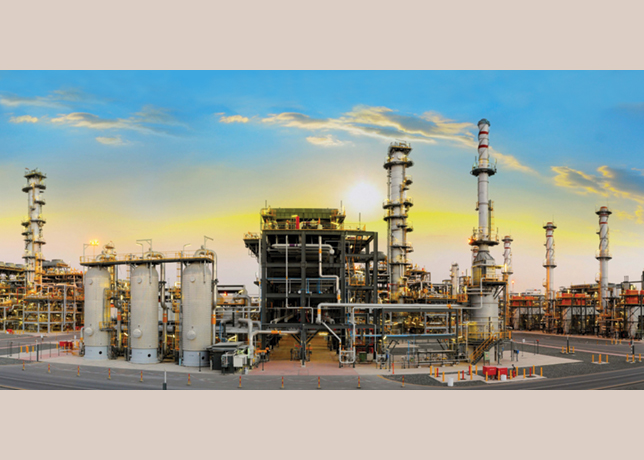















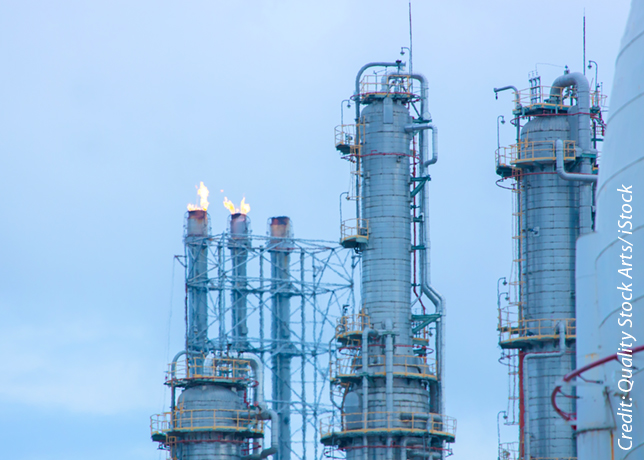
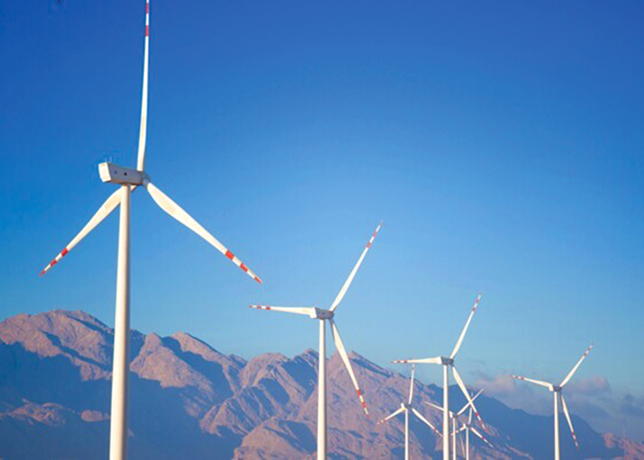
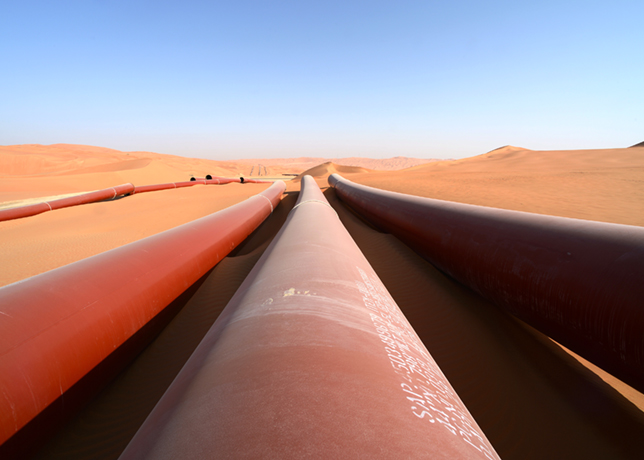
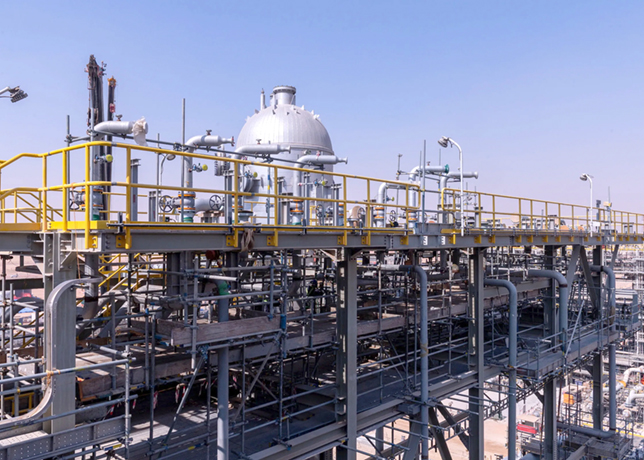
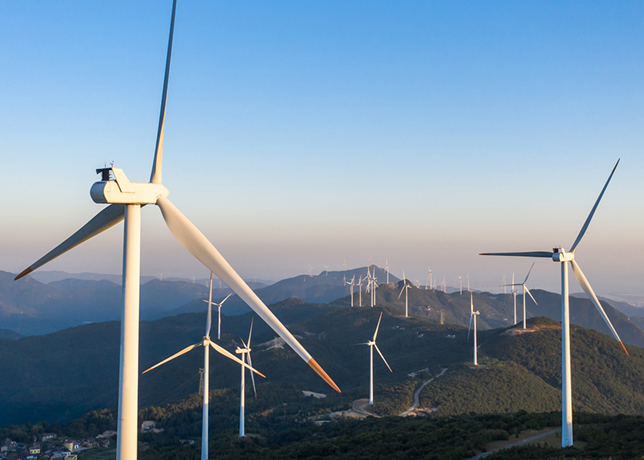






















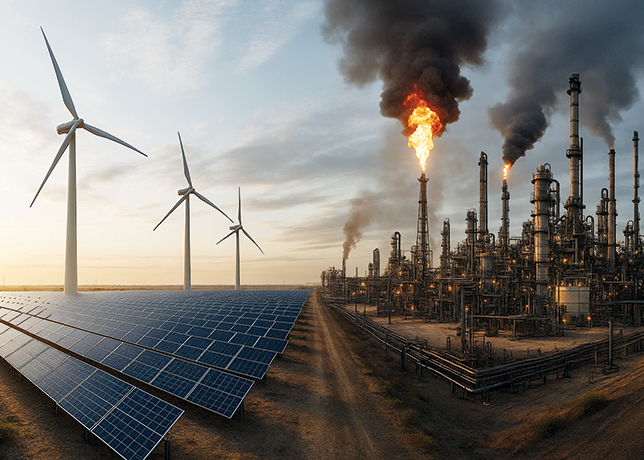
 Fossil fuels continue to fill part of the rising energy demand.
The energy landscape is locked in a fierce, data-driven competition as renewables reach unprecedented global penetration, forcing fossil fuel entities to diversify and reinforce their market position amid soaring global demand
In an increasingly complex energy security context, a fierce competition is unfolding across a wide range of fuels and technologies.
Countries around the world are contending with pressing energy security threats and growing longer-term risks, thrusting energy into the heart of geopolitical tensions and elevating it as a core issue of economic and national security.
Global energy demand is expected to increase by 23 per cent by 2050, intensifying the race to secure resources.
Two mega-trends dominate the global power system for the rest of the decade: The rapid ascent of solar power as it challenges fossil fuel dominance; and robust electricity demand growth, as electricity replaces other forms of energy powering the global economy.
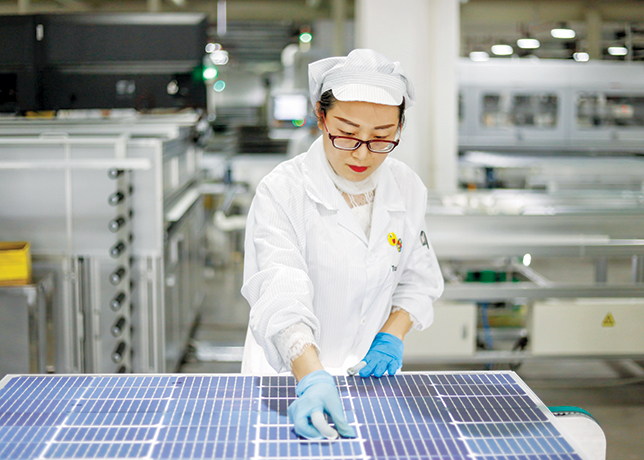
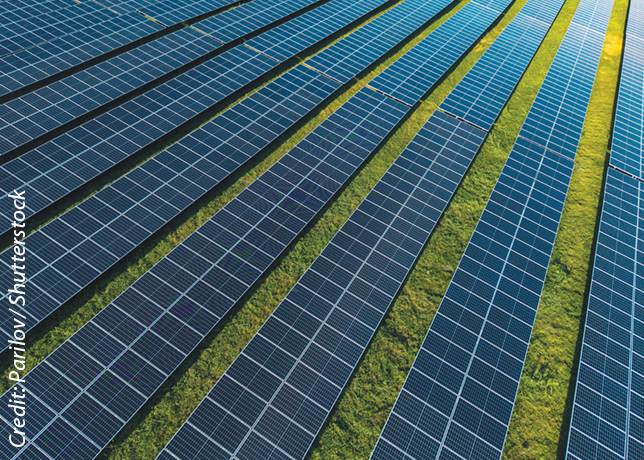
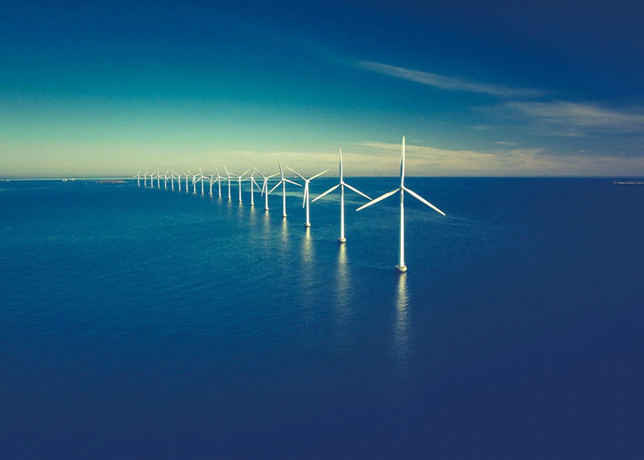
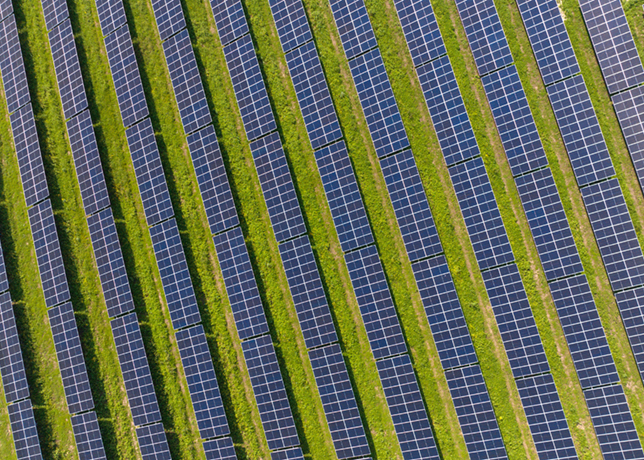
The competition is fierce: Clean power surpassed 40 per cent of global electricity generation in 2024, driven by record growth in renewables, especially solar.
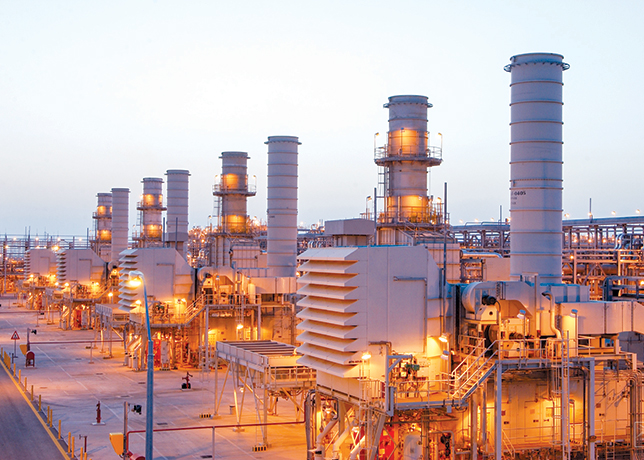
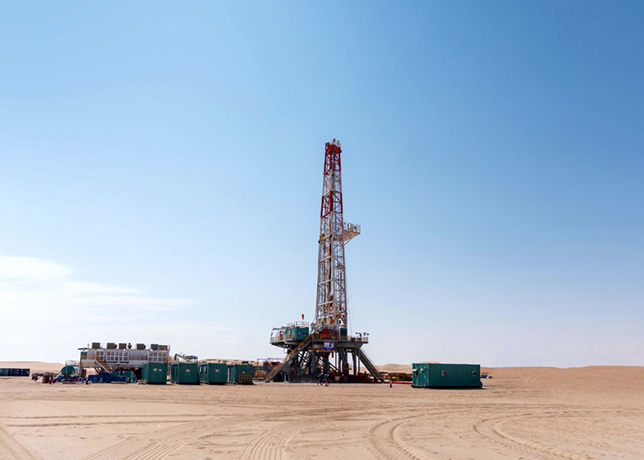
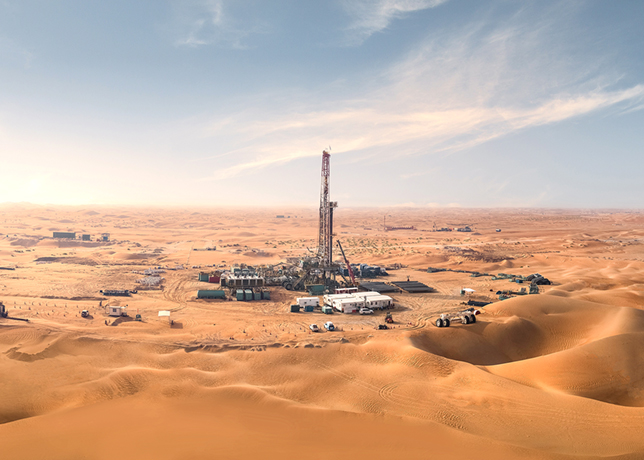
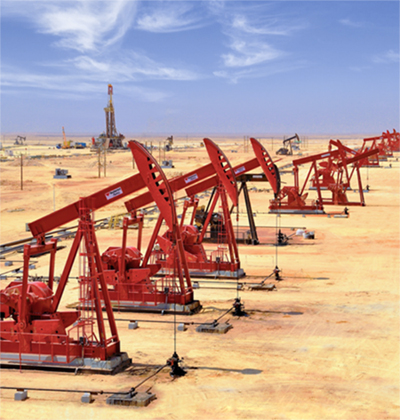
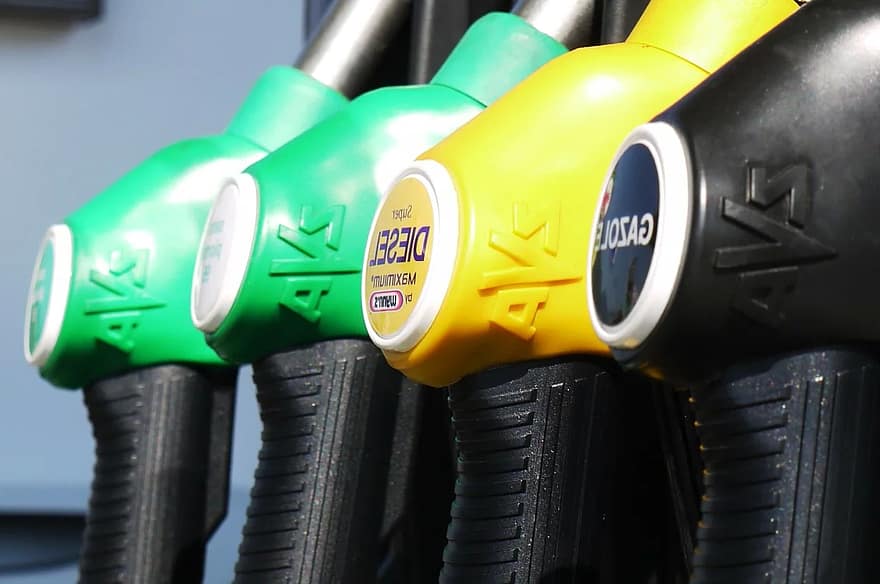
Yet, fossil fuels are fighting back, continuing to fill part of the rising energy demand.
The world added over 700 gigawatts (GW) of renewable power capacity, marking the largest annual increase to date and a significant victory for the renewables camp.
Global energy-related carbon dioxide emissions increased by 0.8 per cent compared to 2023, reaching a new all-time high of 14.6 billion tonnes in the power sector alone.
The ADIPEC 2025 Impact Report highlights that the path ahead is one of 'energy addition', a pragmatic recognition that the world needs more of everything, intensifying the battle for market share between new and traditional sources.
REINFORCEMENT OR REPLACEMENT?
The concept of energy addition challenges the narrative of a simple linear transition where one source replaces another. Instead, it presents a scenario of fierce coexistence and competition.
As global demand grows exponentially, the world requires more of every resource; oil, gas, and renewables, forcing the industry to respond with strategic diversification.
Energy addition means adding secure, diversified and lower-carbon supply while harnessing the power of artificial intelligence (AI) and investment, creating a crowded and competitive marketplace.
All this while electricity demand will keep surging through 2040, fuelling the contest, with some of the reasons being power for data centres set to grow four-fold, 1.5 billion people will move into cities, and more than 2 billion air-conditioners will come online, all demanding reliable power.
The International Energy Agency (IEA) notes in its World Energy Outlook 2025 (WEO) that countries are prioritising energy efficiency and security, reaching for different levers to achieve them and creating divergent paths in the energy race.
Resilience, affordability, and infrastructure are all contested, encompassing protection against physical and digital threats.
The private sector is undertaking retrofitting projects that support energy savings that could translate into 40 per cent of energy saved on average, and in some regions, such as in Africa, it can be as high as 50 per cent.
Those numbers represent lost energy that, if saved, would fundamentally alter the balance of power and change the landscape of energy security.
However, global progress on energy efficiency remained weak at around 1 per cent in 2024, unchanged from 2023 and well below the average annual gains of the previous decade.
To meet the commitment made at COP28 to double the annual rate of energy efficiency improvement from 2 per cent to 4 per cent by 2030, significant acceleration is required.
Navigating volatility remains a persistent challenge, with demand shocks, geopolitical tensions, and price fluctuations testing the resilience of global markets and the strategies of all players.
Geopolitics continue to shape trade flows and news flows, with complexity becoming constant and volatility the new norm.
While increased trading activity offers more certainty and flexibility, the fundamental challenge remains: will supply growth meet demand growth, and at what cost?
Geopolitical fragility coexists with subdued oil prices, creating a volatile mix where ongoing conflicts sit alongside oil market balances showing a large surplus of supply over demand.
The Global Energy Scenarios 2025 report by Rystad Energy suggests that oil and gas will remain resilient in the near term, a formidable opponent to renewables, with peak oil expected to emerge in the 2030s.
Amid these shifts, diversification is more urgent than ever, a strategic imperative to survive and thrive.
Governments must pursue greater diversification of supplies and increased cooperation to navigate the uncertainties ahead.
This involves diversifying not just fuel sources but also the technologies and supply chains that underpin energy systems, spreading bets in a high-stakes game.
Investment trends signal this shift, with countries seeking to reduce dependence on imported technologies critical to the energy transition through new waves of industrial policy.
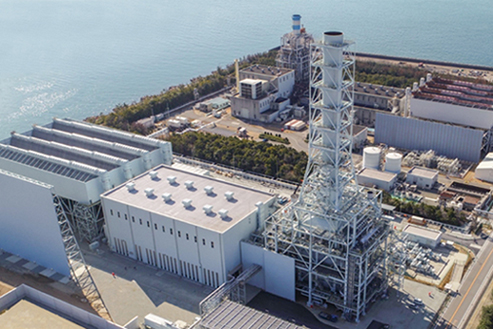
The natural gas revolution continues to play a pivotal role, positioning gas as a resilient competitor and a necessary partner.
The natural gas revolution in the US has had a profound effect, with the objective being to have as many reliable, affordable and secure energy sources as possible.
Gas provides more than a quarter of the baseload power required by data centres, and a shortage of gas turbines is turning a supply crunch into a choke point that is pushing electricity prices higher—a vulnerability in the system.
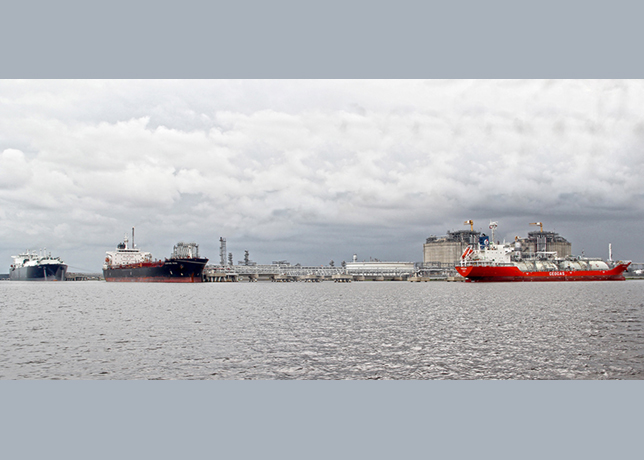
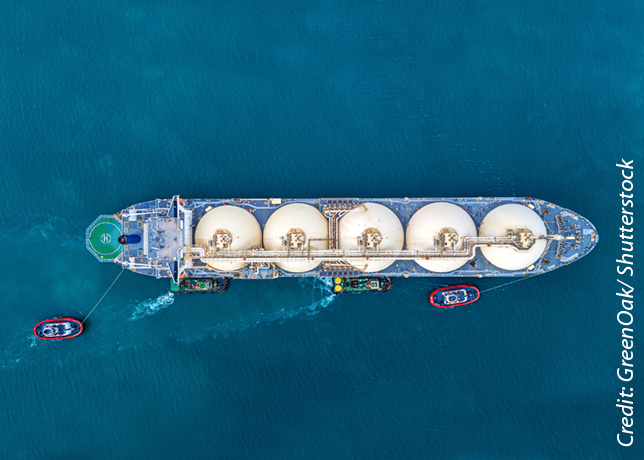
Global gas trade is expected to continue shifting toward liquefied natural gas (LNG), with an unprecedented 300 billion cubic metres (bcm) of new annual LNG export capacity scheduled to start operation by 2030.
Around half of this new capacity is being built in the United States, and a further 20 per cent in Qatar, followed by Canada and others.
This wave of new supply represents a 50 per cent increase in available global LNG supply, reshaping global gas trade and bolstering energy security.
In the IEA’s Stated Policies Scenario (STEPS), natural gas demand is increasing nearly 1 per cent annually to 2035, supported by this abundant supply.
Emerging market and developing economies in Asia are the destination for nearly 60 per cent of the oil and gas exported globally in 2035, up from 45 per cent today.
However, in the IEA’s Net-Zero Emissions by 2050 (NZE) Scenario, much swifter deployment of low-emissions technologies brings consequent declines in demand for all fossil fuels.
INFRASTRUCTURE, INTELLIGENCE AND CRITICAL RESOURCES: THE NEW FRONTLINES
AI’s dual role has emerged as a critical factor, acting as both a hungry consumer and a pace optimiser in the energy race.
The new top driver of energy demand growth is AI, with electricity consumption from data centres and cryptocurrency mining estimated to have increased by 20 per cent in 2024 alone.
A striking shift in capital allocation will be due to power for data centres projected to grow four-fold through 2040.
Investment in data centres is expected to reach $580 billion in 2025, surpassing the $540 billion being spent on global oil supply
By 2035, a tripling of the amount of electricity consumed by data centres represents less than 10 per cent of total global electricity demand growth, but it is highly concentrated geographically.
More than 85 per cent of new data centre capacity additions over the next ten years are expected in the US, China and the EU.
Conversely, AI offers unprecedented opportunities to maximise the potential of energy by enhancing efficiency and optimising systems like transportation and supply chains.
Companies report a 2.5 times higher return on investment with a C-suite-led AI strategy.
Through home-grown companies, entities like ADNOC have embedded over 200 AI use cases from the wellhead to the trading floor, cutting unplanned shutdowns by half.
Programmes like EnergyAI will make production forecasts 90 per cent more accurate.
'We still rely on molecules to create the electrons that AI needs,' a reminder given at ADIPEC 2025 in Abu Dhabi of the interdependence in this competition.
Energy infrastructure is currently way behind where it needs to be to support this new, power-intensive reality.
The world needs, at least, six million km of new transmission lines by 2050, as one cannot run tomorrow’s economy on yesterday’s grid.
Grid investment has risen at less than half the pace of generation investment, reaching $400 billion annually compared to $1 trillion for generation.
This lag increases congestion, delays the connection of new sources of electricity generation, and pushes up electricity prices.
Power lines proved particularly vulnerable to extreme weather in 2023, with transmission and distribution grid damages accounting for about 85 per cent of operational disruptions.
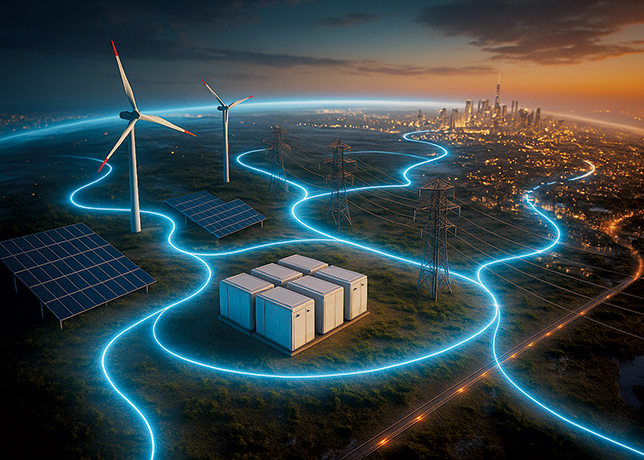
In the Global Electricity Review 2025, Ember notes that unlocking rapid declines in fossil generation will require faster deployment of clean generation alongside the expansion of grids and flexibility mechanisms such as storage.
Battery storage technology has undergone rapid cost reductions, with the average price of lithium-ion battery packs dropping to $115 per kWh in 2024, strengthening the renewables’ arsenal.
Annual installations of battery storage capacity have increased dramatically, with 69 GW installed in 2024, almost enough to double total battery storage capacity.
To support this infrastructure, critical minerals have become increasingly important in the electricity supply chain.
China is singlehandedly the dominant refiner for 19 out of 20 energy-related strategic minerals, with an average market share of around 70 per cent.
Geographic concentration in refining has increased for nearly all key energy minerals since 2020, particularly for nickel and cobalt.
The market value of key energy transition minerals could increase by three-quarters to reach $120 billion by 2040 if domestic refining is strategically scaled up in resource-rich regions like Africa.
Demand for copper, fundamental to all electrical applications, is projected to be around 25 per cent higher in 2035 in the NZE Scenario than in the STEPS.
Lithium demand is projected to be 70 per cent higher, while nickel, cobalt and graphite demand is projected to be 30-50 per cent higher.
Unreliable supply of critical minerals could significantly affect both the pace of progress and the cost of achieving energy transition goals.
Supply disruptions could derail efforts to diversify energy technology manufacturing, concentrating supply chains further and affecting industrial development.
The IEA’s Critical Minerals Security Programme aims to bolster mineral security by building systems to enhance resilience against potential disruptions.
The minerals in question are vital for power grids, batteries and EVs, but they also play a crucial role in AI chips, jet engines and defence systems.
BY Abdulaziz Khattak