












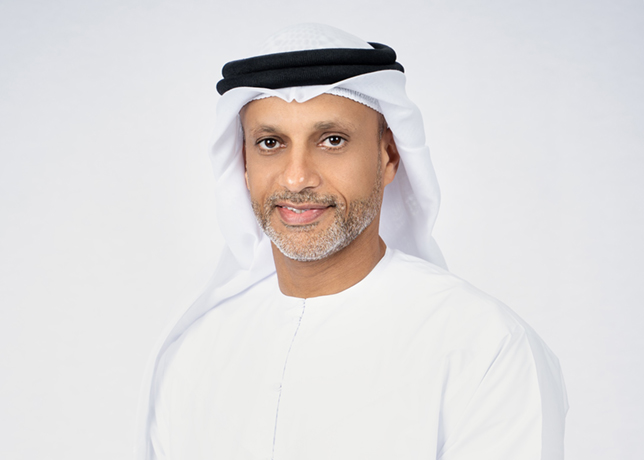



.jpg) Shaikh Isa receives the trophy watched by GPIC General Manager Abdul Rahman Jawahery
Shaikh Isa receives the trophy watched by GPIC General Manager Abdul Rahman Jawahery
On December 6, 2005, at a glittering celebration in the Ritz Carlton Hotel, Bahrain, Lord Jordan of Bournville, Deputy Chairman of the Royal Society for the Prevention of Accidents in the United Kingdom, presented the Sir George Earle Trophy, RoSPA's most prestigious award internationally, to Shaikh Isa bin Ali Al Khalifa, Chairman of GPIC.
It was the very first time that this internationally important safety award was presented to a company outside of Europe and North America.
In the years leading up to winning the Sir George Earle Trophy GPIC had achieved numerous Gold and Highly Commended Awards from RoSPA. In the final run-in for the Trophy, which is awarded for outstanding performance in safety and industrial hygiene, GPIC was short-listed with Toyota, Shell and General Electric.
With milestone achievements such as this, it is no wonder that GPIC is regarded regionally and internationally as a model petrochemical producer with a management approach built on the Triple Bottom Line philosophy of Economic Profitability, Environmental Care and Equitable Social Responsibility.
Background
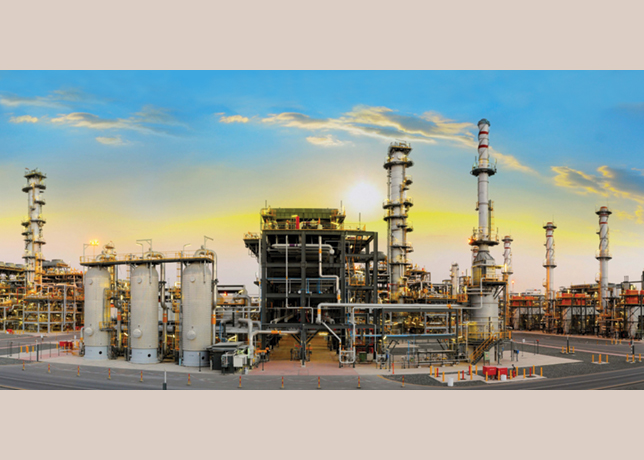
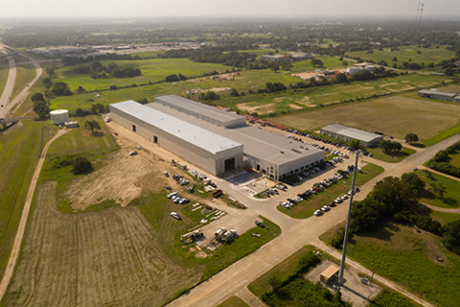
Gulf Petrochemical Industries Co (GPIC) was formed in 1979 as a joint venture with equal shareholding by the governments of Bahrain, Saudi Arabia (represented by Sabic) and Kuwait (represented by PIC) with the objective of utilising Bahrain's natural gas for the production of petrochemicals.
The first project consisted of reclaiming an industrial site of 60 hectares from the sea and constructing an Ammonia plant (330,000 tonnes per year), a Methanol plant (330,000 tonnes per year) and a comprehensive Utilities plant. Production started in 1985.
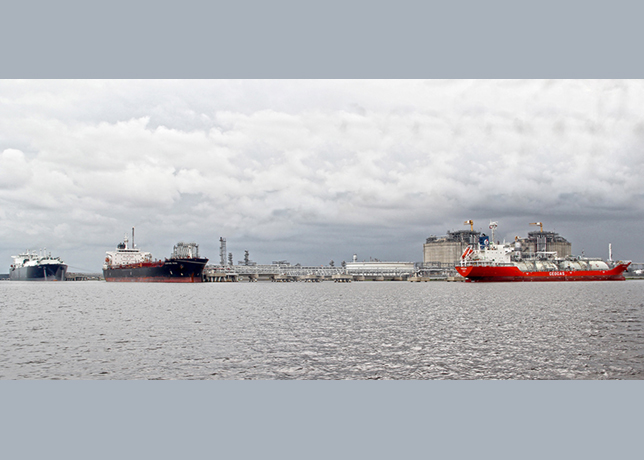
In 1989 the Ammonia and Methanol plants were debottlenecked to produce 400,000 tonnes per year of each product. In 1998 a 560,000 tonnes per year Urea plant and its marine export facilities were added downstream of the Ammonia plant.
GPIC has become a role model for other petrochemical industries in the region.
Its strength lies in people and the solid systems that have been developed to ensure reliable, safe, eco-friendly and economic operation.
The company has established a number of core values over the years, some of which are reliability, safety, quality, environmental concern, training and development and above all, team spirit.
Metamorphisis
Initially the company had to come to terms with the general recession in the petrochemical markets of the mid-eighties.
Prices for products did not achieve the levels anticipated during the earlier planning phases.
Fortunately, circumstances were such that at this critical point a new and creative approach could be introduced by management. It was possible to change the fortunes of GPIC through its people.
Greater empowerment and trust and the sensible and practical use of task teams and goal-orientated committees ensured that innovative and creative solutions to many of the difficulties facing the company could be found and implemented, leading to a complete turnaround in the fortunes of GPIC.
It is true to say the company underwent a metamorphosis to become the successful entity it is today.
This metamorphosis was brought about internally by innovative and creative management practices. Many management theories found both internationally and regionally were utilised and moulded into a practical, efficient mixture with the 'one-team' concept at the centre, to provide a management approach which is unique to GPIC.
The unique principles permeate throughout the entire organisation at GPIC and encompass all management processes as well as concepts such as human resource development, safety, environmental care, empowerment etc.
Simple indications of the level of motivation, commitment and care of GPIC's people are the extraordinary continuous daily production runs achieved in the process plants; Ammonia 738 days, Methanol 932 days and Urea (which is a world record) 941 days!
Safety
For all employees at GPIC, safety is a way of life. At a very early stage a campaign to broaden the safety concept to encompass not only all aspects of work but also the home environment was introduced.
A conscious effort was made to include homes, wives and especially the children of all employees in safety campaigns and activities.
As part of the annual Safety Week, safety competitions for employees' families, a Family Safety Evening etc were introduced. For GPIC employees occupational safety does not begin and end at the factory gate, it is part of everyone's daily life and includes home and family.
GPIC's track record in safety, mentioned specifically in the introduction and including recognition by NSA (USA) as well as RoSPA (UK), speaks for itself. The continuous improvement and attention to safety culminated in the receipt of the Sir George Earle Trophy in 2005.
Environment
The management of GPIC is aware of the adverse publicity given to petrochemical industries and their environmental impact globally.
As a result it has tended to concentrate its efforts on simple practical demonstrations of its care for the environment. GPIC has clearly demonstrated that a petrochemical industry can be successful, productive and profitable without having to harm the environment.
It was also fortunate that the designers of the process plants set themselves such strict environmental standards at that time that the complex has no problem in complying with the most stringent environmental legislation today.
GPIC's demonstration projects, which do far more than any formal statement or laboratory analysis sheet to demonstrate environmental friendliness, consist of the following:
• A Charity Garden producing about two tonnes of vegetables annually proves that the soil is uncontaminated and healthy. The produce is distributed to needy families in the neighbouring villages.
In addition a number of green areas with hundreds of date palms, fruit and other trees in and around the complex have been established to enhance GPIC's image as a fertiliser producer and to create a pleasant workplace for all employees.
• A Charity Fish Farm producing 30,000 sea bream of around 1kg each annually to demonstrate the cleanliness of the sea around the complex.
The Fish Farm is very close to the seawater cooling water outfall and is living proof of the environmental friendliness of the major liquid effluent.
The fish produced are released back into the sea to bolster Bahrain's fish stocks.
• A Bird Sanctuary where hundreds of indigenous and migratory birds visit or roost. This is concrete proof of the cleanliness of the air in and around the plant and is a practical demonstration which far surpasses the impact of SOx and NOx monitoring to the man in the street.
To date more than 80 different bird species have been recorded in and around the Bird Sanctuary. The first successful hatching of a Western Reef Heron chick in Bahrain was also recorded here.
• A Herbal Garden to conserve indigenous herbal desert plants threatened by extinction or destruction of habitat, to provide material for scientific study and to conserve Bahrain's heritage.
GPIC actively carries the message of concern and care for the environment to the youth of Bahrain.
The company has a comprehensive lecture scheme in which young graduate engineers deliver lectures on the environment to schools in the Kingdom.
A research scheme for environmental projects in schools has also been established in coordination with the Ministry of Education.
Human resources
The GPIC management recognises that people are the most valuable assets of the company and go out of its way to provide a safe, pleasant and happy workplace for them.
It is no coincidence that GPIC employees formed the first labour union in Bahrain and are working closely with management to the mutual benefit of both employees and company.
GPIC has a relatively young workforce, 80 per cent of whom are Bahrainis. The company takes pride in the fact that all operators and technicians have been trained and developed in-house.
To provide recreation GPIC actively participates in a number of the local industrial sports leagues and have often emerged as champions.
During 2004 a fully equipped club to the value of US$ 5 million with comprehensive recreational, sports and gymnasium facilities was inaugurated. Employees and their families are encouraged to utilise these facilities.
Employees are also encouraged to participate in charity activities and events and GPIC contributes substantially to various charities in Bahrain.
Management also values education and development of people very highly. In addition to vocational development courses the GPIC Training Centre arranges a number of lectures on health, environment and general interest topics during the year for all employees.
Nearly everything GPIC does is approached as a team effort. Teamwork is the company's watchword. This approach is reflected in the number of task groups and committees that actively investigate and address various issues inside the company.
All of these groupings comprise employees of different levels and departments in the organisation chart and allow all members to contribute confidently and freely to ensure creative and practical solutions to issues.
In GPIC, companies or parties that could be defined as competitors have often been assisted in terms of information sharing and training.
The company has trained personnel from Venezuela, Australia, Oman and others in the operation and maintenance of process plants and equipment. This is an idea that GPIC would like to expand to ultimately become a training ground for the petrochemical industry in the region.
Recognition
Apart from the recognition by RoSPA, the company has also been presented with a symbolic glass globe by the British Standards Institution (BSI) on GPIC's tenth anniversary of ISO 9001 certification as a symbol of quality management excellence in 2005.
In addition the company holds a number of other regional and international awards such as the Prime Minister's Award for Excellence in Industry, Shaikh Mohammed bin Rashid Al Maktoum's Award for Arab Management, the GCC Environment Award, the first Bahrainisation Shield, the Rafiq Hariri Award for Maintenance Management and the Shaikh Abdulla bin Hamad Al Khalifa Trophy for Industrial Gardens.
Numerous benchmarking results placing GPIC at the top, or certainly in the top categories of their various studies, have been received for the company's process plants.
The latest of these was by Johnson Matthey, identifying GPIC's Methanol Plant as the best run in a worldwide study. In addition GPIC's overall quality management system was benchmarked by BSI and awarded a Platinum Award in 2006 - the very first award of this level ever.
All these achievements have certainly helped GPIC to enter premium markets such as Australia, Europe, the USA and Canada with confidence in all products.
A singular honour was bestowed on the company when its granular urea export terminal became the first in the Arabian Gulf to be awarded Level 1 System Status by the Australian Quarantine and Inspection Service.
Requests are often received from technology holders for training courses for their clients' personnel. This has led to a wider recognition through the international markets that equate GPIC to reliability and quality.
Profitability
It has always been vitally important that GPIC should be successful financially to demonstrate that a joint venture of this nature could be profitable.
It would also encourage further enterprises of a similar nature to be established and introduce foreign investment in Bahrain.
Most importantly it would demonstrate to the world that Bahrain has the skilled manpower, training facilities and capabilities to successfully operate and maintain a world class petrochemical facility through successfully transferring, absorbing and utilising the appropriate technologies and technical know-how.
Today, GPIC is indeed an economic success story. The company has paid around $492 million in dividends to the shareholders over the past decade.
It has contributed approximately $58 million annually to Bahrain's economy; that is substantially more than $1.2 billion over the life of the company. Excellent relationships exist with banks and other financial institutions and at the present the company is in a strong financial position, ready to take advantage of new developments in the region.
As a GCC joint venture GPIC stands unrivalled anywhere.
Future
As for the future, the company has a number of expansion and downstream projects ready on the drawing board.
There are a number of options in terms of the provision of raw materials regionally that are in an advanced stage of discussion at present.
The authorities in Bahrain are actively pursuing these options to ensure the reliable and economic provision of strategic raw materials to industry.
GPIC stands ready to launch these new ventures with the agreement and support of the shareholders, once the raw material availability is confirmed.


.jpg)


