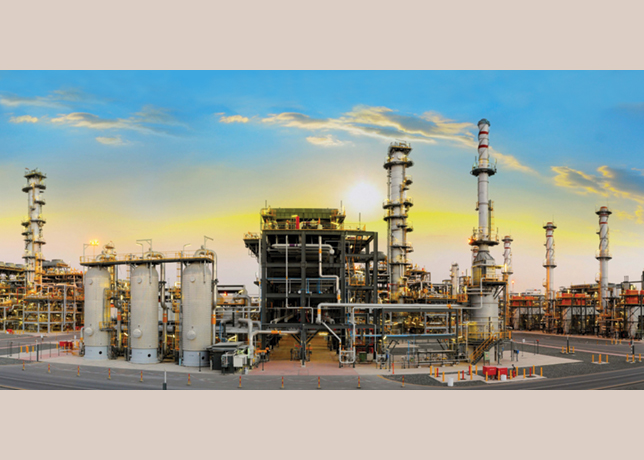






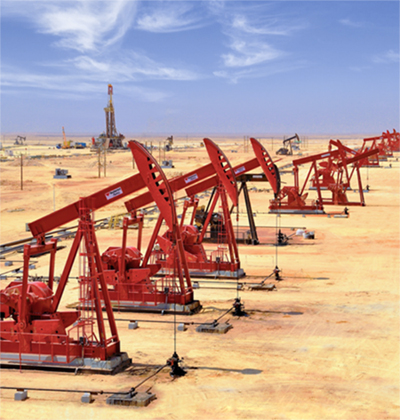
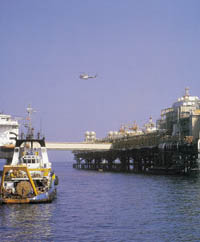
With some 90 per cent of the UAE's oil reserves, Abu Dhabi is a vital source of income for the country, and remains the hub of the nation's oil industry.
Now, with an advanced financial and industrial infrastructure in place, Abu Dhabi is looking to further enhance its status on a regional level by attracting new investment and boosting its domestic private sector.
For now though, Abu Dhabi will be watching oil market developments closely as prices fall. The UAE, as a whole, is expected to reap $17 billion in export revenues this year, according to estimates.
The country's current Opec quota is 2.03 million barrels per day (bpd), while production capacity is 2.65 million bpd. Abu Dhabi accounts for approximately 85 per cent of national output. Proven national oil reserves are estimated at 97.8 billion barrels (of which Abu Dhabi holds approximately 92.2 billion barrels). Abu Dhabi's gas reserves total 188.4 trillion cu ft.
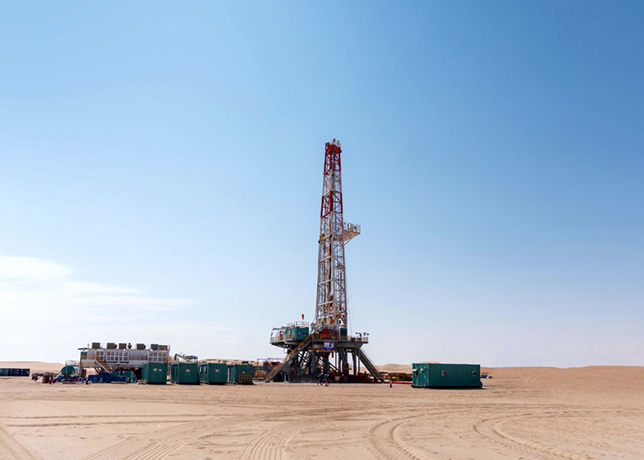
Abu Dhabi is now entering into a new stage of development of its onshore and offshore oil and gas fields as part of a strategic plan to increase production to meet growing demand.
Increased investments are being made in the development and maintenance of the fields through water and gas injection, and the upgrading of some operational systems. Investments in Abu Dhabi's oil sector totalled $1.86 billion last year, concentrated on water injection to develop and maintain the capacity of some fields, and this figure is set to rise further.
The latest round of investments will increase the country's oil production capacity to more than three million bpd within five years.
Abu Dhabi Marine Operating Company (Adma-Opco), a subsidiary of Abu Dhabi National Oil Company (Adnoc), recently gave the go-ahead for a project to expand the output capacity of its main offshore Zakum oilfield.
The project is seen by Adma as being one of the largest the company has ever undertaken, and involves a tie-up between the giant Umm Shaif gasfield, where the gas will be collected, and Zakum West Supercomplex, where it will be injected.
A new compressor in the gas injection platform, with a capacity of 200 million cu ft of gas per day, will carry out the job, according to Adma.
The multi-million-dollar project includes a year-long phase of engineering, design and procurement. National Petroleum Construction Company (NPCC) - another Adnoc subsidiary - and Kellog Brown and Root are the contractors for the project.
Adma says that the scheme will ''drastically enhance oil recovery from the Zakum field''. It is scheduled for completion by early 2004, according to the company.
The Zakum field is already one of the world's largest offshore oilfields, with an estimated output capacity of more than 300,000 bpd.
The Zakum Development Company (Zadco), which produces around 500,000 bpd from the offshore Upper Zakum field, is looking for foreign majors to assist in increasing its long term production capacity.
A number of majors, including BP, TotalFinaElf, ExxonMobil, Royal Dutch/Shell and, more recently, ChevronTexaco, are said to be looking at a 28 per cent stake in Zadco, which is owned 88 per cent by Adnoc and 12 per cent by Japan Oil Development Company (Jodco).
Onshore, a project is underway at the Bab oilfield to increase production capacity by approximately 100,000 bpd. The field has a current production capacity of 250,000 bpd.
The project will include the supply and installation of two processing units, two and three-phase gas/oil separation facilities, a degassing station and related pipeline works, according to reports.
The project is being undertaken by Abu Dhabi Company for Onshore Oil Operations (Adco), which is now said to be evaluating bids for front end engineering and design (FEED) contractor and the project management consultant.
Abu Dhabi's gas sector has witnessed a number of major developments in recent years, with Adnoc having spent an estimated $3 billion on establishing onshore gas facilities at Habshan and Asab.
The Onshore Gas Development (OGD) and Asab Gas Development (AGD) projects are entering new phases to increase the output of gas and condensates in Abu Dhabi.
The third phase of OGD, termed OGD-3, will see the construction of a gas gathering system in the field, which will supply an estimated 1.35 billion cu ft per day of gas to new treatment facilities at Habshan. At Habshan, the condensate and NGL will be stripped out and the remaining dry gas will be re-injected to maintain reservoir pressure.
The AGD-2 project will, meanwhile, focus on the recovery of NGL from gas which is currently processed and injected in the Asab area.
Provision of gas in Abu Dhabi will receive another major boost once the much-publicised Dolphin project gets the go-ahead.
The first phase of the project will see the supply of up to two billion cu ft per day of gas from Qatar's North Field by a $1.5 billion, 48 inch diameter underwater pipeline to Taweelah in Abu Dhabi.
The first delivery of gas to Taweelah is expected in late 2004 or early 2005, according to reports.
Abu Dhabi Gas Industries Company (Gasco), another Adnoc subsidiary, is looking to increase gas supplies to Dubai from Abu Dhabi from 500 million cu ft per day at present to 800 million cu ft per day by the end of next year. An $85 million, 130km gas pipeline was completed earlier this year from Abu Dhabi to Jebel Ali in Dubai.
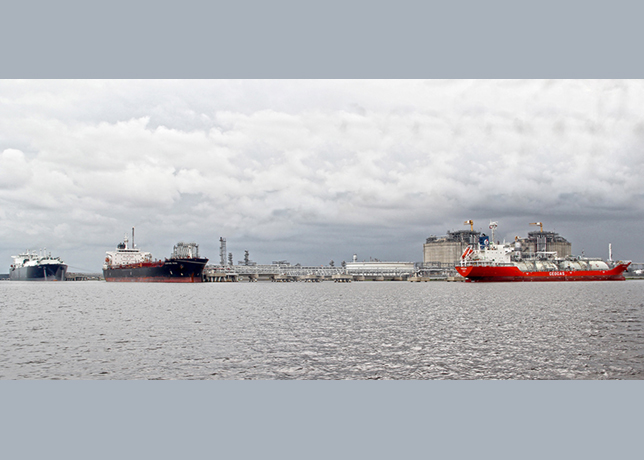
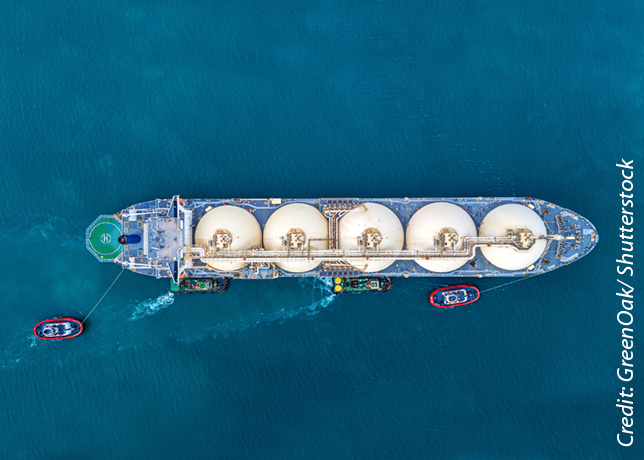
Abu Dhabi is already a major gas exporter to international markets. Abu Dhabi Gas Liquefaction Company Ltd (Adgas) was the first liquefied natural gas (LNG) scheme in the Gulf when it was established in 1973 and supplies LNG to Japan and South Korea through long-term contracts.
Now Adgas is building an estimated $200 million LPG train on Das Island at the site of the existing 5.4 million tonnes per year (tpy) three-train LNG facility. The LPG facility will produce approximately one million tpy, according to reports.
Downstream, the $1.2 billion Abu Dhabi Polymers Company (Borouge) is due to start exports next month from its 600,000 tpy ethylene and 450,000 tpy polyethylene facility.
Products from the facility - the UAE's first significant petrochemical investment - will be exported mainly to the Indian subcontinent, China, southeast Asia and the Middle East. Adnoc has a 60 per cent stake in Borouge, with Denmark's Borealis, a leading European polyolefins producer, holding a 40 per cent stake.