


























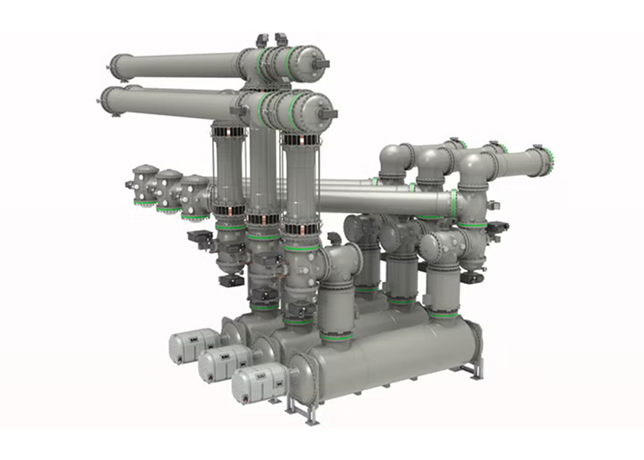






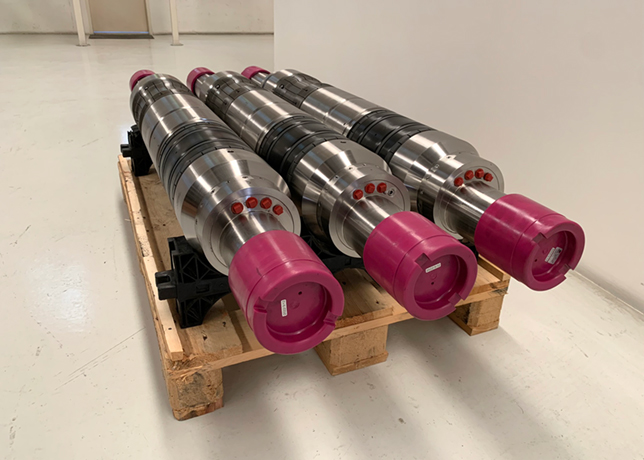
















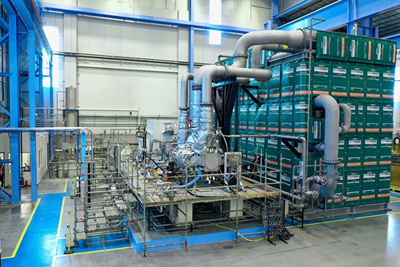





 The 16-fold high throughput test unit
In order to advance its understanding of the catalytic dehydration of biogenic isobutanol to form isobutylene, Gevo selected hte of Germany to conduct a study, considering this is a key step in the chemical pathway for producing sustainable aviation fuel and high-octane renewable gasoline.
The scope of the study includes accelerated catalyst deactivation under a multitude of different conditions and the effect of biogenic feed impurities in a 16-fold high throughput test that mapped the impacts of relevant impurities and operating conditions.
Isobutanol dehydration under relevant conditions indicates sufficient catalyst stability at a commercial scale.
hte’s high throughput systems allow for a very fast mapping of different catalysts or reaction parameters.
Supported by hte’s proprietary software solutions, experiments can be executed and analysed in a fully automated and flexible way.
Consequently, the evaluation of large amount of data sets is shortened immensely which allows the customers to access knowledge very fast.
Dr Chris Ryan, Chief Operating Officer at Gevo says: "The study at hte provided insights in the isobutanol dehydration reaction beyond Gevo’s expectations, further strengthening Gevo’s technical knowledge and capabilities as they relate to the production of renewable fuels. Thus, strengthening the successful execution of commercial-scale projects."
Wolfram Stichert, CEO at hte, comments: "High throughput experimentation is an efficient tool to accelerate the development of new catalytic processes such as low-carbon biofuel or chemicals within a short time. Therefore, hte is proud of supporting Gevo, a pioneer in sustainable fuels."
Gevo’s mission is to transform renewable energy and carbon into energy-dense liquid hydrocarbons. These liquid hydrocarbons can be used for drop-in transportation fuels such as gasoline, jet fuel and diesel fuel, that when burned have potential to yield net-zero greenhouse gas emissions when measured across the full life cycle of the products.
Gevo’s products perform as well or better than traditional fossil-based fuels in infrastructure and engines, but with substantially reduced greenhouse gas emissions.
Gevo uses low-carbon renewable resource-based carbohydrates as raw materials, and is in an advanced state of developing renewable electricity and renewable natural gas for use in production processes, resulting in low-carbon fuels with substantially reduced carbon intensity (the level of greenhouse gas emissions compared to standard petroleum fossil-based fuels across their life cycle).
Gevo also plans to take advantage of decarbonisation via geological sequestration in the future.
In addition to addressing the problems of fuels, Gevo’s technology also enables certain plastics, such as polyester, to be made with more sustainable ingredients.