













 The Canyon Express project is the deepest pipeline in the Gulf of Mexico.
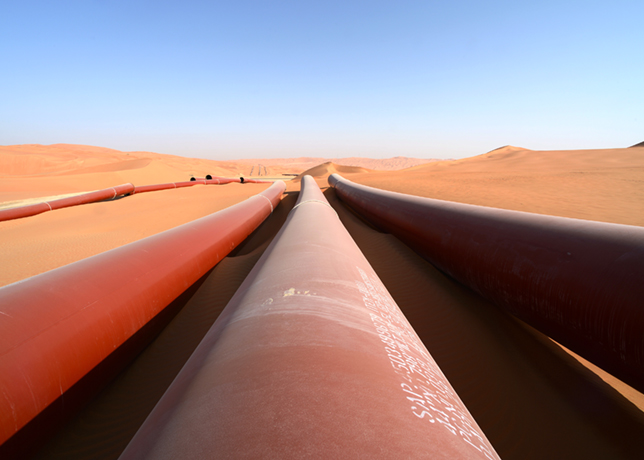
Tenaris the tubular technologies company supplied the TotalFinaElf E&P USA's Canyon Express project with sour-service, easy-to-weld line pipe providing excellent mechanical properties that met all the demands of the deepwater project, which is the deepest pipeline to be laid in the Gulf of Mexico.
The 118-mile (190-km) pipeline at 7,200ft (2,196m) will carry the output of ten deepwater wells from three fields clustered about 150 miles (241 km) southeast of New Orleans. TotalFinaElf E&P USA, BP and Marathon operate the fields - Aconcagua, King's Peak and Camden Hills - respectively.
The pipeline loops around the underwater mountain of King's Peak, carrying what will be a maximum of 500 million cubic feet (mcf) of gas per day to a shallow-water platform 65 miles (105 km) away.
Tenaris is responding with tubular technology that makes the drilling and subsequent transportation of deepwater reserves not only possible, but also safe and economically viable.
Its product-development program combines trial orders in the mills with laboratory analysis and full-scale testing in research centers, in order to produce line pipe that will meet the specifications of today and the foreseeable future.
Saibos FDS vessel installed the line using the J-Lay method, and required pipe with all the aforementioned deepwater-tubular characteristics.
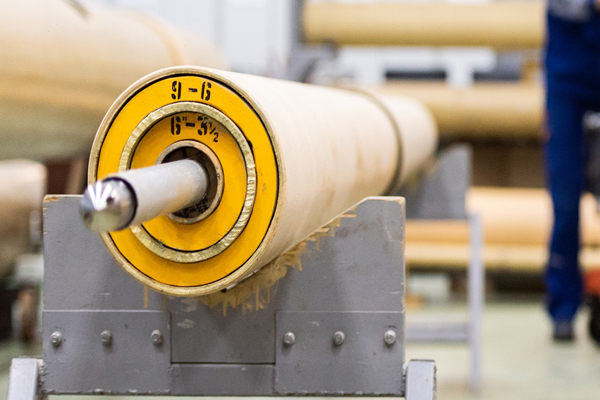
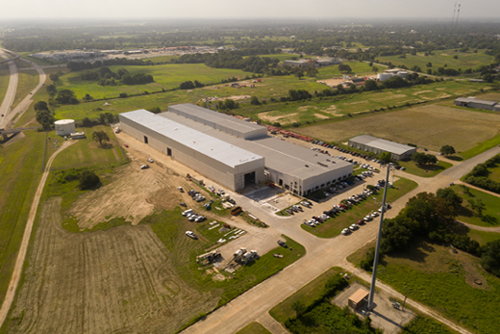
Two Tenaris mills, Tamsa in Mexico and Dalmine in Italy, produced more than 30,000 tons of X65 line pipe ranging between 6-in. and 8-in. outside diameter.
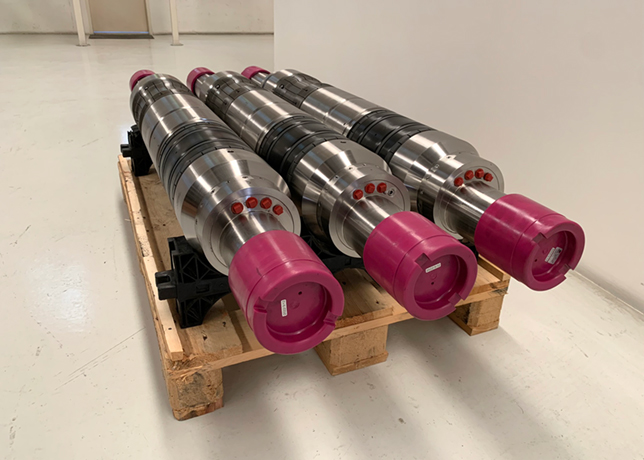
One of TotalFinaElf E&P USA's objectives was to reduce welding time at sea. Tenaris designed the steel with low carbon (C <= 0.10per cent) and a low-carbon equivalent (CE <= 0.36per cent) meeting stringent size tolerances of inside diameter +/- 1.6mm or +/- 2mm (depending on pipe size), so welding crews could match joints quickly and ensure a smooth on-board welding process. The mills coded the joints with different colored bands so operators could easily identify the dimensional tolerance range of each pipe.
The company needed to go back to fundamentals in order to create the best solution. The pipeline required a low hardness of the base material in order to avoid sulfide stress cracking caused by hydrogen sulfide in the sour-service environment, as found in most deepwater projects.
Tenaris complied with stringent hardness values on all items. The cleanness of the steel further enhanced sour service performance.
All Tenaris mills use a modern combination of electric arc furnace and ladle furnace (EAF-LF) to produce fine grained, clean steel that is fully aluminum-killed, argonstirred for low oxygen and nitrogen content and calcium-treated. The addition of Ca-Si modifies the non-metallic inclusions so they do not act as build-up sites for hydrogen, which can lead to cracking.
Finally, but of fundamental importance, the pipe had to comply with an absorbed-energy requirement of 100J on average and at least 80J individually, at a temperature of-21 degrees Fahrenheit (-29øC).
After a series of trials, Tenaris supplied low sulfur, low-carbon-equivalent (low-hardness) line pipe with uniform mechanical properties that met the demands of the deepwater project. The pipeline was installed successfully and the Marathon and TotalFinaElf E&P USA fields are in production.
Customer feedback is reported to be favorable in terms of welding and ease of pipe installation.
The particular challenge in this case was the extreme depths in which work had to remain efficient and reliable.
Greater water depths mean external pressures unheard of only a few years ago, creating a need for new breeds of pipe.
Deepwater pipeline contractors need tubular products with enhanced resistance to collapse. Pipe manufacturers must understand the effects of imperfections and residual stress on collapse resistance, so production processes can be modified.
The Tenaris research and development (R&D) center in Argentina has a study of the collapse resistance of line pipe as one of its ongoing research programs, in addition to the trial orders undertaken at the mills.
This combination of product trials conducted at the mills, as with Canyon Express, along with laboratory analysis and ongoing R&D programs, gives Tenaris the technical capability to continue pushing the boundaries of tubular deepwater technology.
Producing steel line pipe suitable for these projects also requires close interaction between metallurgists and customer engineers to understand technical challenges and innovate solutions that will make deepwater pipeline projects successful.
