







































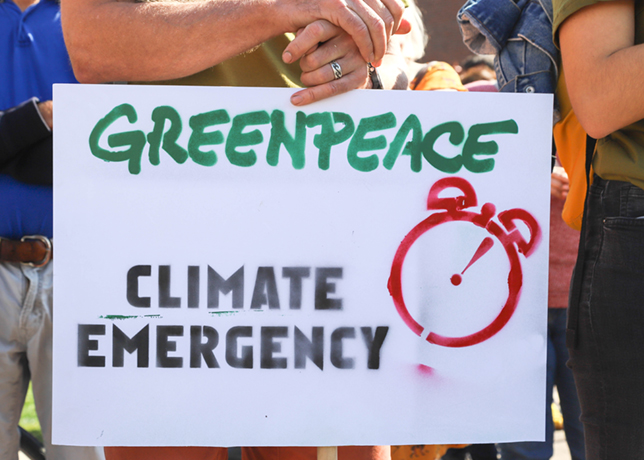
 Greenpeace Mena is asking polluters to take responsibility for climate damage
The group urges fossil fuel phaseouts, polluter-pays financing, warning that rising heat, conflict and industrial pollution are accelerating migration and ecological collapse across region, Ghiwa Nakat tells OGN
GREENPEACE Mena is urging oil-dependent economies to abandon GDP-first growth, arguing that climate shocks, pollution and conflict now demand a wellbeing economy that centres people and ecosystems.
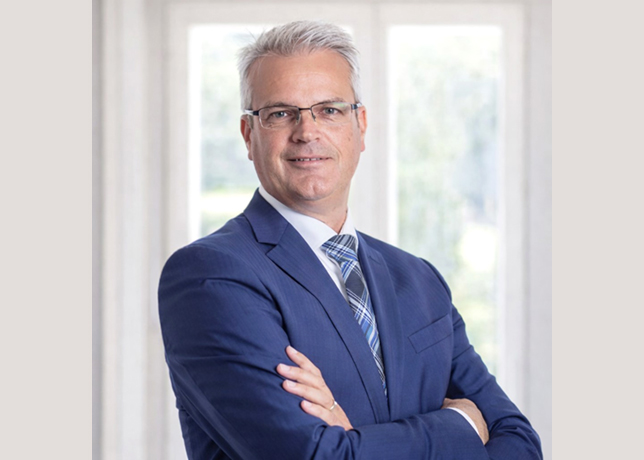
In an exclusive interview with OGN energy magazine, Ghiwa Nakat, Executive Director of Greenpeace Mena, says fossil fuel dependence was linked to intensifying heat, drought and water scarcity, while warning that industrial pollution is accelerating migration across North Africa.
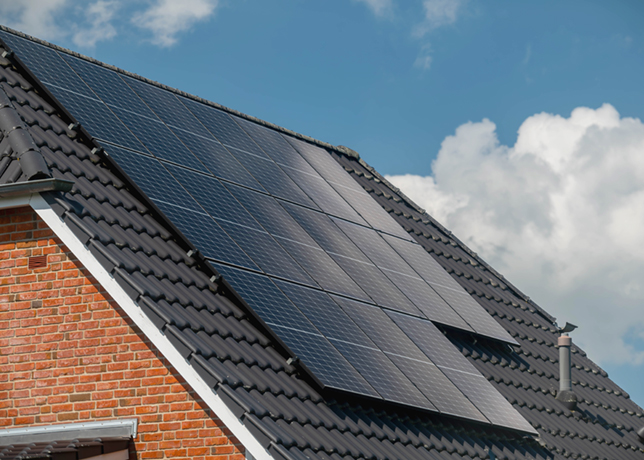
She says the group’s Wellbeing Economy Dialogue proposes phasing out fossil fuels, prioritising local energy supply, and scaling distributed renewables through rooftop solar and community microgrids.
It also backs fair climate finance, polluter-pays levies, revenue-sharing and strategic litigation, redirecting private profits towards public repair, biodiversity protection and social benefits for workers and frontline communities.
With more than 95 per cent of regional energy still fossil-based, Mena faces weather, air pollution and ecosystem loss, compounded by conflicts in Gaza and Yemen that damage infrastructure and silence environmental monitoring.
Below are excerpts from the interview:
What specific transition models did Greenpeace Mena propose in its Wellbeing Economy Dialogue for oil-dependent economies to move beyond GDP-focused growth?
The traditional focus on GDP and endless expansion often ignores resource depletion and ecosystem degradation.
This consumption-driven model prioritises profit over sustainability and fuels climate change.
Greenpeace Mena argues for reshaping development narratives by centring ecological balance and elevating grassroots solutions rooted in regional traditions.
A wellbeing economy places human and ecological wellbeing at the heart of decision-making, valuing fairness, resilience, and balance, recognising that prosperity lies in healthy communities and ecosystems.
Across Mena, energy systems remain shaped by external actors and export interests.
A just transition aligned with wellbeing requires phasing out fossil fuels, prioritising local energy supply, and expanding distributed renewables such as rooftop solar and community microgrids, while ensuring workers and communities benefit directly.
Financing tools, including equitable climate finance, polluter-pays levies, strategic litigation, and revenue-sharing mechanisms, can redirect private profits toward public repair, environmental protection, and social development.
How has the ongoing reliance on fossil fuels in the Mena region exacerbated water scarcity and extreme weather events?
Although the region contributes less than 5 per cent of global emissions, it bears disproportionate impacts.
Temperatures are rising nearly twice the global average, bringing extreme weather, drought, and severe water scarcity, making Mena one of the world’s driest regions and threatening food security.
Global North countries carry historic responsibility, but Mena nations, especially Gulf states with significant resources, must also act decisively.
More than 95 per cent of regional energy systems still depend on fossil fuels. In 2023, Mena produced roughly 35 per cent of global oil and 23 per cent of natural gas.
Yet the transition presents a major economic opportunity. Exporters must diversify away from volatile hydrocarbons, while importers can boost resilience by cutting costly energy dependence.
Combined with exceptional solar potential, Mena can lead a transition supporting climate goals and long-term sustainability, demonstrating leadership grounded in values, traditions, and regional capability.
In light of recent conflicts, what specific barriers has Greenpeace Mena faced in addressing air pollution and biodiversity loss, and how do these geopolitical factors intersect with fossil fuel infrastructure development?
In conflict zones such as Gaza and Yemen, the environment becomes a silent victim. Humanitarian emergencies sideline environmental protection, while insecurity limits access and monitoring.
In Gaza, environmental destruction forms part of broader attacks on natural resources and heritage.
In Yemen, oil and gas facilities have been directly targeted, worsening air pollution and ecosystem damage.
These conflicts represent massive violations of the right to a clean, healthy environment, compounding an already severe climate burden.
Given the findings in the "Major Air Polluters in Africa Unmasked" report, particularly Egypt’s high impact, how do you assess the role of industrial activities in driving climate migration across North Africa as of late 2025?
In 2024, Greenpeace Mena and Greenpeace Africa released Major Air Polluters in Africa Unmasked, exposing companies responsible for toxic air pollution. North Africa, especially Egypt, is among the hardest hit.
Air pollution is Africa’s second leading risk factor for death, driving premature mortality in Egypt, Nigeria, and South Africa and causing heart and lung disease, pregnancy complications, kidney problems, and cancer.
Industrial activities intensify climate migration by increasing emissions, accelerating warming, and worsening water scarcity, drought, and desertification.
They undermine agriculture and food security, forcing people to move internally or across borders.
By 2050, internal climate migration in North Africa could reach 4.5 to 19 million people, compounded by social pressures such as high youth unemployment, making climate change a powerful migration multiplier.
Your organisation’s "Make Polluters Pay" campaign secured an environmental taxation clause in Iraq’s law. How do you plan to replicate this success in other Mena countries amid resistance from international oil companies? Can you elaborate on potential litigation strategies?
For decades, oil, coal, and gas companies have profited while fuelling climate disasters and avoiding accountability.
In Iraq, Greenpeace Mena supported Basra communities in amending the Environmental Protection Law to include the polluter-pays principle.
This introduces environmental taxes on polluters, directing revenue to restoration, public health, and compensation through decentralised mechanisms, positioning Iraq as a regional precedent.
Building on this, Greenpeace Mena launched the Regional Roadmap for a Just Energy Transition and the Polluters Pay Pact.
The report From Energy Security to Sovereignty: Pathways for a Just Energy Transition in Egypt, Morocco, and Tunisia shows renewable transitions remain dominated by foreign investors and outlines pathways for locally driven change.
State-led strategic litigation can use international jurisprudence, including the International Court of Justice Advisory Opinion, to support climate claims.
This includes domestic tort and administrative cases over spills, air quality, or flaring, alongside strategic filings invoking international obligations to push companies toward settlements or compliance funding community projects.
Governments can also empower public-interest litigation by granting standing to attorneys general or ombudspersons.
At COP29 and in your Global Plastics Treaty advocacy, Greenpeace Mena emphasised regional priorities for Egypt and the UAE. How effective have these efforts been in influencing post-COP30 policies on plastic pollution in the Mediterranean and Red Sea?
Some progress is visible. The UAE Circular Economy Policy 2021–2031 targets resource management across sectors, alongside a phased nationwide ban on single-use plastics, including bags, cups, cutlery, plates, and Styrofoam, with many items fully banned from January 2026.
The UAE also launched a pilot Extended Producer Responsibility programme in Abu Dhabi and Dubai covering packaging, electronics, and batteries.
Egypt introduced measures to limit plastic bags and apply producer fees, increasing accountability across product lifecycles.
While encouraging, these actions have yet to drastically reduce plastic at source.
The Global Plastics Treaty remains a historic opportunity. Without a strong treaty, pollution in the Mediterranean and Red Sea will persist, requiring bold regional leadership in upcoming negotiations.
Through initiatives like the ‘Ummah for Earth and Islamic Finance’ report, how is Greenpeace Mena navigating alliances with faith-based groups and governments in the region to push for renewable energy transitions?
Ummah for Earth, co-founded by Greenpeace Mena, demonstrates how faith partnerships can accelerate climate action.
Working with Islamic scholars, youth networks, religious leaders, and governments frame renewables as both technological progress and moral responsibility.
The Islamic Finance and Renewable Energy report highlights alignment between Shariah principles and ethical renewable investment.
With $4.5 trillion in Islamic finance assets in 2023, allocating just 5 per cent could mobilise about $400 billion by 2030.
The EDUCATE Renewable Energy Toolkit supports Shariah-compliant financing frameworks, unlocking culturally relevant capital while embedding climate action in faith teachings and financial systems.
Looking ahead, how will Greenpeace Mena amplify frontline community voices in international climate litigation against polluters, especially in the context of Arabian Peninsula biodiversity loss?
Greenpeace Mena centres justice and inclusivity, ensuring frontline communities shape campaigns and act as changemakers.
Advocacy at UNFCCC conferences and plastics treaty negotiations elevates regional voices globally. Through Stop Drilling, Start Paying, the Regional Roadmap, and the Polluters Pay Pact, Greenpeace calls on polluters to fund climate solutions and resilience, including emergency services, climate-ready infrastructure, first responder tools, and support for vulnerable communities.
Grassroots advocacy powers these efforts, complemented by SAWT, Mena’s first community-led digital campaigning platform, empowering youth and local groups to address biodiversity loss, drought, water scarcity, and disappearing oases, ensuring communities drive the region’s environmental future while holding polluters accountable.
By Abdulaziz Khattak