



















































 Access to sustainable aviation fuel will enable KAUST to develop more efficient formulations
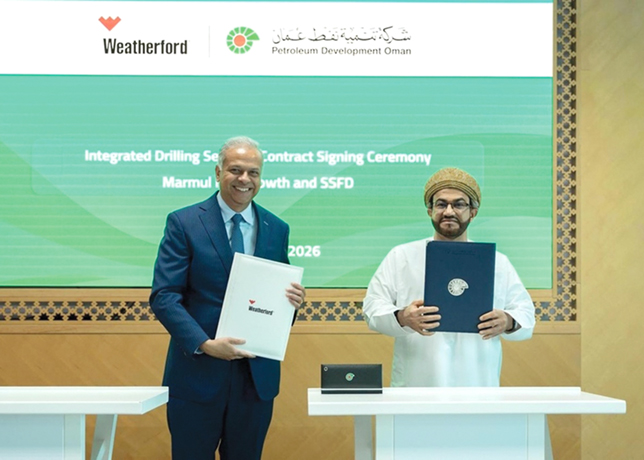
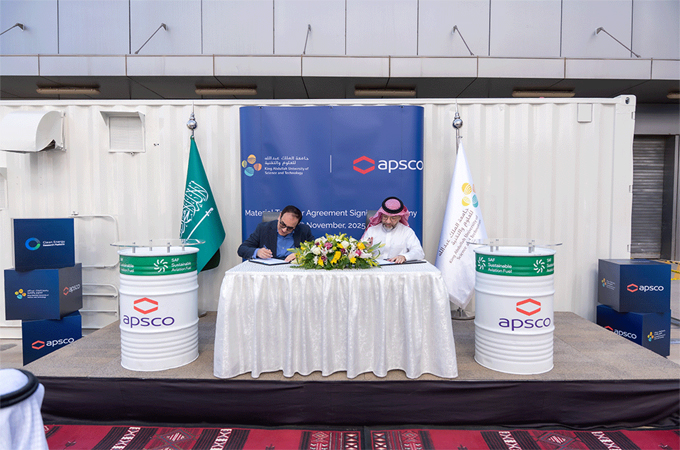
King Abdullah University of Science and Technology (KAUST) in Saudi Arabia has entered into a new material transfer agreement (MTA) with the Arabian Petroleum Supply Company (Apsco), under which Apsco will supply KAUST with sustainable aviation fuel (SAF) for research on next-generation low-emission fuels.
The collaboration
comes at a critical time for the aviation industry. Under
the ReFuelEU Aviation regulations, airlines are required to
use a 2% SAF blend by 2025, increasing to 6% by 2030 and 70% by 2050—targets
that remain out of reach with today’s fuel technologies.
Meanwhile, global SAF
demand is expected to surge from 2 million metric tons in 2025 to 10 million in
2030 and 75 million by 2040.
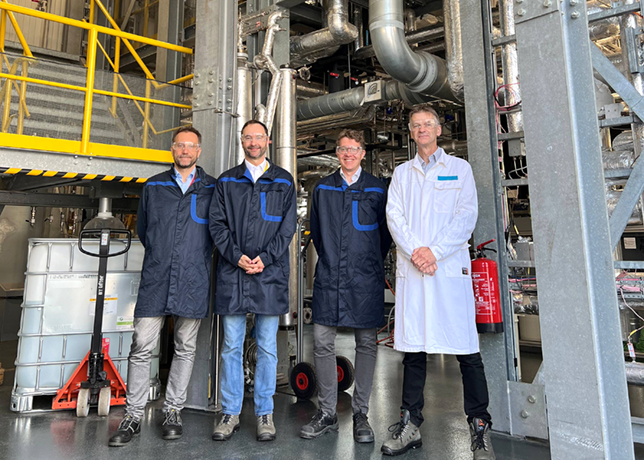
Professors Mani
Sarathy, Thibault Guiberti, Aamir Farooq, and Hong Im will
lead the research, which will focus on the chemical properties, reaction
pathways, and combustion behaviour of the provided fuels.
The new data on fuel behaviour,
emissions characteristics, and performance metrics will build a comprehensive
database that will develop models for the creation of future SAF
formulations of higher efficiency and lower environmental impact.
“This partnership
allows us to combine world-class experimental facilities with advanced
artificial intelligence to fundamentally reimagine how sustainable aviation
fuels are designed,” said Sarathy. “Using the new data generated, our
models will help identify efficient, cleaner, and more scalable fuel
formulations that can support the aviation sector’s ambitious climate
goals.”
Globally, the
aviation industry is increasingly turning to create predictive
models for fuel behaviour from partial datasets, reducing development cycles
from years to months.
Beyond fuel design,
the project will help bridge critical knowledge gaps that currently slow SAF
adoption worldwide, from understanding emissions behaviour to assessing how
fuels perform across a range of operating environments.
By answering these
fundamental questions, the partnership will enable industry and regulators to
make faster, more informed decisions about future SAF deployment.
“This collaboration
with KAUST marks an important milestone for Apsco and for the future
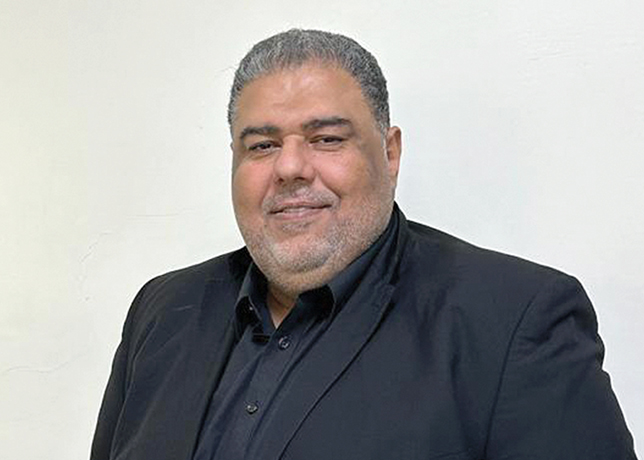
of sustainable aviation in the Kingdom,” said Apsco CEO Dr Azzam
Qari. “As the global aviation sector moves rapidly toward lower-carbon
solutions, investing in local research and national capabilities in SAF is no
longer optional, it is strategic. Through this agreement, our role
goes beyond supplying fuel for testing; we are helping build the scientific and
technical foundation that can enable Saudi-developed SAF technologies in the
years ahead.”
As Saudi Arabia
expands its aviation network and explores domestic SAF production
opportunities, the ability to test and validate fuel properties
within the Kingdom scientifically becomes increasingly essential.
Building local
research infrastructure accelerates certification, supports national
sustainability targets, and strengthens the country’s position in the future
global aviation fuel market.
With research facilities already in place, KAUST will provide the scientific foundation needed to accelerate domestic SAF research in the Kingdom, supporting the goals of the Saudi Aviation Strategy to advance low-carbon, next generation energy technologies. -TradeArabia News Service