





































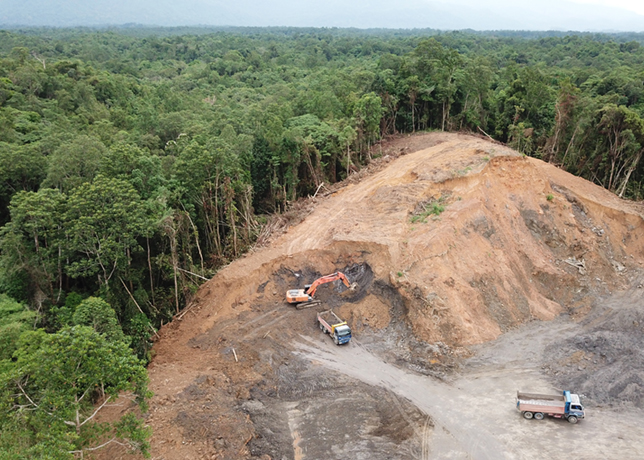
Planetary degradation is intensifying across all systems, threatening achievement of international sustainability goals and human well-being despite multiple pathways existing for transformational change, says UNEP’s report
The Earth’s interconnected environmental systems are deteriorating at unprecedented rates, driven by escalating human pressures that now threaten the planet’s capacity to sustain life and support equitable development.
The global population expanded from 3 billion in 1960 to 8 billion by 2022, whilst global gross domestic product surged from $9.14 trillion to $93.35 trillion over the same period, creating demands for goods and services that exceed planetary boundaries.
According to the United Nations Environment Programme’s seventh edition of the Global Environment Outlook (GEO-7) assessment report, four interconnected global environmental crises: Climate change, biodiversity loss and land degradation, desertification, and pollution and waste, are simultaneously intensifying, creating cascading effects across terrestrial, marine, freshwater, and atmospheric systems.
Anthropogenic greenhouse gas emissions reached nearly 60 gigatonnes of CO2 equivalent in 2023, with 79 per cent originating from energy, industrial processes, transport, and buildings, whilst 22 per cent derived from agriculture, forestry, and land-use change.
Average global surface temperature for 2014-2023 increased by 1.19 deg C above the 1850-1900 baseline, with the World Meteorological Organization (WMO) confirming 2024 as the hottest year on record, exceeding the 1.5 deg C threshold.
The ten years between 2015 and 2024 represent the warmest period since records began in 1850, with polar regions warming considerably faster than the global mean.
Marine systems have absorbed approximately 25 per cent of anthropogenic carbon dioxide (CO2) emissions, resulting in ocean acidification that increased by 26 per cent as pH decreased from 8.11 in 1985 to 8.05 in 2021.
Global mean sea level rose by an average of 0.20 metres over the period 1901 to 2018, with the rate accelerating to 3.7 millimetres annually for 2006–2018.
Terrestrial biodiversity continues declining in abundance and richness, with estimates suggesting 200,000 species may have become extinct during the 20th century, whilst one million species face extinction risk if current trends persist.
Approximately 20-40 per cent of Earth’s land area is degraded, jeopardising livelihoods for roughly 40 per cent of the world’s population.
According to the UNEP’s report, Earth is losing the equivalent of four football fields to land degradation every second, amounting to over 4 million sq km of degraded land each year.
Global soils, which produce an estimated 95 per cent of the world’s food and feed supplies whilst storing more carbon than the biosphere and atmosphere combined, are degrading at alarming rates.
Predictions indicate almost 95 per cent could be degraded by 2050, an increase from one-third today, with more than 24 billion tonnes lost annually to erosion.
Freshwater systems face mounting pressures from pollution, overextraction, and climate change.
Global freshwater withdrawals, currently estimated at 4,300 sq km per year, have nearly doubled since 1980, reaching unsustainable rates in North Africa, parts of Southern and Western Asia, Central America, and the Southwestern US.
Groundwater levels have declined in more than 30 per cent of the world’s regional aquifers since 2000.
Air pollution exposure affects 99 per cent of the world’s population at harmful levels, with outdoor and indoor pollution combined causing approximately eight million deaths annually.
Urban air pollution with fine particulate matter alone could cause around 4 million premature deaths annually by 2050, similar to 2020 levels despite technological improvements.
Chemical pollution presents escalating risks, with an estimated 350,000 chemicals available globally, including emerging threats such as poly and perfluorinated chemicals, micro and nanoplastics, and other novel pollutants with largely unknown toxic effects.
Non-greenhouse gas chemical pollution is estimated at five times greater in scale than greenhouse gas emissions.
Current development trajectories project intensifying environmental pressures through 2050, including rising greenhouse gas emissions, continuing land-use change, and intensifying resource exploitation.
Global materials extraction is projected to rise by 70 per cent between 2020 and 2050, with the largest increase from non-metallic minerals driven by infrastructure expansion in rapidly developing economies.
Depending on policy implementation, global temperatures could increase to 2.4-3.9 deg C this century, falling short of Paris Agreement goals.
With inadequate policy implementation, global mean temperature is projected to increase by approximately 3.9 deg C by 2100, whilst full implementation of current policies could limit increases to approximately 2.9 deg C.
Multiple Earth system tipping points present catastrophic risks. At least, 25 such tipping points have been identified, with 16 intersecting the biosphere.
Critical thresholds include Arctic sea ice loss potentially altering jet stream position and strength, collapse of Antarctic and Greenland ice sheets causing significant irreversible sea-level rise, and transformation of Amazon rainforest into low tree-cover savanna through combined pressures of temperature rise, drought, deforestation, and intensified wildfires.
Environmental crises disproportionately affect socioeconomically disadvantaged groups, especially women, children, the elderly, Indigenous Peoples, people with illness or disability, and those living in informal settlements.
Approximately 489,000 heat-related deaths occurred annually over 2000-2019, with annual heat-related mortality for people over 65 years increasing by approximately 85 per cent during 2013-2022 compared with 1991-2000.
The economic costs of environmental degradation are substantial and escalating. In 2020, approximately half the world’s GDP, around $44 trillion, was moderately or highly dependent on nature and its services.
Between 2000 and 2019, losses from recorded disasters totalled $2.97 trillion, whilst estimated annual loss of ecosystem services from 1997 to 2011 ranged from $4.3 to $20.2 trillion.
TRANSFORMATION PATHWAYS TOWARDS SUSTAINABILITY GOALS
Achieving ambitious environmental and societal goals agreed upon in multilateral agreements remains possible, but requires immediate, unprecedented, and coordinated transformations across economy and finance, energy, food, materials and waste, and environmental systems.
Target-seeking scenarios demonstrate multiple pathways exist, though all demand complete transformation of systems for supply, demand, consumption, and service provision.
Energy system transformation requires sustained increases in renewables and substantial reduction of unabated fossil fuel technologies by 2050.
Electrification of final energy demand must more than double from approximately 20 per cent to almost 50 per cent by 2050, necessitating massive investment in renewable energy capacities, power storage, and new consumption technologies including electrified transport and heat pumps.
Food system measures, improved agricultural practices, diet change, and food-waste reductions, can prevent continued natural land conversion and degradation.
Curtailing meat consumption produces the greatest effect, vastly reducing land use for pasture and feed, improving biodiversity, reducing pollution, and providing significant health benefits.
These changes, combined with improved irrigation management, can reduce water stress whilst maintaining adequate irrigation.
The protection of existing ecosystems, restoration of degraded lands, and improved land management prove crucial for preserving biodiversity and increasing carbon storage.
The increasing protected areas helps prevent conversion of natural land, with scenarios ranging from 30 per cent with strict protection to 50 per cent with mutually beneficial human-nature relations.
Economic analysis reveals transformation benefits vastly outweigh upfront costs through avoided climate change damages, with benefits surpassing $20 trillion annually by 2070.
Changes in consumption and production cost approximately $1-3 trillion annually until 2050, equivalent to roughly 1.5 per cent of projected global economic activity.
However, economic damage from climate change becomes increasingly severe after 2050, leading to loss of 6 per cent of potential future gross domestic product by 2070, increasing to over 25 per cent by 2100.
Global progress towards internationally agreed goals remains insufficient and uneven. None of the 20 Aichi Biodiversity Targets for terrestrial biodiversity agreed in 2010 were fully achieved by 2020, with 12 out of 16 indicators showing significantly worsening trends.
Successful transformation depends on specific enabling conditions including effective governance and policymaking, appropriate legal frameworks, increased policy predictability, and inclusion of Indigenous, local, and scientific knowledge.
By Abdulaziz Khattak