




























































Escalating contamination drives breakthrough developments in photocatalytic materials, carbon-based cocatalysts, and semiconductor technologies for sustainable energy generation worldwide
The confluence of escalating environmental degradation and fossil fuel depletion has catalysed an unprecedented expansion in environmental catalysis research, transforming it into a multidisciplinary frontier where chemists, materials scientists, and environmentalists converge to address humanity’s most pressing ecological challenges.
Environmental catalysis has emerged as a critical field where controllable materials synthesis, advanced characterisations through electron microscopy and spectroscopy, high-level analytical chemistry, and computational studies collectively drive the generation of clean energy whilst simultaneously abating major pollutants in air and water.
The synthesis of high-performance catalysts and their applications in various catalytic technologies for environment remediation now represents a coordinated effort to illustrate the theories behind catalytic reactions whilst delivering practical solutions.
PHOTOCATALYTIC INNOVATION & SOLAR ENERGY UTILISATION
Photocatalysis remains the central focus for the environmental catalysis community due to its wide applications in carbon dioxide reduction, oxidation of volatile organic compounds, elimination of aqueous organic pollutants, disinfection, and water splitting.
The synthesis of visible light and near-infrared light responsive semiconductor photocatalysts has attracted immense scientific interest because visible light and NIR light occupy approximately 90% of solar light energy, compared to no more than 5% for ultraviolet light.
Multiple routes including creating defects and element doping have been developed to enhance the visible light absorption of titanium dioxide, the most popularly used photocatalyst.
Researchers have introduced carbon and nitrogen elements into titanium dioxide simultaneously, demonstrating improved catalytic properties compared to anatase titanium dioxide under simulated sunlight irradiation for degradation of 4-nitrophenol, whilst also evaluating the embryonic toxicity of intermediate degradation compounds.
Palladium-copper loaded over hybrid materials of carbon nanotubes and titanium dioxide have shown high photocatalytic performance for nitrate conversion, expanding the toolkit for water treatment applications.
Bismuth compounds represent a new class of photocatalytic materials receiving substantial attention, with bismuth oxychloride exhibiting excellent photocatalysis behaviours driven by UV light.
Efforts to fabricate graphene oxide/bismuth oxychloride nanocomposite films and bismuth oxyiodide/bismuth oxychloride films have successfully expanded light absorption to the visible spectrum.
Bismuth vanadate has been identified as a visible light-activated photocatalyst due to its narrower band gap than titanium dioxide, though its poor specific surface area limits catalytic performance.
A co-precipitation method to coat silica onto bismuth vanadate has yielded composites with larger surface area and higher photocatalytic activity and degradation efficiency towards methylene blue dye with respect to monoclinic bismuth vanadate.
CARBON ALLOTROPES AS REVOLUTIONARY COCATALYSTS
Carbon materials, including activated carbon, carbon nanotubes, graphene, and carbon quantum dots have been used as effective cocatalysts to enhance the photocatalytic activities of semiconductors, making them widely applicable for photocatalytic energy generation and pollutants degradation.
In their paper, ‘The Promoting Role of Different Carbon Allotropes Cocatalysts for Semiconductors in Photocatalytic Energy Generation and Pollutants Degradation’, Weiwei Han and his co-researchers at the School of Chemical Engineering and Technology, Tianjin University, Tianjin, China, noted that loading cocatalysts for the modification of semiconductors increases the separation efficiency of photogenerated hole-electron pairs whilst enhancing the light absorption ability of semiconductors, thus obtaining new composite photocatalysts with high activities.
They saw that carbon nanotubes and graphene possess large specific surface areas, excellent electric conductivity, high mechanical strength, and good thermal and chemical stability, making them ideal substitutes for noble metal cocatalysts.
A graphene-titanium dioxide nanoparticles hybrid synthesised by wrapping amorphous titanium dioxide nanoparticles with graphene oxide using a one-step hydrothermal method exhibited superior photocatalytic activity for photodegradation of methylene blue under visible light irradiation.
Novel three-dimensional silver halide/graphene aerogels structured composites have demonstrated excellent photocatalytic and cycling performance for the degradation of methyl orange and reduction of hexavalent chromium.
Carbon quantum dots assembled on the surface of hydrogenated titanium dioxide demonstrated photocatalytic activity superior to P25, titanium dioxide nanobelts, and hydrogenated titanium dioxide nanobelts for the degradation of methyl orange under UV-visible-NIR irradiation.
The carbon quantum dots possess excellent photo-induced electron transfer and reservoir properties, converting NIR light to visible light for utilisation by hydrogenated titanium dioxide whilst effectively suppressing the recombination of electron-hole pairs.
SYNTHESIS METHODOLOGIES & MATERIAL ENGINEERING
Mechanical mixing, hydrothermal/solvothermal processes, and sol-gel methods represent the most frequently employed synthesis approaches for carbon-based photocatalysts.
Hydrothermal or solvothermal methods are widely adopted due to their mild reaction conditions, high product purity, controllable morphology, good crystallinity, and uniform distribution of obtained products.
Two-dimensional hexagonal alpha-iron oxide/graphene nanoplate composites synthesised via a simple one-step hydrothermal method achieved effective reduction of graphene oxide to graphene whilst forming intimate contact between the alpha-iron oxide nanoplates and graphene.
Multi-walled carbon nanotube-titanium dioxide sphere composites fabricated through a facile one-step hydrothermal method using titanium tetrafluoride as titanium source and carbon nanotubes as structure regulator demonstrated that decreasing hydrothermal temperature or prolonging hydrothermal time enhanced photocatalytic degradation efficiency.
Sol-gel methods enable close chemical interaction between semiconductors and carbon cocatalysts, controlling the crystal structure and uniformity of supported nanoparticles to fabricate photocatalysts with high activities.
Microwave-assisted methods represent green synthesis approaches based on microwave heating characteristics, achieving preparation of catalysts with special structures and high yields in remarkably short timeframes.
APPLICATIONS IN HYDROGEN EVOLUTION & ENVIRONMENTAL REMEDIATION
Photocatalytic water splitting driven by sustainable solar energy constitutes an ideal pathway to achieve clean hydrogen production, addressing fossil fuel depletion concerns.
Reduced graphene oxide/indium gallium zinc nanocomposites synthesised using a one-pot hydrothermal method achieved hydrogen evolution rates reaching 435 micromoles per hour under visible-light irradiation.
Carbon nanotube-titanium dioxide catalysts prepared through one-pot oxidation obtained hydrogen evolution rates of 485 micromoles per hour, representing 2.4 times the performance of platinum/titanium dioxide catalysts.
Carbon quantum dots/P25 composites with dyade-like structures demonstrated photocatalytic performance under both UV-visible and visible light irradiation, achieving hydrogen evolution rates of 9.1 micromoles per hour under UV-visible light, four times higher than pure P25.
Nitrogen-doped graphene incorporated into cadmium sulphide/niobium pentoxide heterojunction structures exhibited hydrogen evolution rates of 100 micromoles per hour per gramme, approximately 7.7 times that of pure cadmium sulphide.
For pollutant degradation applications, dandelion-like zinc sulphide/carbon quantum dots hybrid materials showed degradation rates 1.67 and 2.11 times higher than bare zinc sulphide for methylene blue and rhodamine B respectively.
Fullerene-modified anatase titanium dioxide nanocomposites demonstrated enhanced photocatalytic degradation of methylene blue under UV-A light irradiation, with density functional theory calculations confirming strong covalent interaction and bandgap narrowing to 0.8 electron volts.
BIOMASS CONVERSION & PHARMACEUTICAL WASTE TREATMENT
Catalytic conversion of biomass to biofuels has emerged as another vital topic in environmental catalysis, driven by the imperative to transform agricultural wastes into resources whilst reducing carbon dioxide emissions from fossil fuel combustion.
Heterogeneous acidic catalysts and enzyme biocatalysts lead the candidates for converting lignocellulosic biomass to fuels and value-added chemicals.
Bifunctional catalysts synthesised by decorating propyl/phenyl-sulphonic acid group functionalised mesoporous silica materials with platinum particles demonstrated good catalytic performance in hydrodeoxygenation reactions of bio-derived phenol to produce cyclohexane fuel.
Pharmaceutical and personal care products represent emerging contaminants widely present in pharmaceutical and hospital wastewater, even appearing in natural water systems.
Iron-modified MCM-41 materials fabricated at different conditions successfully adsorbed ciprofloxacin hydrochloride for removal from wastewater, addressing antibiotic contamination challenges.
The integration of computational studies using ab initio techniques like density functional theory has become an important complementary tool for elucidation of inherent mechanisms of catalytic reactions.
Density functional theory studies on mechanisms of carbon monoxide oxidation catalysed by manganese-embedded divacancy graphene and boosted oxygen reduction reaction performance catalysed by two-dimensional metal-organic frameworks provide theoretical foundations for rational catalyst design.
STRATEGIC OUTLOOK FOR CLEAN ENERGY & WATER
The advancements in catalysis for environment remediation and innovations in clean energy with diminished production of undesired by-products illustrate the field’s trajectory towards practical implementation.
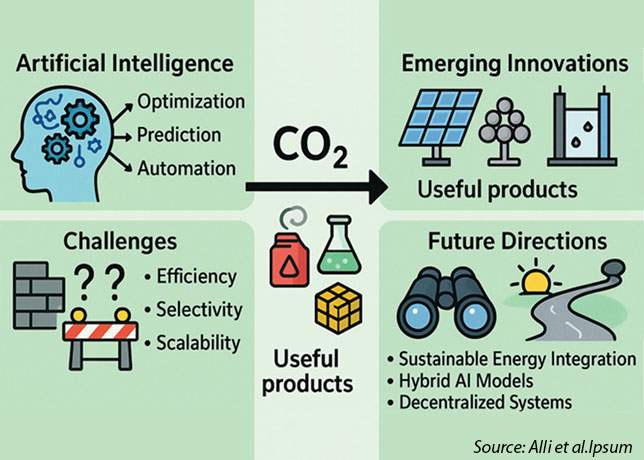
Challenges and perspectives for this field address the need for future research focused on establishing a world with clean air and water alongside sustainable and green energy for human habitation.
The collection of research demonstrates how controllable materials synthesis, advanced characterisations, analytical chemistry, and computational studies continue driving clean energy generation and pollutant abatement whilst illuminating catalytic reaction theories.
By Abdulaziz Khattak