







































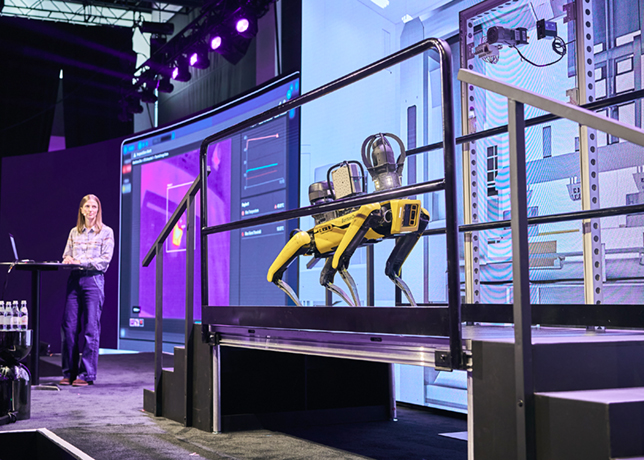
 Mark Moffat speaks at IFS Industrial X Unleashed
Annual infrastructure investment of $10 trillion plus $7 trillion for data centres over five years creates self-perpetuating AI transformation cycle driving additional 1pc global GDP growth, says Mark Moffat
The global industrial economy has entered an investment cycle of unprecedented scale, with $17 trillion committed to fundamentally rebuilding the physical and digital infrastructure underpinning modern commerce, energy distribution, and manufacturing capacity.
This represents not a one-time modernisation effort, but the beginning of a self-perpetuating cycle driven by the abbreviated lifespan of technologies being installed today, creating conditions for what economists project will be a full percentage point increase in global GDP growth.
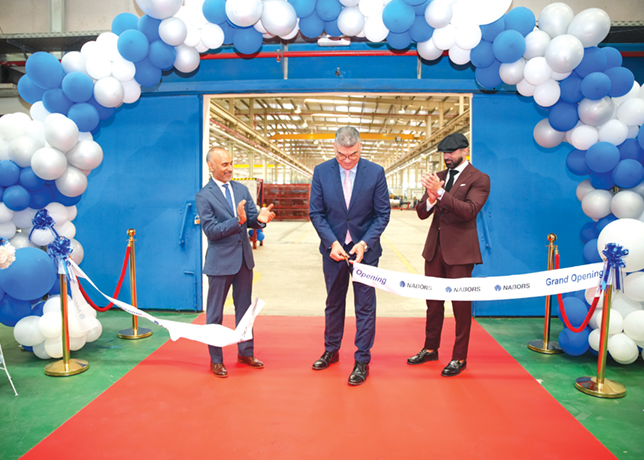
Speaking at the Industrial X Unleashed event in New York, Mark Moffat, IFS CEO, outlined the mathematics behind what he characterised as an "unfathomable" level of investment flowing into industrial transformation, with profound implications for how quickly artificial intelligence (AI) capabilities will penetrate operational environments across asset-intensive sectors.
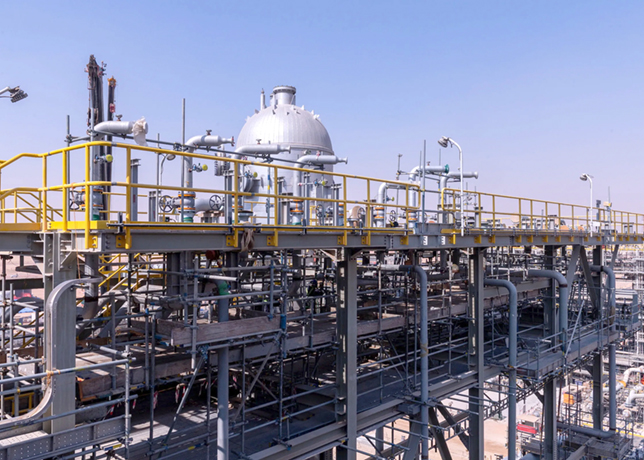
About $10 trillion has been committed annually to rebuilding the industrial world, including new manufacturing plants, electrical grids, transmission systems, and supply chains.
This represents ongoing annual investment, not a finite programme with a defined endpoint.
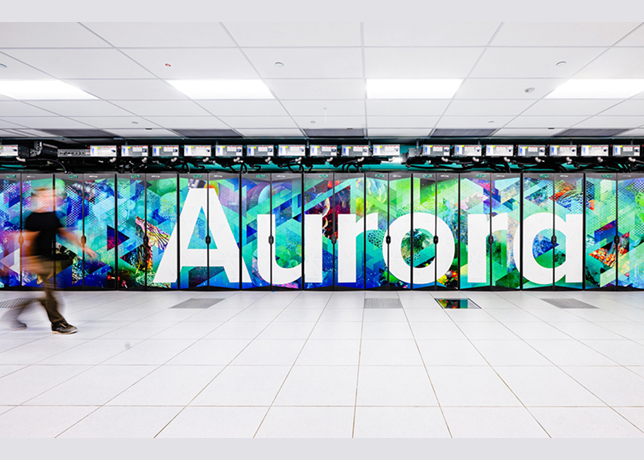
Simultaneously, $7 trillion has been allocated specifically for the next five years to build out data centres and their supporting ecosystem, including semiconductor production, electrical grid capacity, and the physical infrastructure required to house and cool computing equipment operating at unprecedented scale.
The combined commitment dwarfs previous industrial investment cycles and creates conditions economists believe will lift worldwide economic expansion from approximately 3-4 per cent.
THE GDP GROWTH EQUATION
 |
$17 trillion has been committed to rebuilding the physical and digital infrastructure |
The projection that infrastructure investment will deliver a full percentage point increase in global GDP growth rests on assumptions about how quickly AI capabilities translate into measurable productivity improvements across industrial operations.
With current global GDP levels approaching $100 hundred trillion, a sustained 1 per cent increase represents an additional trillion dollars in annual economic output.
The mechanism driving this growth operates through multiple channels simultaneously.
Direct productivity improvements come from AI systems enabling existing workforces to accomplish more work at the same time, whether through better decision-making, reduced downtime, or elimination of routine tasks.
Capacity expansion represents a second growth channel, with AI and robotics enabling operations that physical workforce limitations previously constrained.
Manufacturers can operate additional shifts without proportional workforce increases, whilst supply chains optimise inventory levels in real-time.
Quality improvements constitute a third channel, with AI systems detecting defects, predicting failures, and preventing incidents that traditional approaches missed.
The capital efficiency of existing assets improves through AI-enabled optimisation, extracting more productive capacity from infrastructure already in place.
New capabilities become economically viable as AI systems perform tasks previously impossible at commercial scale, such as wildfire prevention through continuous transmission line monitoring and real-time supply chain reconfiguration.
The challenge in translating infrastructure investment into GDP growth lies in execution rather than technology availability.
Realising that potential requires successful integration into existing operations, workforce adaptation to new tools, and organisational changes enabling AI capabilities to influence real-time decision-making.
IMPLICATIONS FOR ENERGY SECTOR TRANSFORMATION
The energy sector faces particularly acute pressure to translate infrastructure investment into operational performance given its central role in enabling broader economic activity.
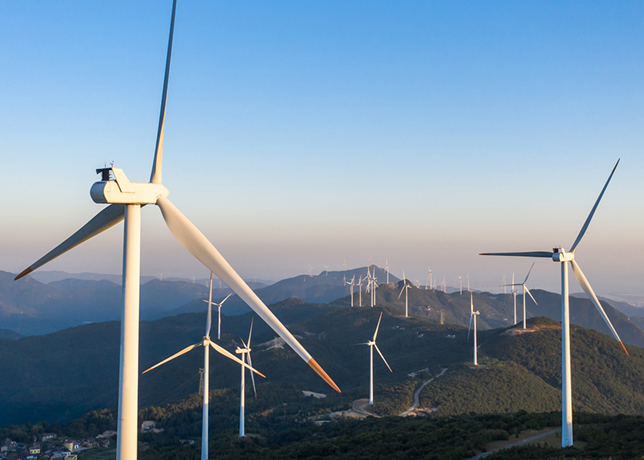
The $10-trillion annual investment in industrial infrastructure includes substantial allocation to electrical grid modernisation, transmission system expansion, and generation capacity development.
Yet traditional utility operating models prove poorly suited to managing infrastructure incorporating components requiring replacement every three to five years.
This creates organisational tension between long-term infrastructure planning horizons and rapid technology evolution cycles.
Capital approval processes designed for investments with multi-decade payback periods struggle to accommodate continuous technology refresh requirements.
The utilities successfully navigating this transition recognise that infrastructure investment and organisational transformation must proceed in parallel.
Installing AI-ready infrastructure without developing workforce capabilities to leverage those systems wastes capital and delays productivity gains.
The $17 trillion investment cycle creates both urgency and opportunity for energy sector transformation.
Utilities that successfully integrate AI capabilities into operations during this infrastructure build-out establish competitive advantages that laggards may find impossible to overcome.
Conversely, operators that treat AI as incremental enhancement rather than fundamental transformation risk finding their infrastructure investments deliver only modest returns whilst competitors multiply workforce capacity and operational performance.
The investment wave currently underway represents not just capital deployment but a fundamental restructuring of how industrial operations function, with particular implications for the energy infrastructure enabling that transformation.
By Abdulaziz Khattak