































 Shell's involvement in Oman is comprehensive
Shell's history of partnership with the peoples and governments of the Middle East can be traced back to a century ago.
The company's experience in the area has contributed to an extensive portfolio of expertise which has enhanced operational results and contributed to societies of the region while honouring sovereignty and constitutional concerns.
Today, this expertise and the technologies it has spawned are being applied to ensure the continuation of sustainable development of the area's maturing carbonate reservoirs.
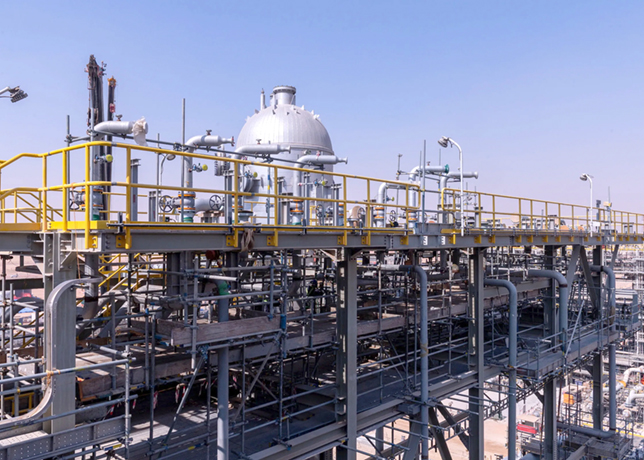
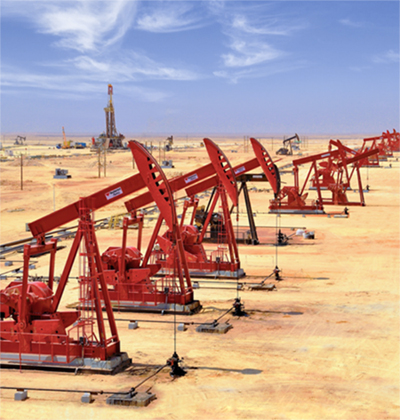
Although easy to develop initially, these reservoirs produce large amounts of water as they mature. In Oman, for example, 450,000 cu m of water is produced every day as a by-product of an oil output of 135,000 cu m per day.
The volume of water has been rising steadily, and is forecast to exceed 900,000 cu m per day by 2009.
Approximately 40 per cent of the produced water is reinjected into producing wells for reservoir support. Handling and disposal of the remaining 60 per cent presents major environmental and economical challenges.
Produced water cannot be disposed of at the surface because of contamination with traces of oil, heavy metals, boron, H2S, salt and solids. Currently the bulk of produced water in Oman is handled by deep water disposal, or reinjection deep into the main producing formation.
Significant effort is being devoted to costly deep water disposal, in particular in looking to convert the waste water stream into a cleaner stream which could be put to better use.
In Oman, Shell and its partners have been concentrating on an initiative called 'Greening the Desert', to clean the produced water and reuse it for crop irrigation.
Using reed beds which act as a biological filter to promote microbial activity, degradation of hydrocarbons and sorption of heavy metals, a small 'Greening the Desert' pilot was launched in the Sultanate in early 1999.
The project proved that water which came out of the reed beds was cleaner than when it entered, and as such could be used for certain irrigation purposes.
The purposes of this pilot were to further test the technical and economic feasibility of reed beds as an alternative to deep water disposal.
Final conclusions and a decision on whether reed bed technology can be successfully applied in Oman will, according to Shell, be made this year.
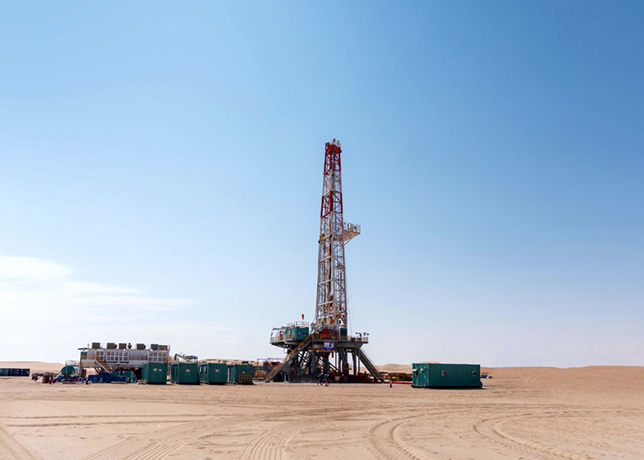
Shell also applies advanced logging and seismic techniques to optimise the drainage of the Middle East, and in particular, Oman's huge and often fractured carbonate reservoirs.
The techniques, which have been applied with success in Oman's Yibal and Fahud fields, have led to dramatic improvements in recovery.
They include: Shell's proprietary implementation of pre-stack depth migration to reprocess existing seismic data for better positioning of wells; 4D seismic to map water movement and locate and tap inadequately drained hydrocarbon-bearing pockets; 3D forward modelling and multi-component seismic surveys to characterise reservoir rock properties such as lithology, porosity and fractures.
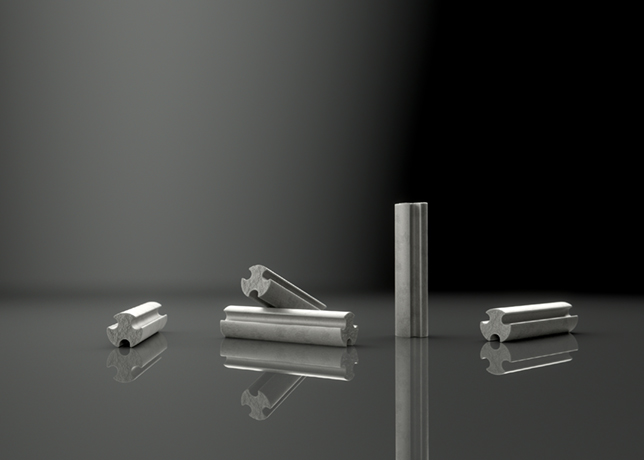
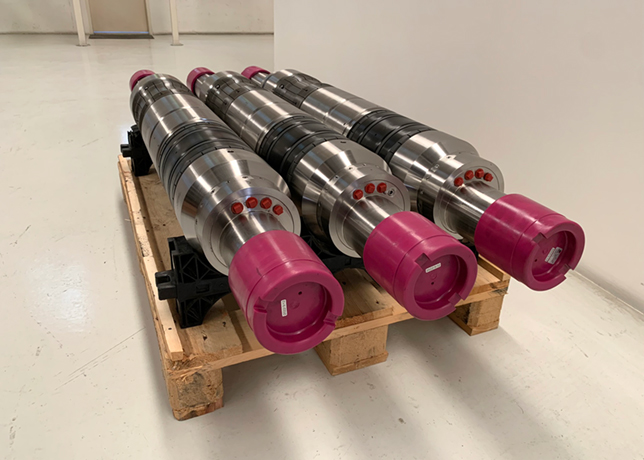
Other technologies include rock mechanics based on fracture prediction, intelligent wells, integrated studies and fracture shutoff techniques such as expandable tubulars and chemical gels.
Placement and completion of horizontal wells have been among the most successful of efforts to minimise water production in Middle East carbonate reservoirs.
Indeed, more than 1,000 horizontal wells have been drilled and completed in Oman.
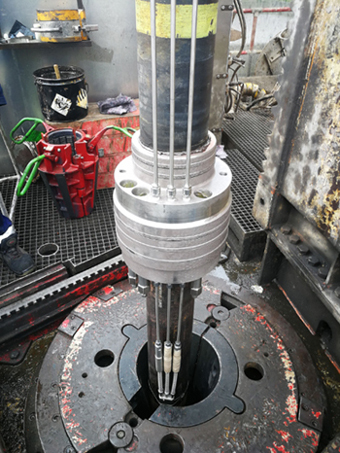
Many of these wells have deep, long horizontal sections which must be cased and then selectively opened to the formation through perforating.
For these applications, Shell's patented expandable tubular technology will, according to the company, prove valuable.
In addition to developing upstream technologies which have application in Oman, Shell also plays an important downstream role in the Sultanate.
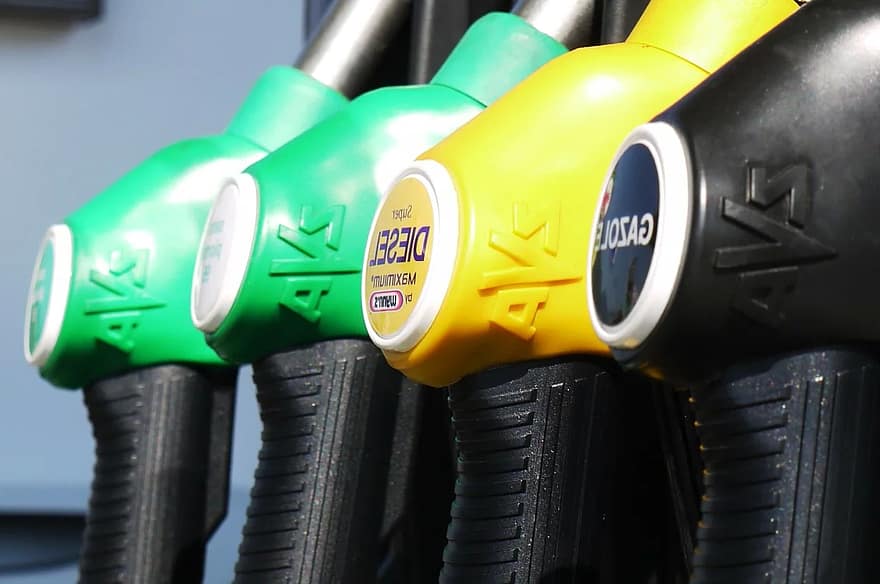
Shell Oman Marketing (SOM) was incorporated as an Omani company in 1997, and offers fuels (motor, aviation and marine) and lubricants to consumers through its network of approximately 115 service stations and a retail network of resellers.
It also delivers fuels, lubricants, greases, chemicals and specialist services directly to government and industrial customers.
The Company also markets a wider lubricant product and services range than any of its competitors. It also offers customers genuine bulk lubricant supply benefits accruing from its own fully computerised lubricant and oil blending plant.


