




















Oman has a well-developed strategy to reduce its dependence on oil revenue, in particular enhancing the value of its gas resources to offset the relatively high costs of producing oil.
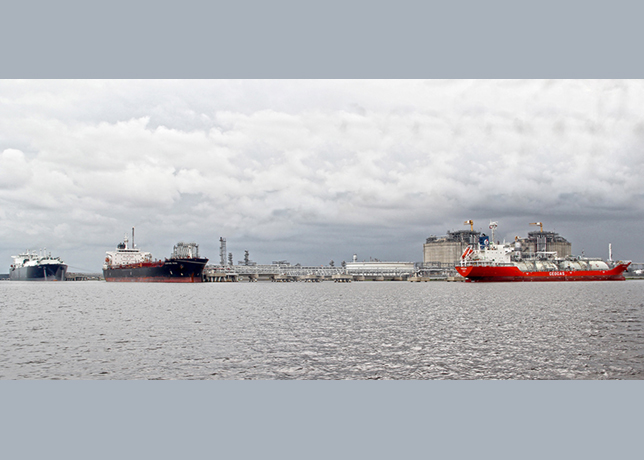
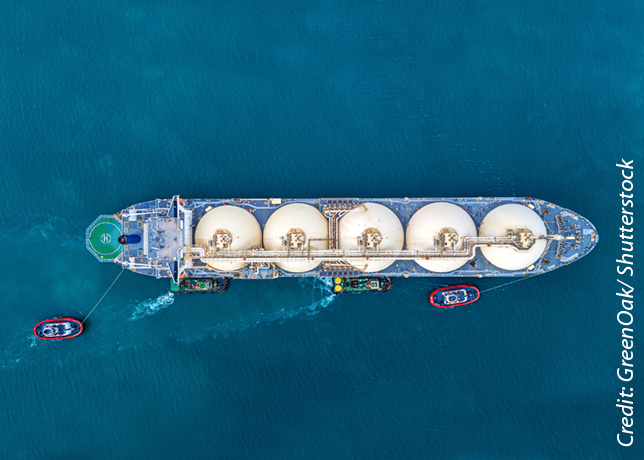
Leading the way is the giant Oman LNG facility, which was commissioned more than two years ago and which is to expand its capacity by 50 per cent to 9.9 million tonnes per year (tpy) with the addition of a third train. Oil Ministry officials expect construction to start early next year with completion due in 2005.
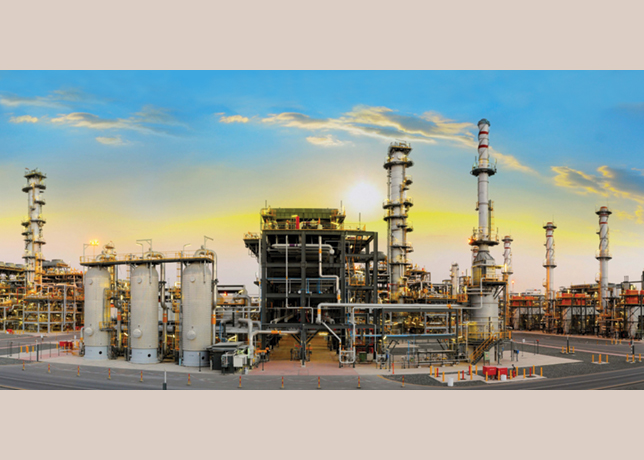
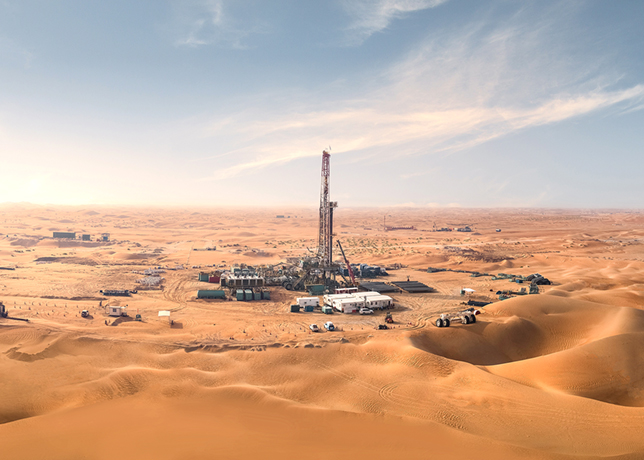
Upstream, infrastructure is also being put in place to further harness the country's gas resources and meet both the demand of the third train at Oman LNG as well as downstream petrochemical industries being developed in Sohar.
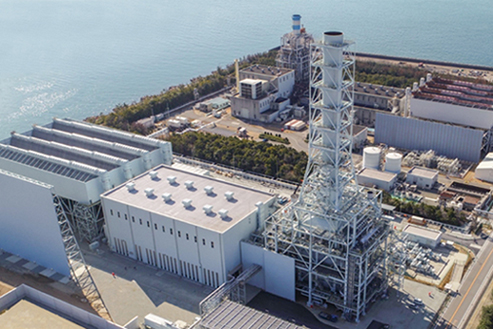
Petroleum Development Oman (PDO) selected a winner earlier this month of a $150 million deal for the construction of a gas plant in Saih Nihayda in central Oman, though PDO is awaiting government approval before making an official announcement on the winner. However, industry sources have indicated that Canada's SNC-Lavalin, in partnership with localÊfirm Al Hassan Engineering, had been chosen as it was the preferred bidder.
PDO, which produces about 95 per cent of Oman's crude oil, is looking to expand the gas plant at Saih Nihayda to 60 million cu m per day from 40 million cu m per day at present.
Other, smaller projects are planned to increase available gas. Parsons Engineering Corporation of the US is, for example, said to be working on detailed designs for an estimated $22 million debottlenecking project at Yibal.
According to official statistics, Oman's gas demand in 2000 was 28 million cu m per day, a figure which is expected to rise to 70 million cu m per day by 2005 and ultimately to 84 million cu m per day by 2010.
Approximately 26 million cu m per day of gas is supplied to Oman LNG, with the remainder used domestically, mainly for power generation and water desalination.
The industrial city of Sohar is now the focus of the Sultanate's diversification drive. A major methanol project is expected to start by mid-2005 with the construction of a 5,000 tonnes per day (tpd) plant.
The project is a joint venture between Oman Oil Company, Oman's Al Zawawi Establishment and Germany's Ferrostaal AG, who signed a memorandum of understanding earlier this month with Dutch company Vitol Holding as the offtaker of the methanol.
Design and engineering have begun on the plant which, when completed, is expected to be one of the largest in the world.
Construction is due to begin next year on a $180 million joint venture polypropylene plant in Sohar. The 340,000 tonnes per year (tpy) facility will be completed by 2006, according to reports. South Korea's LG international and ABB Lummus Global each hold 20 per cent stakes in the joint venture, with the state-run Oman Refinery Company (ORC) holding the remaining 60 per cent share.
The facility will use propylene supplied by a residual catalytic cracker from a refinery being constructed by Sohar Refinery Company.
Construction of the 75,000 bpd Sohar refinery has been delayed following alterations to the plant configuration. The company earlier this year asked bidders to include the extension of a topping unit in their bids, a process which is likely to increase the total cost of the refinery to $775 million from the previous estimate of $750 million.
The topping unit will, according to reports, supply long residue to the Sohar refinery. The initial plan envisaged receiving long residue from the existing ORC refinery at Mina Al Fahal.
Last November, Oman shortlisted South Korea's LG Engineering and global engineering firm Foster Wheeler Corporation, Samsung Engineering bidding with France's Technip, Japan's JGC Corporation with Chiyoda Corporation, Hyundai Engineering with Toyo and Germany's MG Engineering bidding with SK Engineering of South Korea for the contract for the plant.
The front-end engineering and design (FEED) package for the refinery has been prepared by JGC Corporation, while the project manager is ABB. The refinery is expected to be completed in 2005.
Also at Sohar, bids have been received for the construction of an ammonia-urea complex from TEC, Krupp Uhde and Snamprogetti/Mitsubishi Heavy Industries.
The facility will, according to reports, be called Sohar International Urea & Chemical Industries SAOC and will bring in a capacity of 660,000 tpy of ammonia and 1,11 million tpy of granular urea.
The overall cost for the project is estimated to be in the range of $534 to $582 million, with a projected debt equity ratio of 70:30.
Meanwhile, at Sur, a $770 million ammonia and urea complex is to be built by Technip-Coflexip for the Oman-India Fertilizer Company. Once complete, it will be the largest grassroots fertiliser complex in the world.
Despite its successful diversification schemes to date, the Sultanate is still dependent on oil for some 73 per cent of national revenues from a relatively modest oil output of 900,000 bpd.
Its national budget announced at the beginning of this year was based on an oil price average of $18 per barrel.
In line with its commitment to support global oil prices, Oman continues to maintain oil output cuts in cooperation with Opec.
Although not a member of Opec, the Sultanate has been a staunch supporter of the cartel's strategy to maintain and stabilise oil prices.
Minister of Oil Dr Mohamed Al Rumhi said earlier this year that the country was ready to extend its 40,000 barrels per day (bpd) crude output cut to the end of this year, if necessary. The current Opec output cuts are set until June 1, though many suggest that the cuts will remain in place beyond this date.
However, the country is keen to continue its policy of signing oil and gas production sharing contracts with foreign firms in a bid to boost its reserves, which currently stand at some 10 billion barrels of crude and 849.5 billion cu m of gas.
Most recently, Muscat signed an exploration and production agreement with France's TotalFinaElf for Block 31 in the Wusta region of the country, while last month, it signed a concession agreement with Australia's Novus Petroleum which will concentrate on the northern Musandam area.
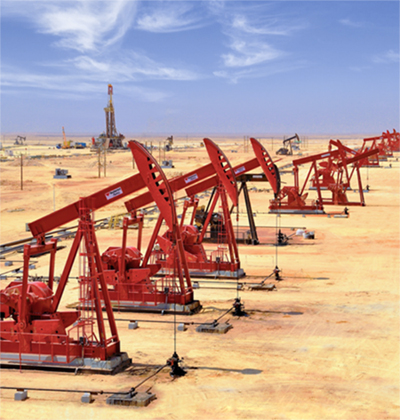
PDO is leading the way in developing innovative techniques to enhance oil production from the Sultanate's existing fields, many of which contain high volumes of water. Plans are currently in place to increase the percentage of oil extracted from its wells to 50 per cent from the current 28 per cent as the company moves from being a traditional oil and gas producer to an enhanced oil recovery (EOR) producer.
EOR techniques have allowed Oman so far to reduce the cost of oil production to $3.50 per barrel since 1998, though this could rise again. Gas will also be increasingly used for PDOs EOR programmes.
PDO works closely with Shell - which owns a 34 per cent stake in the state oil company - on ways to boost production from its heavy oilfields. Focus could turn onto the southern Mukhaizna oilfield, which, with the appropriate technology could produce up to 100,000 bpd from 12,000 to 15,000 bpd at present.
Omani crude could have a new role on the international stage if plans to replace Dubai crude with Oman crude as a sour market benchmark come to fruition.
Muscat said earlier this year that it was prepared to accept the adoption of its crude as a benchmark for the crude oil pricing system in Asian markets, following requests from a number of Korean, Japanese and Chinese oil firms.
Dubai crude has been the price benchmark for Middle East crudes in Asia for a long time, but its quantities have dropped to around 165,000 bpd at present from 400,000 bpd in the early 1990's.


