























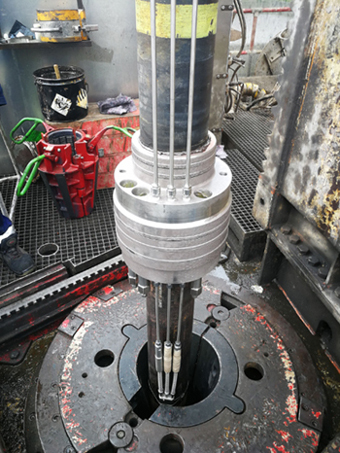

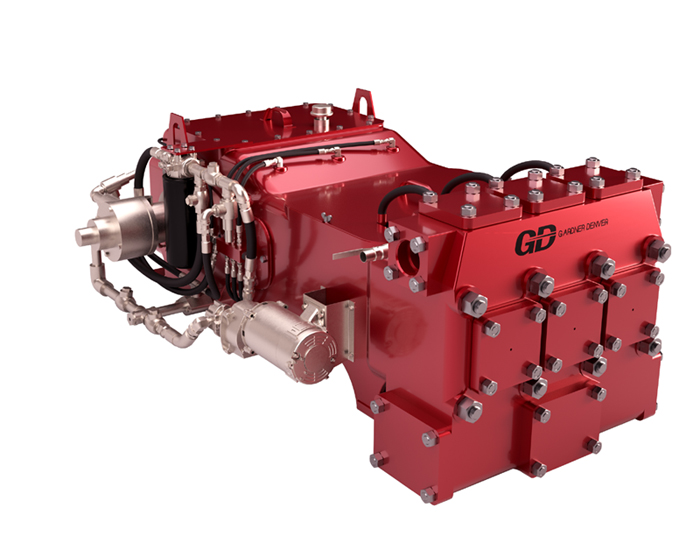
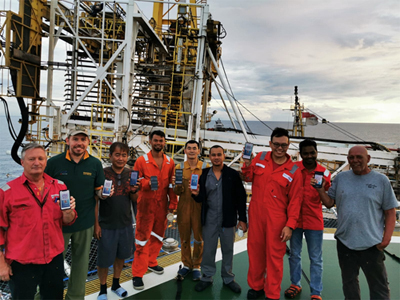


 The PRISA team drilled and worked over more than 200 wells ahead of schedule.
April 6, 1956 marked a turning point for both Schlumberger and the Sultanate of Oman.
Schlumberger engineers logged the Fahud No. 1 well, beginning a 46-year period of teamwork and innovation during which numerous cutting-edge technologies have been introduced. Since then, countless technologies have been harnessed to maximise recovery of Oman's energy assets.
Technology is only one part of the equation, however. Teamwork and commitment are equally important.
The commitment with which the first Schlumberger crew set to work in 1956 remains, and more than four decades later, can be witnessed on ongoing projects. Teamwork between Schlumberger and the E&P companies in the Sultanate has and continues to provide a solid base from which to maximise production and ultimate recovery of reserves.
Today, Schlumberger innovation and commitment extends to new ways of integrating its full spectrum of oilfield services and new methods of collaboration. Collaboration, infused with the same strong spirit of innovation, remains the key to achieving production objectives.
These elements can be witnessed in the more than 90 Schlumberger collaborative alliances with national, major and independent oil companies throughout the world.
Schlumberger invests more than $1.5 million each day in research and development to find integrated, innovative ways to extract hydrocarbons cost efficiently and in an environmentally-responsible manner.
As the Sultanate navigates a path towards Enhanced Oil Recovery (EOR), the Schlumberger commitment to teamwork and innovation continues.
Two examples - the first in Saudi Arabia with the PowerSTIM* project team and the second with PRISA in Venezuela - are evidence of the Schlumberger continued commitment to collaboration.
Saudi Arabia
Increased gas production is the result of applying jointly developed completion guidelines in Saudi Arabia's Jauf reservoir.
Applying completion guidelines developed by a Saudi Aramco and Schlumberger PowerSTIM* team decreased cleanup time and increased gas production from wells in this reservoir.
The goals in this project were to increase production, optimise fracture design, improve completion efficiency, and minimise time between fracturing jobs and the time between evaluation and execution. The approach incorporated a team of experts from both companies to develop completion solutions and best practices to be applied on subsequent wells.
The project team integrated all available basin, field and well data to characterise the reservoir and optimise fracture design. Screenless completion guidelines were adapted and distributed for use along with sand-control guidelines for well flowback.
Staff from each company appreciated the ability to contribute knowledge, experience and ideas to improve stimulation treatments and the well-completion process. Both companies benefited from the reduced engineering cycle time that is the result of expediting the learning process, emphasising added value and targeting incremental production potential.
Venezuela
A big boost in production in Venezuela's Lake Maracaibo project has been attributed to the introduction of new practices and services made available by Schlumberger.
As part of a late 1990s plan to increase production in Venezuela, PDVSA sought more economical ways to drill and work over wells in Lake Maracaibo.
Schlumberger helped provide solutions to this challenge by applying an integrated approach to project management and introducing a range of new technologies. The companies formed a novel 10 year alliance, perforaci-n y reha-bilitaci-n integral con servicios en alianza (PRISA), in which Schlumberger operates an oilfield on behalf of PDVSA to improve productivity and achieve shared goals. The project management scope covers all phases of operations from planning to job execution and analysis.
By January 2000 the PRISA project was fully mobilised with six multipurpose drilling and workover vessels and 645 Schlumberger personnel in place. The PRISA project team creatively manages drilling and workover rigs and services, barges, tugs, and crew boats. Schlumberger has introduced many new practices and services to the Lake Maracaibo project, resulting in


