






























The Jotachar 1709XT, engineered for hydrocarbon fires, delivers superior mechanical strength, faster application, and significant carbon savings by preserving steel integrity, Andy Czainski tells OGN
In the rapidly growing Middle East passive fire protection market, Jotun’s Jotachar 1709XT supports regional net-zero ambitions including UAE’s 2050 and Saudi Arabia’s 2060 targets through full lifecycle emissions reductions.
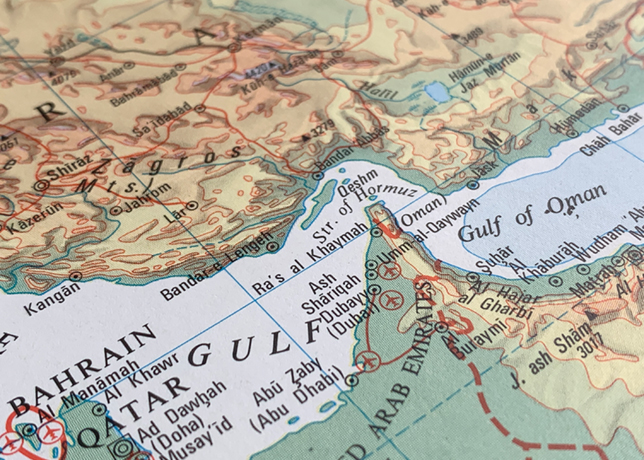
Manufactured locally in Oman, the mesh-free solution offers enhanced durability in harsh Gulf conditions without compromising performance.
This innovation positions Jotun as a leader in sustainable, high-efficiency PFP for oil and gas assets.
In an exclusive interview with OGN energy magazine, Andy Czainski, Global Category Manager – Fire Protection, Jotun Performance Coatings, Jotun Paints Arabia, says the Jotachar 1709XT delivers faster installation and lower total installed cost while fully maintaining certified hydrocarbon fire performance.
Below are excerpts from the interview:
How does Jotachar 1709XT’s calculated carbon saving per tonne of steel account for its full lifecycle, including manufacturing in Oman and disposal, and what quantitative metrics align it with UAE’s Net Zero 2050 or Saudi Arabia’s Net Zero 2060 targets?
In passive fire protection, the most impactful decarbonisation lever is preserving steel in service.
We define "carbon saving per tonne of steel" as the avoided emissions that would otherwise arise from fire-induced damage requiring demolition, new steel fabrication, transportation, and reinstallation.
Our accounting spans the full lifecycle, including raw materials and manufacturing in Oman, packaging, logistics, and application, to long-term in-service performance and responsible end-of-life management.
Life cycle assessment (LCA) serves as our primary tool, supported by independently verified environmental product declarations (EPDs) where available.
 |
The Jotachar 1709XT is tailored to the GCC’s conditions of humidity and operational exposure |
Quantification is tailored to each project: We model a baseline scenario (steel replacement following hydrocarbon fire exposure) against a protected scenario using Jotachar 1709XT (where steel integrity is maintained), then normalise the emissions difference per tonne of steel kept in service, drawing on conservative, audited intensity factors for steel production, logistics, and site works.
To support ambitious regional targets like UAE Net Zero by 2050 and Saudi Arabia’s Net Zero by 2060, our metrics align fully with the GHG Protocol:
• Scopes 1 and 2: Driving ongoing operational reductions, with a commitment to 70 per cent renewable electricity by 2030.
• Scope 3: Ensuring product transparency through LCA/EPD and robust avoided-emissions modelling for customer assets.
In short, Jotachar 1709XT advances net-zero pathways by preventing emissions-intensive steel replacement and providing rigorous, end-to-end documentation of those carbon savings.
Can you elaborate on Jotachar 1709XT’s technical breakthroughs that allow it to achieve ‘faster film build’ and superior mechanical strength when compared to other leading PFP solutions?
Jotachar 1709XT is certified to UL 1709 for hydrocarbon fire protection and is built on advanced technology designed for high build, mechanical robustness, and superior application efficiency.
This technology optimises for fast film build with high sag tolerance, enabling efficient one-leg application without the need for thinning.
It provides high mechanical strength and adhesion, which significantly reduce the risks of cracking, delamination, or detachment during fabrication, lifting, transport, and service.
The product is mesh-free for up to 60 minutes and offers competitive loadings for up to 120 minutes, resulting in lower installed thickness and weight for UL 1709 projects.
It has proven application performance at elevated substrate temperatures, supporting greater productivity in challenging Gulf climates.
 |
The Jotachar 1709XT is engineered for high substrate temperatures |
Its durability is demonstrated by UL 2431 certification and pre-qualification to NORSOK M-501:2022, achieved without a topcoat, which underscores its exceptional long-term performance.
Collectively, these features deliver faster installation and lower total installed cost while fully maintaining certified hydrocarbon fire performance.
Beyond reducing lead times, how does localising the manufacturing of the Jotachar range enable Jotun to tailor the coating’s performance for the region’s harsh environmental challenges?
Localising production in Oman (with an annual capacity 2.4 million litres) does more than reduce lead times.
It lowers embodied emissions via onsite solar share by improving the coating’s cradle to gate footprint for regional projects.
The Jotachar 1709XT is a climate ready application, as it is engineered for high substrate temperatures and robust handling through fabrication/transport typical of Gulf projects.
The system’s durability is assured through validation to UL 2431 and NORSOK M-501:2022 System 5A standards without a topcoat, demonstrating robust resistance to weathering and mechanical stresses, while owners may specify a compatible topcoat where long-term UV aesthetics are required.
Together, local production, climate tolerant application windows and validated durability help tailor performance to Gulf conditions of heat, humidity and operational exposure.
How is Jotun positioning Jotachar 1709XT against rivals in the growing Middle East PFP market, focusing on total installed cost, application speed, and long-term non-fire durability for oil and gas assets?
Jotachar 1709 XT stands out as the most optimised solution for up to 120 minutes of protection, delivering cost efficiency across all projects by combining low material consumption with competitive loadings and installed costs.
It also offers best-in-class performance for 30- and 60-minute ratings through single-coat application, enabling remarkably fast installation.
This is further enhanced by its easy partial mesh installation when required, along with rapid thickness build-up and high sag tolerance.
Additionally, the product allows for effortless single-leg application without any need for thinning, culminating in an excellent overall finish.
Given the Middle East’s shortage of skilled PFP applicators, what training, technology, or quality measures does Jotun’s Certified Applicator Scheme use to address the industry skills gap and reduce application risks?
Jotun mitigates the industry-wide skills gap in PFP application through its Certified Applicator Scheme, backed by comprehensive technical service and more than 1,200 dedicated coating advisors worldwide.
We provide full support at every stage, from fire engineering services and loading calculations to engineering guidance and PFP weight optimisation.
We also offer client demonstrations, reference areas, inspection and testing guidance, and hands-on expertise to ensure flawless application and absolute compliance, keeping client assets protected and operations safe.
For typical brownfield asset retrofit projects, how do Jotun’s Fire engineering services integrate with owners’ existing integrity management systems to ensure compliance and minimise operational downtime?
Jotun’s Fire Engineering Services team provides Dry film thickness (DFT) loading tables and optimised solutions that fully comply with industry standards and guidelines, ensuring all documentation is audit-ready and minimising the risk of non-conformities or deviations.
Through value engineering and structural fire engineering, we collaborate closely with project designers from the earliest stages to reduce both the overall cost and the weight of PFP material required, without compromising performance.
This proactive approach also shortens application time and reduces the need for repairs.
Additionally, our unique DFT markup drawings streamline the inspection process, enable faster application, and help minimise operational downtime.
The result is faster, fully compliant brownfield execution with significantly lower operational impact.
What is Jotun’s roadmap for transitioning its thick-film PFP range to eco-friendly, low-VOC or water-borne formulations while maintaining performance for hydrocarbon and jet fire scenarios?
The transition is not only about greener/environmentally compliant chemistries but also about sustainable outcomes.
By ensuring that steel structures are protected for decades, Jotun’s PFP systems minimise resource consumption, reduce repair interventions, and extend the lifetime of critical assets.
This holistic approach means fewer recoats, less downtime, and ultimately a smaller carbon footprint across the asset’s lifecycle.
How does Jotun collaborate with regulators and civil defence in Saudi Arabia and the UAE to keep Jotachar 1709XT fully compliant with evolving fire safety regulations?
Jotachar 1709 XT has been subjected to comprehensive testing at third-party test facilities, and is fully certified by leading industry bodies (UL 1709, UL 2431, NFPA 290, NORSOK M 501 pre qualification).
We provide authorities and code enforcers with complete technical dossiers, durability data and specification guidance, and we support owners during approvals and inspections.
Additionally, our regional teams monitor evolving requirements and update documentation, so projects remain fully compliant with local fire safety codes.
What unique dual challenges do explosion scenarios pose to intumescent coatings in UL 1709 hydrocarbon fire tests, and how does Jotachar 1709XT’s high mechanical strength maintain structural integrity against blast pressure waves?
Jotachar 1709XT has undergone rigorous testing, including exposure to extreme jet fire scenarios.
Jet fires occur when gas, oil, or hydrocarbons are rapidly released under high pressure, producing a highly erosive flame jet with intense heat fluxes typically ranging from 240 to 300 kW/sq m (and even exceeding 800 kW/sq m in hydrogen fires).
To counter these extreme conditions, Jotun’s fire protection systems are engineered to meet the demanding ISO 22899-1 standard, ensuring robust and reliable performance during jet fire events.
This advanced level of protection provides ultimate fire safety, safeguarding lives and critical assets precisely when and where it matters most.
By Abdulaziz Khattak