

















Middle East capacity reaches 9 bcm as world relies on 699 facilities for seasonal balancing and energy security amid growing renewable integration challenges, says an IGU report
Global underground gas storage capacity has reached 424 billion cu m (bcm) across 699 facilities worldwide, providing a critical buffer against supply disruptions and price volatility as the energy transition accelerates, with the Middle East contributing 9 bcm to this strategic reserve.
The expansion represents a 10 bcm increase from 414 bcmreported in 2022, with peak withdrawal rates climbing to 7,371 million cu m per day (mcm/d) compared to 7,221 mcm/d two years earlier, according to data compiled by the International Gas Union’s (IGU) Storage Committee through April 2025.
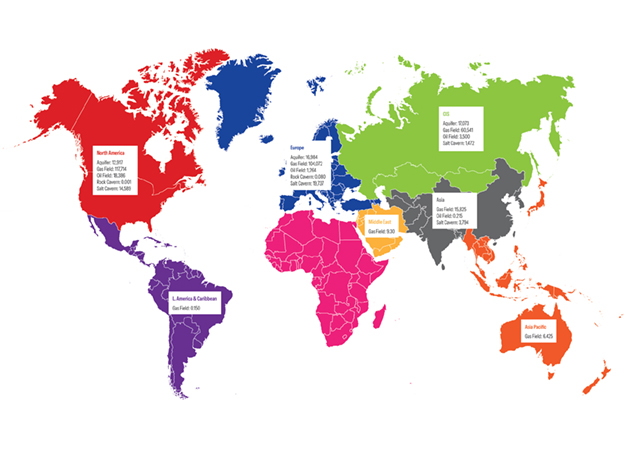
According to the International Gas Union’s report, ‘Underground Gas Storage: A Critical Pillar for Energy Security’, the storage capacity is distributed across North America (164 bcm), Europe (142 bcm), the Commonwealth of Independent States (83 bcm), Asia (20 bcm), the Middle East (9 bcm), Asia Pacific (6 bcm), and Latin America (0.2 bcm).
Natural gas fields dominate the storage landscape, representing 74 per cent of total working gas volume at 314 BCM, though they account for only 57 per cent of the total potential withdrawal rate.
Saline aquifers hold 11 per cent of capacity at 47 BCM, whilst salt caverns, despite comprising just 9 per cent of working gas volume at 40 bcm, deliver 27 per cent of the potential withdrawal rate due to their high deliverability characteristics.
Oil field storage accounts for 6 per cent of capacity at 23 bcm, with rock caverns representing a negligible fraction of global storage infrastructure.
The US operates the highest working gas volume globally at 138.09 bcm across 403 facilities, followed by Russia with 68.99 bcm in 24 facilities and Ukraine with 32.18 bcm in 13 facilities.
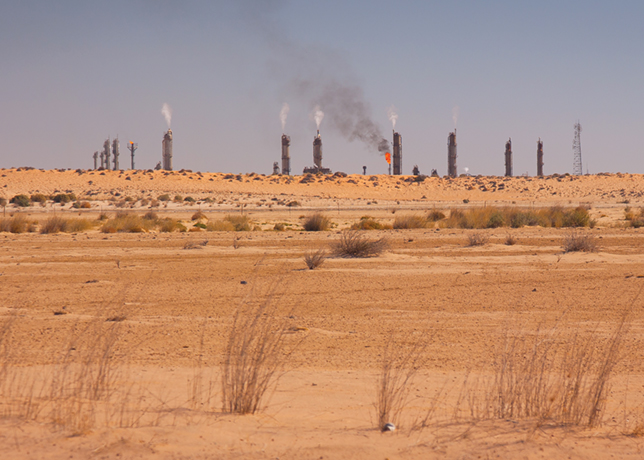 |
At 74 per cent of total working gas volume, natural gas fields dominate the storage landscape |
Canada ranks fourth with 25.52 bcm across 64 facilities, whilst Germany holds 22.49 bcm in 44 facilities, placing it fifth globally.
China has achieved the single largest increase in storage capacity, adding 6 bcm to reach 19.83 bcm across 25 facilities, now ranking sixth in terms of total working gas volume.
The Netherlands, following the expansion of the Norg facility, now operates 13.74 bcm across five facilities, outranking France’s 11.77 bcm in 14 facilities.
Italy maintains 17.66 BCM across 13 facilities, whilst Austria has expanded to 8.58 bcm in nine facilities, with growth exceeding 5 per cent attributed to completion of past projects.
Hungary operates 6.10 bcm across five facilities, and Iran holds 6 bcm in two facilities, demonstrating the strategic importance of storage across diverse geopolitical contexts.
REGIONAL DYNAMICS &DEVELOPMENT PATTERNS
North America has experienced slight capacity increases, though new project development remains limited, with most capacities derived from small-scale porous reservoirs in a fragmented storage market.
Gas storage serves as the cornerstone of gas infrastructure for winter supply in the region, with withdrawal rates reaching 3,395 mcm/d across American facilities.
Europe’s storage capacity has increased slightly compared to 2020-22 levels, with Ukraine now classified under the Europe region rather than the Commonwealth of Independent States.
Completion of extension projects at some storage facilities has counterbalanced capacity losses at sites chosen for abandonment, though conversion to production has commenced in several cases.
European storage facilities remain actively utilised and fundamental for energy system operations, with total withdrawal capacity reaching 2,179 mcm/d across the region’s facilities.
The Commonwealth of Independent States (CIS) relies primarily on storage for seasonal balancing and export support, with most capacity linked to large-scale porous reservoirs featuring average withdrawal rates.
Storage facilities in the region are predominantly state-owned, reflecting the strategic nature of gas storage infrastructure in national energy security frameworks.
Asia, driven principally by China’s strategic policy shift from coal to gas, stands as the only region experiencing robust storage growth, though infrastructure development lags behind the pace of growing gas consumption.
Turkey is developing storage at a rapid pace, whilst Japan has increased capacity at the Sekihara storage facility and resumed operation of the Shiunji Field.
Latin America reported one new project at the Pilar ESGN Field, whilst Africa recorded no major developments during the reporting period.
Globally, plans for 65.9 bcm of working gas volume exist in various stages of planning and development, with greenfield projects representing 42 per cent of this pipeline and the remainder consisting of expansions of existing facilities.
STRATEGIC VALUE & SYSTEM RESILIENCE
Underground gas storage facilities provide large volumes of gas strategically located near key demand centres, enabling suppliers to secure firm capacities for potentially significant gas volumes within record delivery times.
The infrastructure optimises energy systems by acting as additional energy supply, reducing the need to overinvest in gas transmission infrastructure from distant supply regions and thereby enhancing financial efficiency.
Locating storage facilities near consumption hubs decreases reliance on flexibility mechanisms within the power system, which are often constrained in both scale and duration, helping avoid substantial capital expenditures and curbing future operational costs.
During the 2020-2021 LNG price surge in Asia, European prices remained largely insulated thanks to storage levels filled to 92 per cent across the EU, providing a buffer that absorbed global shocks.
The second surge in 2021-2022 affected Europe more severely, with storage levels peaking at only 75 per cent, leaving the continent exposed to global market tensions and contributing to early signs of what became a broader energy crisis.
The EU adopted the Gas Storage Regulation in June 2022, marking the first coordinated attempt to strengthen gas storage requirements across member states in response to demonstrated vulnerabilities.
Gas injection into storage during summer causes slight price increases during low-demand periods, but this effect is offset by substantial price mitigation in winter when demand is significantly higher and more consumers are affected.
The collective savings generated by lower winter prices outweigh modest summer cost increases, delivering meaningful value and stability for consumers across the seasonal cycle.
Storage capacity discharge times range from minutes for tank storage to one year for depleted natural gas fields, with aquifers and salt caverns offering intermediate flexibility options.
Salt caverns can have almost one million times the capacity of battery storage systems, demonstrating the unmatched scale advantages of geological storage for long-duration energy security.
Policymakers across the globe have introduced or reinforced measures to preserve or expand gas storage capacity and ensure sufficient gas volumes are stored in advance of winter seasons.
Countries have adopted various approaches ranging from market-based mechanisms and regulatory interventions to traditional security measures including strategic reserves and minimum storage obligations.
The interaction between gas systems, whether methane or hydrogen-based, and electricity systems must become a priority for enhancing overall energy system resilience as power generation shifts increasingly towards renewables.
This requires an integrated, system-wide approach reflecting the interdependencies of a decarbonising and increasingly interconnected energy landscape, moving beyond siloed sectoral thinking.
Sustained international cooperation, continuous innovation, and active knowledge-sharing will prove essential to ensure underground gas storage remains a robust, future-proof pillar of the global energy system.
By Abdulaziz Khattak