










Qatar is surging ahead with major projects as it reaffirms it position as the largest LNG producer in the world.
Qatari Energy Minister Abdullah bin Hamad Al Attiyah said that Qatar’s LNG export capacity now stood at around 30 million tonnes per year, up from around 25 million tonnes in 2006.
The rapid growth of Qatar’s gas infrastructure has made it the largest LNG producer in the world, he said.
Qatar aims to increase LNG exports capacity to 77 million tonnes per year by 2010.
The country is home to the world’s third largest gas reserves after Russia and Iran.
Al Attiyah said the country would this year increase shipments of LNG to 31 million tonnes as it invests heavily in the energy sector.
Qatar last year became the world’s biggest exporter of LNG when its export capacity was about 25 million tonnes, pushing Indonesia into second place.
“We are working very hard to stabilise supply and demand,” the minister said.
Al Attiyah said Qatar aimed to invest more than $75 billion in the country’s oil and gas sector over the next five years.
He said the extra investment would boost oil production by 200,000 barrels per day to one million bpd, and gas output to four million barrels of oil equivalent per day by 2010.
Qatar is set to become a dominant force in the supply of LNG into a fast growing global market, PricewaterhouseCoopers said.
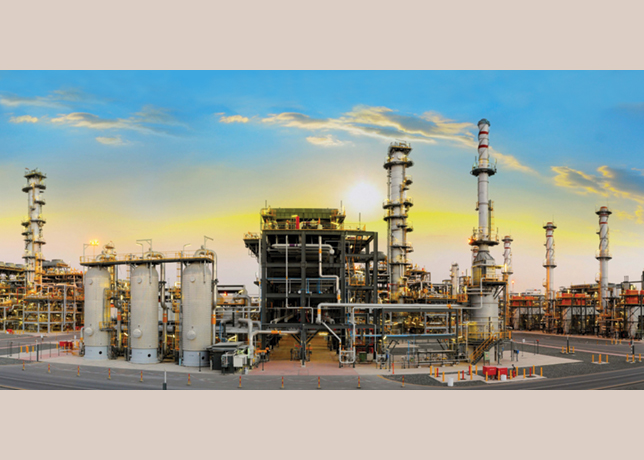
Qatar’s Amir Sheikh Hamad bin Khalifa Al Thani inaugurated RasGas Train 5 (the fifth train of Ras Laffan Liquefied Natural Gas Co) with a production capacity of 4.7 million tonnes of LNG per year at Ras Laffan Industrial City.
Train 5 is one of the world’s largest LNG production plants. The majority of the LNG from Train 5 will head to European gas markets via various gas wholesalers including Belgian wholesaler Distrigas.
Train 5 has a production capacity of 4.7 million tonnes per year (tpy) of LNG making it one of the largest and most productive trains in the world.
Train 6 is scheduled to come onstream in 2008 and Train 7 in 2009.
RasGas said output from its new $1.7 billion train 5 LNG plant will be exported entirely to Europe. “We are exporting to Belgium in Europe and from Belgium to the European grid,” Mohammed Saleh Al-Sada, managing director of RasGas, said.
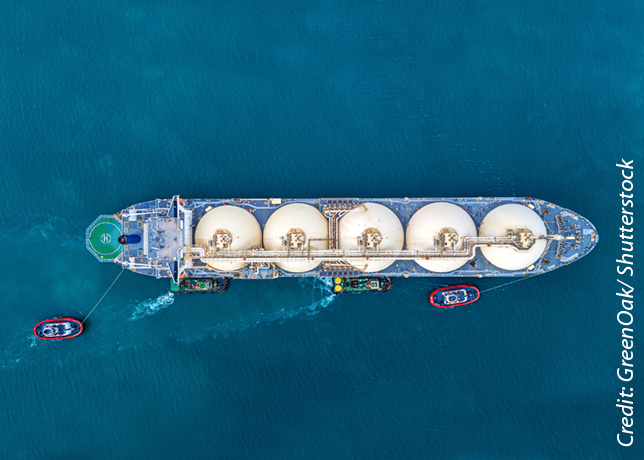
RasGas also added another tanker to its fleet. Al Jassasiya became the 13th LNG tanker for RasGas.
The foundation stone for the Qatargas 3 and Qatargas 4 projects were laid by Sheikh Tamim bin Hamad Al Thani, Heir Apparent of the State of Qatar.
The two projects are expected to generate approximately 2.8 billion cubic feet per day of natural gas, the majority of which is targeted for delivery to the United States, a report said.
Both Qatargas 3 and Qatargas 4 have worked jointly to reach this important milestone in record pace and all the necessary resources to carry out the projects are now in place, the report said.
The first LNG cargos from Qatargas 3 are expected to be delivered in 2009. First LNG cargos from Qatargas 4 are scheduled for around the end of the decade.
Access to growing US natural gas markets is the key element in both the Qatargas 3 and Qatargas 4 LNG marketing strategies.
Qatargas CEO and vice-chairman Faisal M Al Suwaidi said, “Qatargas is supplying to Asia and will reach Europe by end of 2007 and the North American market by end of 2008.”
The start-up of the Qatargas II LNG project is expected in the second quarter of 2008, Qatar Petroleum executive Saad Sherida Al-Kaabi said.
“We had stretch targets to try and push our contractors - but second quarter (2008) is more likely than first quarter,” he said.
Marubeni Corp will take a a stake in the fourth stage of the giant Qatargas LNG project, which will supply it with about a million tonnes per year from 2010, the Japanese firm and Qatargas said.
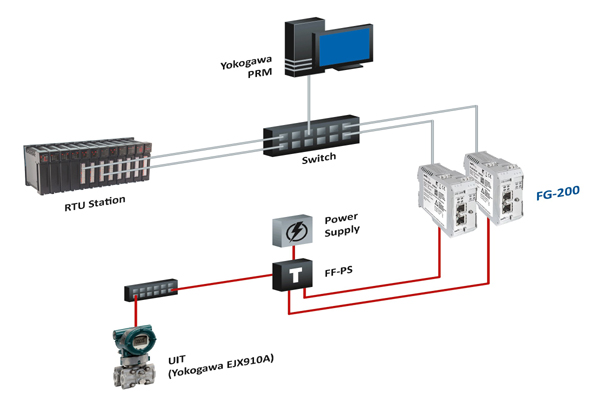
Qatargas Operating Company Ltd and Emerson Process Management, a business of Emerson announced a long term alliance, naming Emerson the preferred supplier of digital automation solutions and Qatargas a preferred customer for the company’s oil, gas and LNG facilities.
Meanwhile, Qatar has signed a five-year deal with Chubu Electric Power Co of Japan to supply 1.2 million tonnes of LNG per year, with deliveries to begin in the second half of 2008, Al Attiyah said.
In another development, Shizuoka Gas Co is in talks with Qatar on a long-term LNG supply deal, but differences over pricing could slow the pace of negotiations.
Qatar has pledged to continue supplying Japan with LNG and oil at a mutually acceptable price after Japan’s Prime Minister Shinzo Abe visited the Gulf state.
Korea Gas Corp (Kogas), South Korea’s largest LNG importer, has signed a contract to import 2.1 million tonnes of LNG per year from Qatar over 20 years, the energy ministry said.
Al Attiyah said that he met the chairmen of oil and gas contractors to detail his deepening worries about rocketing project costs that are delaying projects globally.
Earlier, Qatar Petroleum and ExxonMobil Corp dropped plans to build a gas-to-liquids plant in Qatar due to spiraling costs and will turn their attention to developing part of the country’s huge North gasfield.
Meanwhile, natural gas producer Dolphin Energy is on track for the full commercial launch of its project to import gas from Qatar to the UAE in the first week of June, its chief said.
Qatar aims to complete a study into the state of its giant North gasfield in 2009 and hopes to boost its output and exports after that, Al Attiyah said.
“I hope at the end of the study in 2009, it will show us where to go,” Al Attiyah said.
Qatar has put new projects on hold while it undertakes a study of the field after rapid development made the country the world’s top exporter of LNG.
A scheme to increase the output of Qatar’’s Al Shaheen oilfield to 525,000 barrels per day, from its current level of 240,000 bpd, is on track, according to Jakob Thomasen, the MD of Maersk Oil Qatar.
Thomasen revealed the $5 billion project should be completed by 2009 as planned. He said 14 out of 160 production and water injection wells had already been drilled at the field.
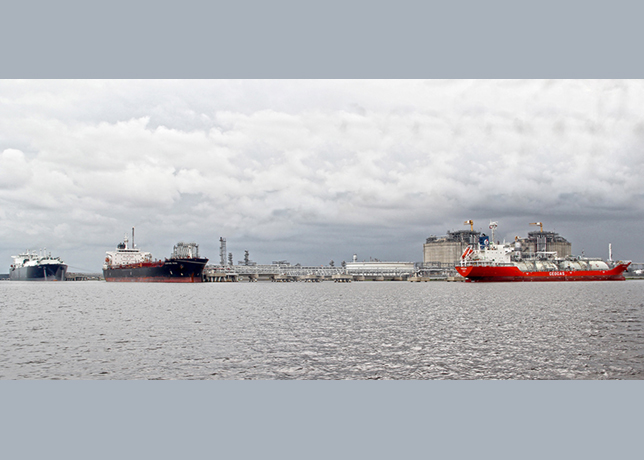
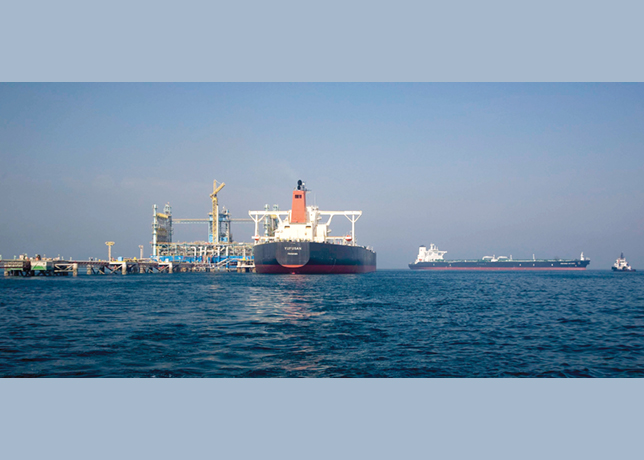
Qatar’s Ras Laffan Port is being developed and equipped to handle 100 million tonnes of LNG and other products per year, a report said.
“Qatar Petroleum is committed to improving facilities at Ras Laffan. Already significant investments worth billions of dollars have been made at Ras Laffan Port primarily to meet Qatar’s growing LNG export capacity needs,” a report cited Al-Suwaidi as saying.
Adyard Abu Dhabi LLC (Adyard), a subsidiary of Topaz Energy and Marine Ltd, has been awarded a key oil and gas fabrication contract by CTJV, a joint venture between Chiyoda, the Japanese integrated contractor and French oil and gas engineering company Technip.
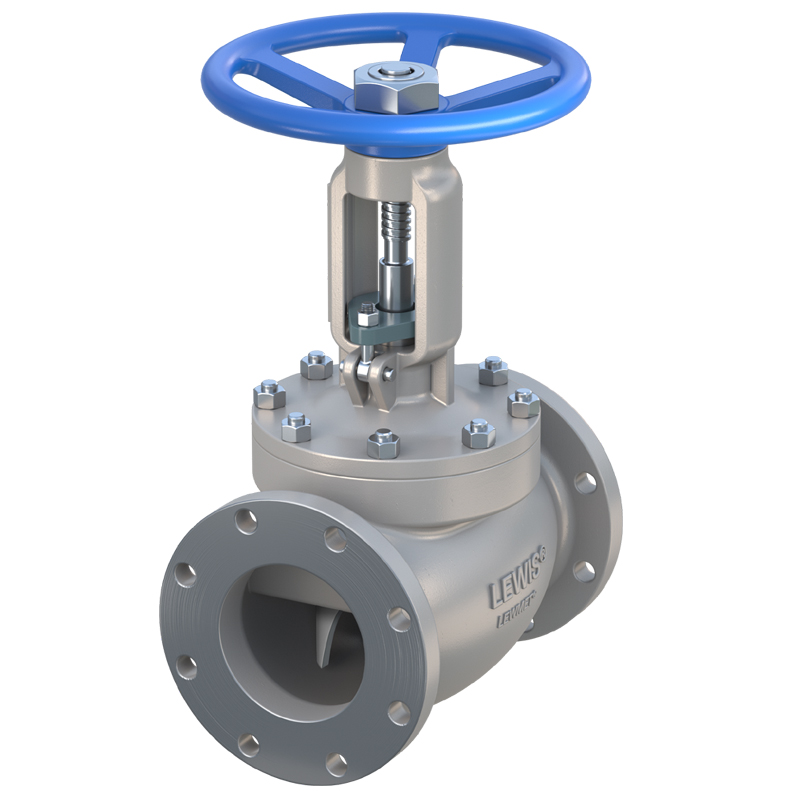
Metso Oyj announced that it has received a valve order from Chiyoda-Technip Joint Venture (CTJV) formed by Chiyoda Corporation, Japan and Technip, France.
In another development, Singapore’s Keppel Corp, the world’s top offshore rigs builder, said that it has signed a deal with Qatar Gas Transport Company (Nakilat) to build a shipyard in the Arabian Gulf.
Qatar Petrochemical Co Ltd (Qapco), a joint venture of Industries of Qatar and Total Petrochemicals, has chosen Basell’s “Lupotech T” technology for its new 250,000 tonnes per year (tpy) low density polyethylene at Mesaieed, Qatar, Basell said.
The start-up of the new plant is expected in 2011.